

Electric Hairbrush Market Analysis and Global Forecast 2024-2034
Price range: $ 1,390.00 through $ 5,520.00
Electric Hairbrush Market Research Report: Information By Gender (Female, Male), Distribution Channel (Supermarkets and Hypermarkets, Beauty Stores, Online Stores, and Others), End Use (Household, Commercial), and by Region — Forecast till 2034
Page: 165
Electric Hairbrush Market Overview
The Electric Hairbrush Market size accounted for USD 5.36 Billion in 2023 and is estimated to account for 6.88 Billion in 2024. The Market is expected to reach USD 15.95 Billion by 2034 growing at a compound annual growth rate (CAGR) of 6.87% from 2024 to 2034. The electric hairbrush market is experiencing significant growth, driven by increasing consumer focus on personal grooming and the rising popularity of convenient and effective hair styling solutions. These brushes, which utilize electrical power for various functionalities like straightening, curling, detangling, and even scalp massaging, cater to diverse hair types and styling preferences.
The electric hairbrush market is poised for continued growth, driven by evolving consumer preferences for effective and convenient hair styling solutions and ongoing technological advancements in product design and features.
Global Electric Hairbrush Market Synopsis
 Electric Hairbrush Market Dynamics
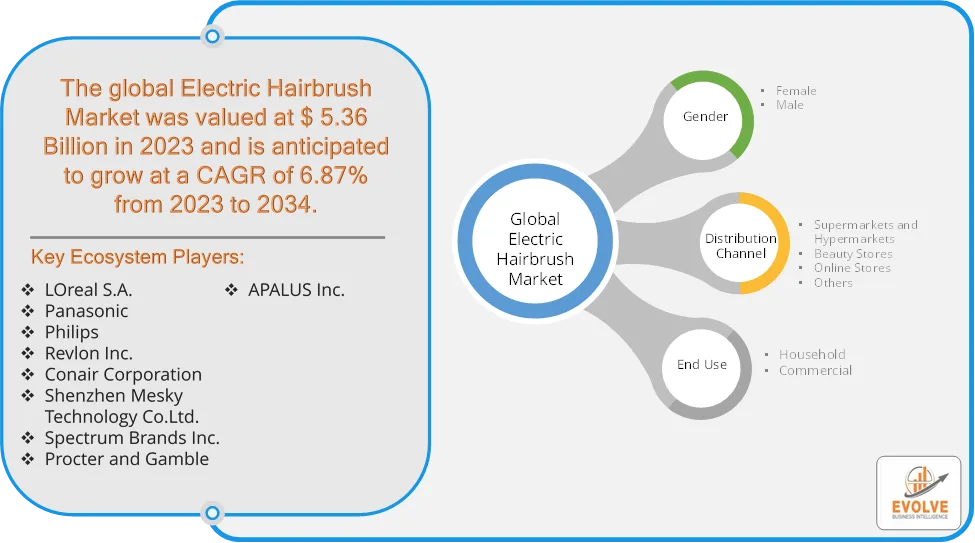
The major factors that have impacted the growth of Electric Hairbrush Market are as follows:
Drivers:
Ø Technological Advancements
Manufacturers are integrating innovative features such as adjustable heat settings, ionization, and anti-frizz properties into electric hairbrushes. These enhancements cater to consumers seeking efficient and personalized hair styling solutions. The proliferation of social media platforms and beauty influencers has heightened awareness of personal grooming. Viral trends and online tutorials encourage consumers to adopt new styling tools, boosting the popularity of electric hairbrushes. Modern lifestyles emphasize quick and effective grooming solutions. Electric hairbrushes offer time-saving benefits by combining brushing and styling functions, appealing to consumers seeking convenience.
Restraint:
- High Cost of Advanced Models and Potential for Hair Damage
Electric: Premium electric hairbrushes equipped with advanced features often come with elevated price tags. This can deter price-sensitive consumers, particularly in emerging markets, from making purchases, thereby limiting market penetration. The market is saturated with numerous brands offering similar products, leading to fierce competition. This environment can result in pricing pressures and reduced profit margins for manufacturers, making product differentiation challenging. Frequent or improper use of electric hairbrushes, especially those with high heat settings, can lead to hair damage, breakage, or dryness. Concerns about these adverse effects may prevent some consumers from adopting these products.
Opportunity:
⮚ Product Innovation and Customization
There is a growing opportunity for manufacturers to innovate and differentiate their products through customization options, such as adjustable heat settings, specialized brush designs for different hair types, and ergonomic features. Tailoring products to meet specific consumer needs and preferences can enhance market competitiveness and appeal to a broader demographic seeking personalized hair care solutions. Incorporating cutting-edge technologies like LED light therapy into electric hairbrushes offers potential for addressing hair health concerns. For instance, LED hairbrushes are gaining popularity for their potential to promote thicker, fuller hair by improving circulation and stimulating hair follicles.
Electric Hairbrush Market Segment Overview
 By Gender
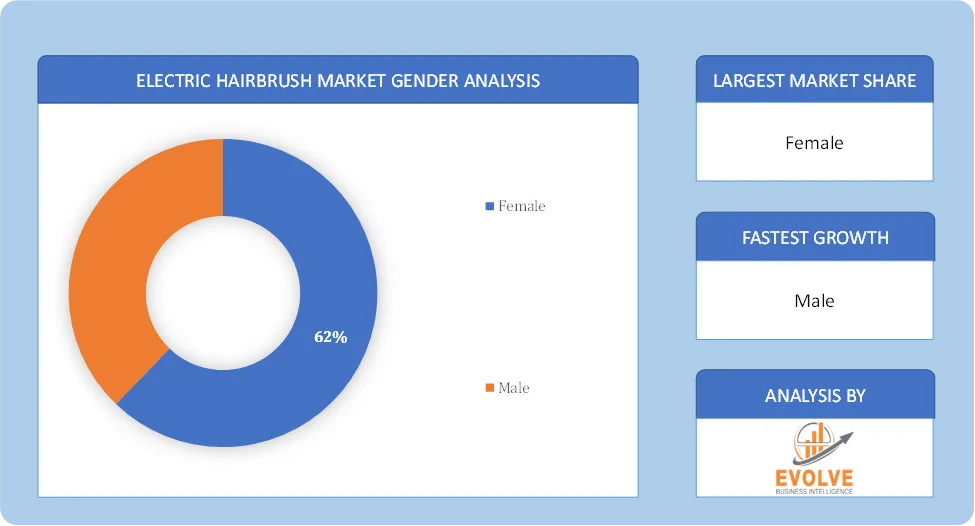
Based on Gender, the market is segmented based on Female, Male. The Female segment dominant the market. Female electric hair brushes often emphasize versatility, catering to various hair lengths and textures. They may include features suitable for straightening, curling, or adding volume, appealing to diverse styling needs.
By Application
Based on Application, the market segment has been divided into Supermarkets and Hypermarkets, Beauty Stores, Online Stores, and Others. The Supermarkets and Hypermarkets segment dominant the market. supermarkets and hypermarkets offer convenience by integrating electric hair brushes into their personal care aisles. Consumers can easily add them to their grocery shopping lists or browse while shopping for other household items.
By End Use
Based on Application, the market segment has been divided into Household and Commercial. The Household segment dominant the market. Electric hair brushes for household use cater primarily to individuals and families seeking convenient and effective solutions for daily hair care and styling. Moreover, household electric brushes often emphasize versatility, offering features for both straightening and styling (such as curling or adding volume), appealing to diverse styling preferences within the household.
Global Electric Hairbrush Market Regional Analysis
Based on region, the global Electric Hairbrush Market has been divided into North America, Europe, Asia-Pacific, the Middle East & Africa, and Latin America. North America is projected to dominate the use of the Electric Hairbrush Market followed by the Asia-Pacific and Europe regions.
North America Electric Hairbrush Market
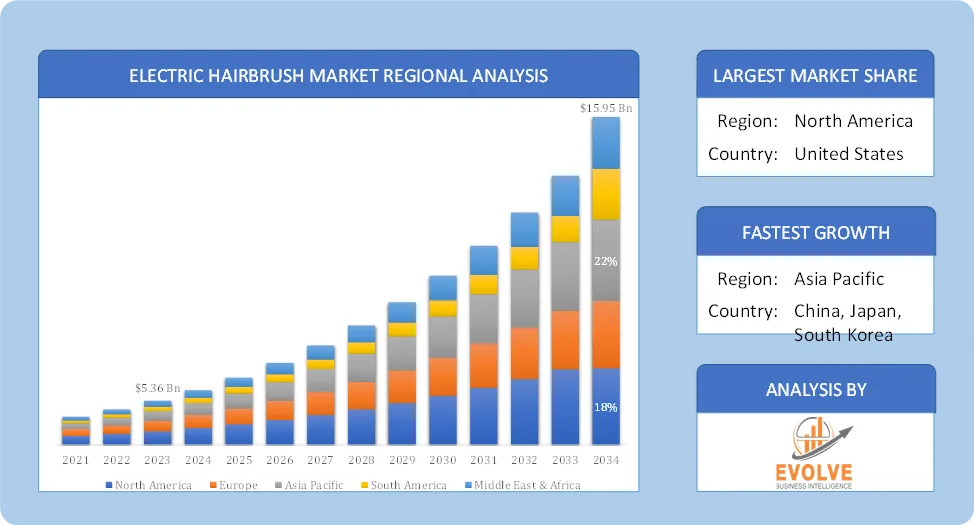
North America holds a dominant position in the Electric Hairbrush Market. The demand is fueled by high consumer awareness and the adoption of advanced personal care products. The U.S. salon industry’s substantial size further contributes to the demand for professional hair-styling devices. Significant number of hair salon establishments, especially in the United States and Canada, leading to higher demand in the professional segment and rising adoption of interactive web applications and online platforms related to hair styling.
Asia-Pacific Electric Hairbrush Market
The Asia-Pacific region has indeed emerged as the fastest-growing market for the Electric Hairbrush Market industry. This growth is driven by increasing disposable incomes, urbanization, and a heightened focus on personal grooming in countries like China, Japan, and South Korea. Increasing awareness of personal grooming and beauty trends, fueled by social media and beauty influencers and Increasing focus on hair care and scalp health in South Korea, driving demand for brushes with features like infrared technology and scalp massage.
Competitive Landscape
The global Electric Hairbrush Market is highly competitive, with numerous players offering a wide range of software solutions. The competitive landscape is characterized by the presence of established companies, as well as emerging startups and niche players. To increase their market position and attract a wide consumer base, the businesses are employing various strategies, such as product launches, and strategic alliances.
Prominent Players:
- LOreal S.A.
- Panasonic
- Philips
- Revlon Inc.
- Conair Corporation
- Shenzhen Mesky Technology Co.Ltd.
- Spectrum Brands Inc.
- Procter and Gamble
- APALUS Inc.
Key Development
In June 2024: T3 launched the Aire 360 multi-styler, an all-in-one styling tool, which is similar to Dyson.
In April 2024: Wavytalk, a manufacturer of hair tools, launched the Ionic Hair Straightening Brush. This unique 2-in-1 brush combines the functionality of a comb and a flat iron, revolutionizing at-home hair style and providing salon quality.
Scope of the Report
Global Electric Hairbrush Market, by Gender
- Female
- Male
Global Electric Hairbrush Market, by Distribution Channel
- Supermarkets and Hypermarkets
- Beauty Stores
- Online Stores
- Others
Global Electric Hairbrush Market, by End Use
- Household
- Commercial
Global Electric Hairbrush Market, by Region
- North America
- US
- Canada
- Mexico
- Europe
- UK
- Germany
- France
- Italy
- Spain
- Benelux
- Nordic
- Rest of Europe
- Asia Pacific
- China
- Japan
- South Korea
- Indonesia
- Austalia
- Malaysia
- India
- Rest of Asia Pacific
- South America
- Brazil
- Argentina
- Rest of South America
- Middle East & Africa
- Saudi Arabia
- UAE
- Egypt
- South Africa
- Rest of Middle East & Africa
| Parameters | Indicators |
|---|---|
| Market Size | 2034: USD 15.95 Billion |
| CAGR (2024-2034) | 6.87% |
| Base year | 2022 |
| Forecast Period | 2024-2034 |
| Historical Data | 2021 (2017 to 2020 On Demand) |
| Report Coverage | Revenue Forecast, Competitive Landscape, Growth Factors, and Trends |
| Key Segmentations | Gender, Distribution Channel, End Use |
| Geographies Covered | North America, Europe, Asia-Pacific, South America, Middle East, Africa |
| Key Vendors | LOreal S.A., Panasonic, Philips, Revlon Inc., Conair Corporation, Shenzhen Mesky Technology Co.Ltd., Spectrum Brands Inc., Procter and Gamble and APALUS Inc. |
| Key Market Opportunities | · Product Innovation and Customization · Integration of Advanced Technologies |
| Key Market Drivers | · Technology Advancement · Influence of Social Media and Beauty Trends |
REPORT CONTENT BRIEF:
- High-level analysis of the current and future Electric Hairbrush Market trends and opportunities
- Detailed analysis of current market drivers, restraining factors, and opportunities in the future
- Electric Hairbrush Market historical market size for the year 2021, and forecast from 2023 to 2033
- Electric Hairbrush Market share analysis at each product level
- Competitor analysis with detailed insight into its product segment, Government & Defense strength, and strategies adopted.
- Identifies key strategies adopted including product launches and developments, mergers and acquisitions, joint ventures, collaborations, and partnerships as well as funding taken and investment done, among others.
- To identify and understand the various factors involved in the global Electric Hairbrush Market affected by the pandemic
- To provide a detailed insight into the major companies operating in the market. The profiling will include the Government & Defense health of the company’s past 2-3 years with segmental and regional revenue breakup, product offering, recent developments, SWOT analysis, and key strategies.
Frequently Asked Questions (FAQ)
What is the growth rate of the global Electric Hairbrush Market?
The global Electric Hairbrush Market is growing at a CAGR of 6.87% over the next 10 years
Which region has the highest growth rate in the market of Electric Hairbrush Market?
Asia Pacific is expected to register the highest CAGR during 2024-2034
Which region has the largest share of the global Electric Hairbrush Market?
North America holds the largest share in 2022
Who are the key players in the global Electric Hairbrush Market?
LOreal S.A., Panasonic, Philips, Revlon Inc., Conair Corporation, Shenzhen Mesky Technology Co.Ltd., Spectrum Brands Inc., Procter and Gamble and APALUS Inc. are the major companies operating in the market.
Do you offer Post Sale Support?
Yes, we offer 16 hours of analyst support to solve the queries
Do you sell particular sections of a report?
Yes, we provide regional as well as country-level reports. Other than this we also provide a sectional report. Please get in contact with our sales representatives.
Press Release

Global Pharmaceutical Manufacturing Market to Reach $1.38 Trillion by 2035 with 7.35% CAGR, New Research Shows
The Global Mammography Market Is Estimated To Record a CAGR of Around 10.29% During The Forecast Period
Glue Stick Market to Reach USD 2.35 Billion by 2034
Podiatry Service Market to Reach USD 11.88 Billion by 2034
Microfluidics Technology Market to Reach USD 32.58 Billion by 2034
Ferric Chloride Market to Reach USD 10.65 Billion by 2034
Family Practice EMR Software Market to Reach USD 21.52 Billion by 2034
Electric Hairbrush Market to Reach USD 15.95 Billion by 2034
Daily Bamboo Products Market to Reach USD 143.52 Billion by 2034
Cross-border E-commerce Logistics Market to Reach USD 112.65 Billion by 2034


Table of Content
CHAPTER 1. Executive Summary
CHAPTER 2. Scope of the Study
2.1. Market Definition
2.2. Market Scope & Segmentation
2.2.1. Objective of Report
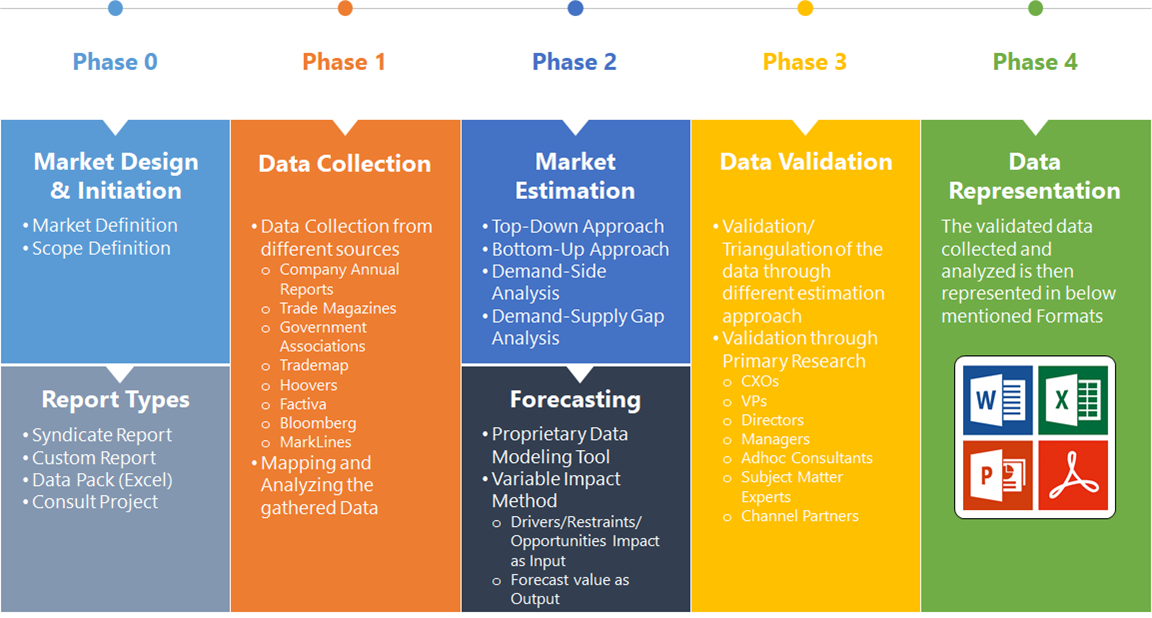
CHAPTER 3. Evolve BI Methodology
3.1. Data Collection & Validation Approach
3.2. Market Size Estimation and Forecast
CHAPTER 4. Exclusive Analysis
4.1. Market Opportunity Score
4.1.1. Gender Segement – Market Opportunity Score
4.1.2. Distribution Channel Segment – Market Opportunity Score
4.1.3. End Use Segment – Market Opportunity Score
4.2. Key Market Influencing Indicators
CHAPTER 5. Market Insights and Trends
5.1. Value Chain Analysis
5.1.1. Raw Material
5.1.2. Manufacturing Process
5.1.3. Distribution Channel
5.1.4. End User
5.2. Porter’s Five Forces Analysis
5.2.1. Bargaining Power of Buyers
5.2.2. Bargaining Power of Suppliers
5.2.3. Threat of New Entrant
5.2.4. Threat of Substitute
5.2.5. Industry Rivalry
5.3. COVID-19 Impact and Post COVID Scenario on Electric Hairbrush Market Market
5.3.1. Impact of COVID-19
5.3.2. Government Support and Industry Revival Policies
5.3.3. Measures Taken by Companies to Mitigate Negative Impact
5.3.4. Post COVID Trend
CHAPTER 6. Market Dynamics
6.1. Introduction
6.2. Drivers
6.2.1. Driver 1
6.2.2. Driver 2
6.2.3. Driver 3
6.3. Restraints
6.3.1. Restraint 1
6.3.2. Restraint 2
6.4. Opportunity
6.4.1. Opportunity 1
CHAPTER 7. Electric Hairbrush Market Market, By Gender
7.1. Introduction
7.1.1. Female
7.1.2 Male
CHAPTER 8 Electric Hairbrush Market Market, By Distribution Channel
8.1. Introduction
8.1.1. Supermarkets and Hypermarkets
8.1.2. Beauty Stores
8.1.3. Online Stores
8.1.4. Others
CHAPTER 9. Electric Hairbrush Market Market, By End Use
9.1. Introduction
9.1.1. Household
9.1.2. Commercial
CHAPTER 10. Electric Hairbrush Market Market, By Region
10.1. Introduction
10.2. NORTH AMERICA
10.2.1. North America: Market Size and Forecast, By Country, 2024 – 2034($ Million)
10.2.2. North America: Market Size and Forecast, By Gender, 2024 – 2034($ Million)
10.2.3. North America: Market Size and Forecast, By Distribution Channel, 2024 – 2034($ Million)
10.2.4. North America: Market Size and Forecast, By End Use, 2024 – 2034($ Million)
10.2.5. US
10.2.5.1. US: Market Size and Forecast, By Gender, 2024 – 2034($ Million)
10.2.5.2. US: Market Size and Forecast, By Distribution Channel, 2024 – 2034($ Million)
10.2.5.3. US: Market Size and Forecast, By End Use, 2024 – 2034($ Million)
10.2.6. CANADA
10.2.6.1. Canada: Market Size and Forecast, By Gender, 2024 – 2034($ Million)
10.2.6.2. Canada: Market Size and Forecast, By Distribution Channel, 2024 – 2034($ Million)
10.2.6.3. Canada: Market Size and Forecast, By End Use, 2024 – 2034($ Million)
10.2.7. MEXICO
10.2.7.1. Mexico: Market Size and Forecast, By Gender, 2024 – 2034($ Million)
10.2.7.2. Mexico: Market Size and Forecast, By Distribution Channel, 2024 – 2034($ Million)
10.2.7.3. Mexico: Market Size and Forecast, By End Use, 2024 – 2034($ Million)
10.3. Europe
10.3.1. Europe: Market Size and Forecast, By Country, 2024 – 2034($ Million)
10.3.2. Europe: Market Size and Forecast, By Gender, 2024 – 2034($ Million)
10.3.3. Europe: Market Size and Forecast, By Distribution Channel, 2024 – 2034($ Million)
10.3.4. Europe: Market Size and Forecast, By End Use, 2024 – 2034($ Million)
10.3.5. U.K.
10.3.5.1. U.K.: Market Size and Forecast, By Gender, 2024 – 2034($ Million)
10.3.5.2. U.K.: Market Size and Forecast, By Distribution Channel, 2024 – 2034($ Million)
10.3.5.3. U.K.: Market Size and Forecast, By End Use, 2024 – 2034($ Million)
10.3.6. GERMANY
10.3.6.1. Germany: Market Size and Forecast, By Gender, 2024 – 2034($ Million)
10.3.6.2. Germany: Market Size and Forecast, By Distribution Channel, 2024 – 2034($ Million)
10.3.6.3. Germany: Market Size and Forecast, By End Use, 2024 – 2034($ Million)
10.3.7. FRANCE
10.3.7.1. France: Market Size and Forecast, By Gender, 2024 – 2034($ Million)
10.3.7.2. France: Market Size and Forecast, By Distribution Channel, 2024 – 2034($ Million)
10.3.7.3. France: Market Size and Forecast, By End Use, 2024 – 2034($ Million)
10.3.8. ITALY
10.3.8.1. Italy: Market Size and Forecast, By Gender, 2024 – 2034($ Million)
10.3.8.2. Italy: Market Size and Forecast, By Distribution Channel, 2024 – 2034($ Million)
10.3.8.3. Italy: Market Size and Forecast, By End Use, 2024 – 2034($ Million)
10.3.9. SPAIN
10.3.9.1. Spain: Market Size and Forecast, By Gender, 2024 – 2034($ Million)
10.3.9.2. Spain: Market Size and Forecast, By Distribution Channel, 2024 – 2034($ Million)
10.3.9.3. Spain: Market Size and Forecast, By End Use, 2024 – 2034($ Million)
10.3.10. BENELUX
10.3.10.1. BeNeLux: Market Size and Forecast, By Gender, 2024 – 2034($ Million)
10.3.10.2. BeNeLux: Market Size and Forecast, By Distribution Channel, 2024 – 2034($ Million)
10.3.10.3. BeNeLux: Market Size and Forecast, By End Use, 2024 – 2034($ Million)
10.3.11. RUSSIA
10.3.11.1. Russia: Market Size and Forecast, By Gender, 2024 – 2034($ Million)
10.3.11.2. Russia: Market Size and Forecast, By Distribution Channel, 2024 – 2034($ Million)
10.3.11.3. Russia: Market Size and Forecast, By End Use, 2024 – 2034($ Million)
10.3.12. REST OF EUROPE
10.3.12.1. Rest of Europe: Market Size and Forecast, By Gender, 2024 – 2034($ Million)
10.3.12.2. Rest of Europe: Market Size and Forecast, By Distribution Channel, 2024 – 2034($ Million)
10.3.12.3. Rest of Europe: Market Size and Forecast, By End Use, 2024 – 2034($ Million)
10.4. Asia Pacific
10.4.1. Asia Pacific: Market Size and Forecast, By Country, 2024 – 2034($ Million)
10.4.2. Asia Pacific: Market Size and Forecast, By Gender, 2024 – 2034($ Million)
10.4.3. Asia Pacific: Market Size and Forecast, By Distribution Channel, 2024 – 2034($ Million)
10.4.4. Asia Pacific: Market Size and Forecast, By End Use, 2024 – 2034($ Million)
10.4.5. CHINA
10.4.5.1. China: Market Size and Forecast, By Gender, 2024 – 2034($ Million)
10.4.5.2. China: Market Size and Forecast, By Distribution Channel, 2024 – 2034($ Million)
10.4.5.3. China: Market Size and Forecast, By End Use, 2024 – 2034($ Million)
10.4.6. JAPAN
10.4.6.1. Japan: Market Size and Forecast, By Gender, 2024 – 2034($ Million)
10.4.6.2. Japan: Market Size and Forecast, By Distribution Channel, 2024 – 2034($ Million)
10.4.6.3. Japan: Market Size and Forecast, By End Use, 2024 – 2034($ Million)
10.4.7. INDIA
10.4.7.1. India: Market Size and Forecast, By Gender, 2024 – 2034($ Million)
10.4.7.2. India: Market Size and Forecast, By Distribution Channel, 2024 – 2034($ Million)
10.4.7.3. India: Market Size and Forecast, By End Use, 2024 – 2034($ Million)
10.4.8. SOUTH KOREA
10.4.8.1. South Korea: Market Size and Forecast, By Gender, 2024 – 2034($ Million)
10.4.8.2. South Korea: Market Size and Forecast, By Distribution Channel, 2024 – 2034($ Million)
10.4.8.3. South Korea: Market Size and Forecast, By End Use, 2024 – 2034($ Million)
10.4.9. THAILAND
10.4.9.1. Thailand: Market Size and Forecast, By Gender, 2024 – 2034($ Million)
10.4.9.2. Thailand: Market Size and Forecast, By Distribution Channel, 2024 – 2034($ Million)
10.4.9.3. Thailand: Market Size and Forecast, By End Use, 2024 – 2034($ Million)
10.4.10. INDONESIA
10.4.10.1. Indonesia: Market Size and Forecast, By Gender, 2024 – 2034($ Million)
10.4.10.2. Indonesia: Market Size and Forecast, By Distribution Channel, 2024 – 2034($ Million)
10.4.10.3. Indonesia: Market Size and Forecast, By End Use, 2024 – 2034($ Million)
10.4.11. MALAYSIA
10.4.11.1. Malaysia: Market Size and Forecast, By Gender, 2024 – 2034($ Million)
10.4.11.2. Malaysia: Market Size and Forecast, By Distribution Channel, 2024 – 2034($ Million)
10.4.11.3. Malaysia: Market Size and Forecast, By End Use, 2024 – 2034($ Million)
10.4.12. AUSTRALIA
10.4.12.1. Australia: Market Size and Forecast, By Gender, 2024 – 2034($ Million)
10.4.12.2. Australia: Market Size and Forecast, By Distribution Channel, 2024 – 2034($ Million)
10.4.12.3. Australia: Market Size and Forecast, By End Use, 2024 – 2034($ Million)
10.4.13. REST FO ASIA PACIFIC
10.4.13.1. Rest fo Asia Pacific: Market Size and Forecast, By Gender, 2024 – 2034($ Million)
10.4.13.2. Rest fo Asia Pacific: Market Size and Forecast, By Distribution Channel, 2024 – 2034($ Million)
10.4.13.3. Rest fo Asia Pacific: Market Size and Forecast, By End Use, 2024 – 2034($ Million)
10.5. South America
10.5.1. South America: Market Size and Forecast, By Country, 2024 – 2034($ Million)
10.5.2. South America: Market Size and Forecast, By Gender, 2024 – 2034($ Million)
10.5.3. South America: Market Size and Forecast, By System, 2024 – 2034($ Million)
10.5.4. South America: Market Size and Forecast, By End Use, 2024 – 2034($ Million)
10.5.5. BRAZIL
10.5.5.1. Brazil: Market Size and Forecast, By Gender, 2024 – 2034($ Million)
10.5.5.2. Brazil: Market Size and Forecast, By Distribution Channel, 2024 – 2034($ Million)
10.5.5.3. Brazil: Market Size and Forecast, By End Use, 2024 – 2034($ Million)
10.5.6. ARGENTINA
10.5.6.1. Argentina: Market Size and Forecast, By Gender, 2024 – 2034($ Million)
10.5.6.2. Argentina: Market Size and Forecast, By Distribution Channel, 2024 – 2034($ Million)
10.5.6.3. Argentina: Market Size and Forecast, By End Use, 2024 – 2034($ Million)
10.5.7. REST OF SOUTH AMERICA
10.5.7.1. Rest of South America: Market Size and Forecast, By Gender, 2024 – 2034($ Million)
10.5.7.2. Rest of South America: Market Size and Forecast, By Distribution Channel, 2024 – 2034($ Million)
10.5.7.3. Rest of South America: Market Size and Forecast, By End Use, 2024 – 2034($ Million)
10.6. Middle East & Africa
10.6.1. Middle East & Africa: Market Size and Forecast, By Country, 2024 – 2034($ Million)
10.6.2. Middle East & Africa: Market Size and Forecast, By Gender, 2024 – 2034($ Million)
10.6.3. Middle East & Africa: Market Size and Forecast, By Distribution Channel, 2024 – 2034($ Million)
10.6.4. Middle East & Africa: Market Size and Forecast, By End Use, 2024 – 2034($ Million)
10.6.5. SAUDI ARABIA
10.6.5.1. Saudi Arabia: Market Size and Forecast, By Gender, 2024 – 2034($ Million)
10.6.5.2. Saudi Arabia: Market Size and Forecast, By Distribution Channel, 2024 – 2034($ Million)
10.6.5.3. Saudi Arabia: Market Size and Forecast, By End Use, 2024 – 2034($ Million)
10.6.6. UAE
10.6.6.1. UAE: Market Size and Forecast, By Gender, 2024 – 2034($ Million)
10.6.6.2. UAE: Market Size and Forecast, By Distribution Channel, 2024 – 2034($ Million)
10.6.6.3. UAE: Market Size and Forecast, By End Use, 2024 – 2034($ Million)
10.6.7. EGYPT
10.6.7.1. Egypt: Market Size and Forecast, By Gender, 2024 – 2034($ Million)
10.6.7.2. Egypt: Market Size and Forecast, By Distribution Channel, 2024 – 2034($ Million)
10.6.7.3. Egypt: Market Size and Forecast, By End Use, 2024 – 2034($ Million)
10.6.8. SOUTH AFRICA
10.6.8.1. South Africa: Market Size and Forecast, By Gender, 2024 – 2034($ Million)
10.6.8.2. South Africa: Market Size and Forecast, By Distribution Channel, 2024 – 2034($ Million)
10.6.8.3. South Africa: Market Size and Forecast, By End Use, 2024 – 2034($ Million)
10.6.9. REST OF MIDDLE EAST & AFRICA
10.6.9.1. Rest of Middle East & Africa: Market Size and Forecast, By Gender, 2024 – 2034($ Million)
10.6.9.2. Rest of Middle East & Africa: Market Size and Forecast, By Distribution Channel, 2024 – 2034($ Million)
10.6.9.3.Rest of Middle East & Africa: Market Size and Forecast, By End Use, 2024 – 2034($ Million)
CHAPTER 12. Competitive Landscape
12.1. Competitior Benchmarking 2023-
12.2. Market Share Analysis
12.3. Key Developments Analysis By Top 5 Companies
12.4. Market Share Acquisition Strategies: Analysis of Key Approaches Employed by Top Players
CHAPTER 13. Company Profiles
13.1. LOreal S.A.
13.1.1. Hanon Systems
13.1.2. Financial Analysis
13.1.2.1. Business Segment Revenue, 2020, 2021, 2022, $ Million
13.1.2.2. Geographic Revenue Mix, 2022 (% Share)
13.1.3. Product Portfolio
13.1.4. Recent Development and Strategies Adopted
13.1.5. SWOT Analysis
13.2. Panasonic
13.3. Philips
13.4. Revlon Inc.
13.5. Conair Corporation
13.6. Shenzhen Mesky Technology Co.Ltd.
13.7. Spectrum Brands Inc.
13.8. Procter and Gamble
13.9 APALUS Inc.
Connect to Analyst
Research Methodology
Our Most Viewed Report and gain instant expertise

Brazil Off-Price Retail Market Analysis and Global Forecast 2023-2033
E-commerce Market Analysis and Global Forecast 2023-2033
E-commerce Market Research Report: By Distribution Channel (Retail, Wholesale), By Trade Category (B2B, B2C, C2C, C2B), By Payment (Net Banking, Credit Card, Debit Card, e-Wallet, Other Payment Methods), By Product type (Electronic Goods, Apparels and Footwear, Travel and Leisure, Food and Beverage, Home Appliances and Furniture, Fashion & Beauty, IT, Others), and by Region — Forecast till 2033
Page: 161
Luxury Travel Market Analysis and Global Forecast 2021-2034
Luxury Travel Market Research Report: By Type Of Traveler (Absolute Luxury, Aspiring Luxury, Accessible Luxury), By Type Of Tour (Customized & Private Vacation, Adventure & Safari, Cruise/Ship Expedition, Small Group Journey, Celebration & Special Event, Culinary Travel & Shopping), By Age Group (Millennial (21–30), Generation X (31–40), Baby Boomers (41–60), Silver Hair (60 and above)), and by Region — Forecast till 2034
Page: 161 Philippines Beauty & Personal Care Market Analysis and Global Forecast 2023-2033
Retail and Wholesale Market Analysis and Global Forecast 2023-2033
Retail and Wholesale Market Research Report: Information By Type (Retail, Wholesale), By Application (Motor Vehicle And Parts, Health And Personal Care, Clothing And Clothing Accessories, Electronics And Appliance, Furniture And Home Furnishings, Building Material And Garden Equipment, Others), and by Region — Forecast till 2033
Page: 165