

Isopropyl Alcohol Market Analysis and Global Forecast 2023-2033
Price range: $ 1,390.00 through $ 5,520.00
Isopropyl Alcohol Market Research Report: Information By Production Method (Indirect Hydration and Direct Hydration), Application (Solvents, Cleaning Agent, Intermediate, Disinfectants and others), End-Use Industry (Cosmetics & Personal Care, Pharmaceuticals, Paints & Coatings, Chemicals and others), and by Region — Forecast till 2033
Page: 129
Isopropyl Alcohol Market Overview
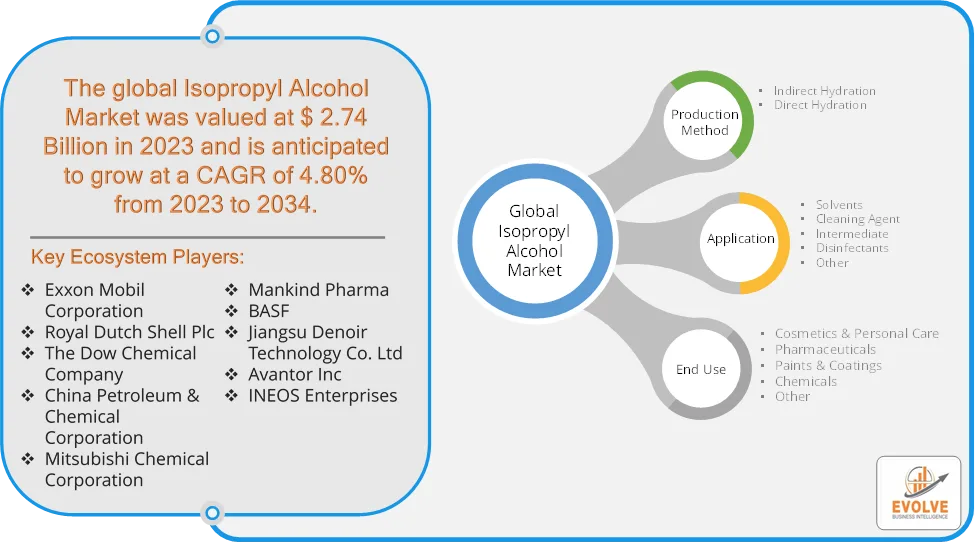
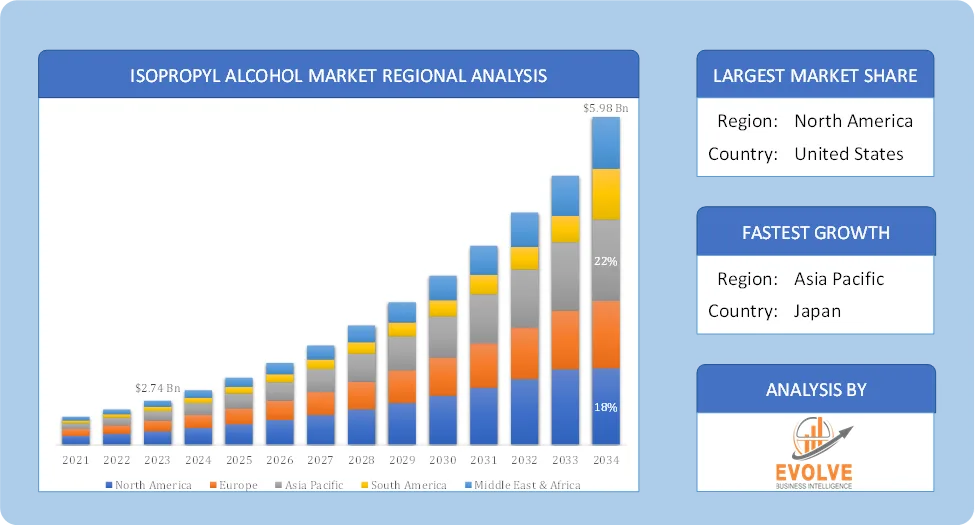
The Isopropyl Alcohol Market size accounted for USD 2.74 Billion in 2023 and is estimated to account for 3.05 Billion in 2024. The Market is expected to reach USD 5.98 Billion by 2034 growing at a compound annual growth rate (CAGR) of 4.80% from 2024 to 2034. Isopropyl Alcohol (IPA) is a colorless, volatile, and flammable chemical compound widely used as a solvent and cleaning agent in various industries. It is also known as isopropanol or 2-propanol and is commonly found in disinfectants, hand sanitizers, pharmaceuticals, cosmetics, and industrial applications. IPA is crucial in pharmaceutical manufacturing as a solvent and intermediate, driving market growth alongside the expanding pharmaceutical sector.
The isopropyl alcohol market is experiencing steady growth driven by its versatile applications across multiple sectors. IPA’s use in cosmetics and personal care products as a solvent and antiseptic contributes to market expansion.
Global Isopropyl Alcohol Market Synopsis
 Isopropyl Alcohol Market Dynamics
The major factors that have impacted the growth of Isopropyl Alcohol Market are as follows:
Drivers:
Ø Rising Demand for Disinfectants & Sanitizers
IPA is a key ingredient in hand sanitizers, surface disinfectants, and antiseptics, making it essential in healthcare and personal hygiene. Post-pandemic awareness has sustained high demand for IPA-based cleaning products in homes, hospitals, and industries and high demand from institutional and household cleaning industries. IPA is widely used in the pharmaceutical sector as a solvent, antiseptic, and disinfectant. Growing investments in healthcare infrastructure and hospital facilities boost IPA demand.
Restraint:
- Fluctuating Raw Material Prices and Safety Concerns
IPA is primarily produced from propylene, which is derived from crude oil and natural gas. Volatility in crude oil prices directly impacts production costs, making IPA prices unstable. Supply chain disruptions can lead to raw material shortages, affecting market supply. IPA is highly flammable and requires strict storage and handling measures and exposure to high concentrations can cause health hazards, including respiratory issues, skin irritation, and dizziness.
Opportunity:
⮚ Rising Adoption of Bio-Based & Sustainable IPA
The demand for eco-friendly solvents is increasing due to environmental regulations on VOC emissions. Bio-based IPA, produced from renewable sources like corn, biomass, and sugarcane, is gaining traction. Companies investing in green chemistry can capitalize on sustainability trends and reduce dependency on crude oil-based IPA. IPA is a crucial solvent for paints, coatings, lubricants, and adhesives in the automotive & industrial sector. The growth of electric vehicles (EVs) and automotive coatings is expanding IPA applications and industrial cleaning solutions using IPA are seeing increased adoption in factories, machinery maintenance, and manufacturing plants.
Isopropyl Alcohol Market Segment Overview
 By Production Method
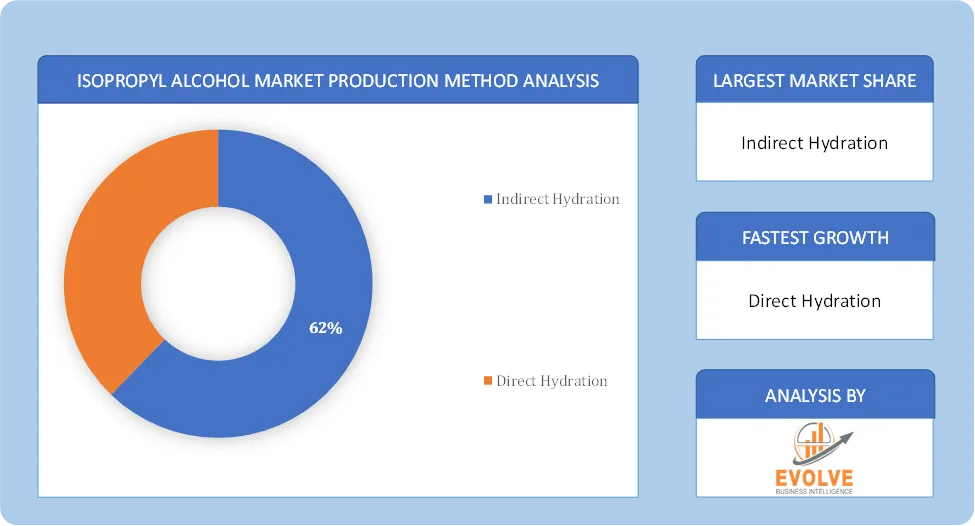
Based on Production Method, the market is segmented based on Indirect Hydration and Direct Hydration. The direct hydration method also allows for greater control over the quality of the end product, as well as more efficient production processes. These factors have contributed to the increasing adoption of direct hydration by isopropyl alcohol manufacturers, particularly in regions such as Asia Pacific, where demand for the chemical is high.
By Application
Based on Application, the market segment has been divided into Solvents, Cleaning Agent, Intermediate, Disinfectants and others. The solvents segment dominant the market. This is because isopropyl alcohol is commonly used as a solvent in a wide range of industries, including pharmaceuticals, chemicals, and electronics.
By End Use
Based on End Use, the market segment has been divided into the Indirect Cosmetics & Personal Care, Pharmaceuticals, Paints & Coatings, Chemicals and others. The Pharmaceuticals segment dominated the market. This is because isopropyl alcohol is widely used as an intermediate in the production of various drugs and pharmaceutical products. It is also used as a solvent and cleaning agent in the pharmaceutical industry. These all factors for Isopropyl Alcohol positively impact the market growth.
Global Isopropyl Alcohol Market Regional Analysis
Based on region, the global Isopropyl Alcohol Market has been divided into North America, Europe, Asia-Pacific, the Middle East & Africa, and Latin America. North America is projected to dominate the use of the Isopropyl Alcohol Market followed by the Asia-Pacific and Europe regions.
North America Global Isopropyl Alcohol Market
North America holds a dominant position in the Isopropyl Alcohol Market. North America holds a significant share in the IPA market due to its well-established healthcare sector and high demand for disinfectants, especially after the COVID-19 pandemic. The U.S. is the largest consumer, driven by pharmaceutical, personal care, and industrial applications. Strong pharmaceutical and chemical industries contribute to market growth and established chemical manufacturing sector.
Asia-Pacific Global Isopropyl Alcohol Market
The Asia-Pacific region has indeed emerged as the fastest-growing market for the Isopropyl Alcohol Market industry. Asia-Pacific is the fastest-growing and largest regional market due to rapid industrialization, increasing healthcare investments, and rising demand for electronics cleaning applications. China, India, Japan, and South Korea are major IPA consumers and increased awareness of hygiene and sanitation has further boosted IPA consumption.
Competitive Landscape
The global Isopropyl Alcohol Market is highly competitive, with numerous players offering a wide range of software solutions. The competitive landscape is characterized by the presence of established companies, as well as emerging startups and niche players. To increase their market position and attract a wide consumer base, the businesses are employing various strategies, such as product launches, and strategic alliances.
Prominent Players:
- Exxon Mobil Corporation
- Royal Dutch Shell Plc
- The Dow Chemical Company
- China Petroleum & Chemical Corporation
- Mitsubishi Chemical Corporation
- Mankind Pharma
- BASF
- Jiangsu Denoir Technology Co. Ltd
- Avantor Inc
- INEOS Enterprises
Key Development
- In March 2023, BASF announced that it would be increasing its production of isopropyl alcohol by 20% in response to the growing demand for the product.
- April 2023, Eastman Chemical Company announced that it would be investing $100 million in a new isopropyl alcohol production facility in the United States.
Scope of the Report
Global Isopropyl Alcohol Market, by Production Method
- Indirect Hydration
- Direct Hydration
Global Isopropyl Alcohol Market, by Application
- Solvents
- Cleaning Agent
- Intermediate
- Disinfectants
- Other
Global Isopropyl Alcohol Market, by End Use
- Cosmetics & Personal Care
- Pharmaceuticals
- Paints & Coatings
- Chemicals
- Other
Global Isopropyl Alcohol Market, by Region
- North America
- US
- Canada
- Mexico
- Europe
- UK
- Germany
- France
- Italy
- Spain
- Benelux
- Nordic
- Rest of Europe
- Asia Pacific
- China
- Japan
- South Korea
- Indonesia
- Austalia
- Malaysia
- India
- Rest of Asia Pacific
- South America
- Brazil
- Argentina
- Rest of SouthAmerica
- Middle East &Africa
- Saudi Arabia
- UAE
- Egypt
- SouthAfrica
- Rest of Middle East & Africa
| Parameters | Indicators |
|---|---|
| Market Size | 2033: USD 5.98 Billion |
| CAGR (2023-2033) | 4.80% |
| Base year | 2022 |
| Forecast Period | 2023-2033 |
| Historical Data | 2021 (2017 to 2020 On Demand) |
| Report Coverage | Revenue Forecast, Competitive Landscape, Growth Factors, and Trends |
| Key Segmentations | Production Method, Application, End Use |
| Geographies Covered | North America, Europe, Asia-Pacific, South America, Middle East, Africa |
| Key Vendors | Exxon Mobil Corporation, Royal Dutch Shell Plc, The Dow Chemical Company, China Petroleum & Chemical Corporation, Mitsubishi Chemical Corporation, Mankind Pharma, BASF, Jiangsu Denoir Technology Co. Ltd, Avantor Inc and INEOS Enterprises. |
| Key Market Opportunities | · Rising Adoption of Bio-Based & Sustainable IPA · Increasing Demand in the Automotive & Industrial Sector |
| Key Market Drivers | · Rising Demand for Disinfectants & Sanitizers · Growth in the Pharmaceutical & Healthcare Industry |
REPORT CONTENT BRIEF:
- High-level analysis of the current and future Isopropyl Alcohol Market trends and opportunities
- Detailed analysis of current market drivers, restraining factors, and opportunities in the future
- Isopropyl Alcohol Market historical market size for the year 2021, and forecast from 2023 to 2033
- Isopropyl Alcohol Market share analysis at each product level
- Competitor analysis with detailed insight into its product segment, Government & Defense strength, and strategies adopted.
- Identifies key strategies adopted including product launches and developments, mergers and acquisitions, joint ventures, collaborations, and partnerships as well as funding taken and investment done, among others.
- To identify and understand the various factors involved in the global Isopropyl Alcohol Market affected by the pandemic
- To provide a detailed insight into the major companies operating in the market. The profiling will include the Government & Defense health of the company’s past 2-3 years with segmental and regional revenue breakup, product offering, recent developments, SWOT analysis, and key strategies.
Frequently Asked Questions (FAQ)
What is the growth rate of the global Isopropyl Alcohol Market?
The global Isopropyl Alcohol Market is growing at a CAGR of 4.80% over the next 10 years
Which region has the highest growth rate in the market of Isopropyl Alcohol Market?
Asia Pacific is expected to register the highest CAGR during 2023-2033
Which region has the largest share of the global Isopropyl Alcohol Market?
North America holds the largest share in 2022
Who are the key players in the global Isopropyl Alcohol Market?
Exxon Mobil Corporation, Royal Dutch Shell Plc, The Dow Chemical Company, China Petroleum & Chemical Corporation, Mitsubishi Chemical Corporation, Mankind Pharma, BASF, Jiangsu Denoir Technology Co. Ltd, Avantor Inc and INEOS Enterprises. are the major companies operating in the market.
Do you offer Post Sale Support?
Yes, we offer 16 hours of analyst support to solve the queries
Do you sell particular sections of a report?
Yes, we provide regional as well as country-level reports. Other than this we also provide a sectional report. Please get in contact with our sales representatives.
Press Release

Global Pharmaceutical Manufacturing Market to Reach $1.38 Trillion by 2035 with 7.35% CAGR, New Research Shows
The Global Mammography Market Is Estimated To Record a CAGR of Around 10.29% During The Forecast Period
Glue Stick Market to Reach USD 2.35 Billion by 2034
Podiatry Service Market to Reach USD 11.88 Billion by 2034
Microfluidics Technology Market to Reach USD 32.58 Billion by 2034
Ferric Chloride Market to Reach USD 10.65 Billion by 2034
Family Practice EMR Software Market to Reach USD 21.52 Billion by 2034
Electric Hairbrush Market to Reach USD 15.95 Billion by 2034
Daily Bamboo Products Market to Reach USD 143.52 Billion by 2034
Cross-border E-commerce Logistics Market to Reach USD 112.65 Billion by 2034


Table of Contents
CHAPTER 1. Executive Summary
CHAPTER 2. Scope of the Study
2.1. Market Definition
2.2. Market Scope & Segmentation
2.2.1. Objective of Report
CHAPTER 3. Evolve BI Methodology
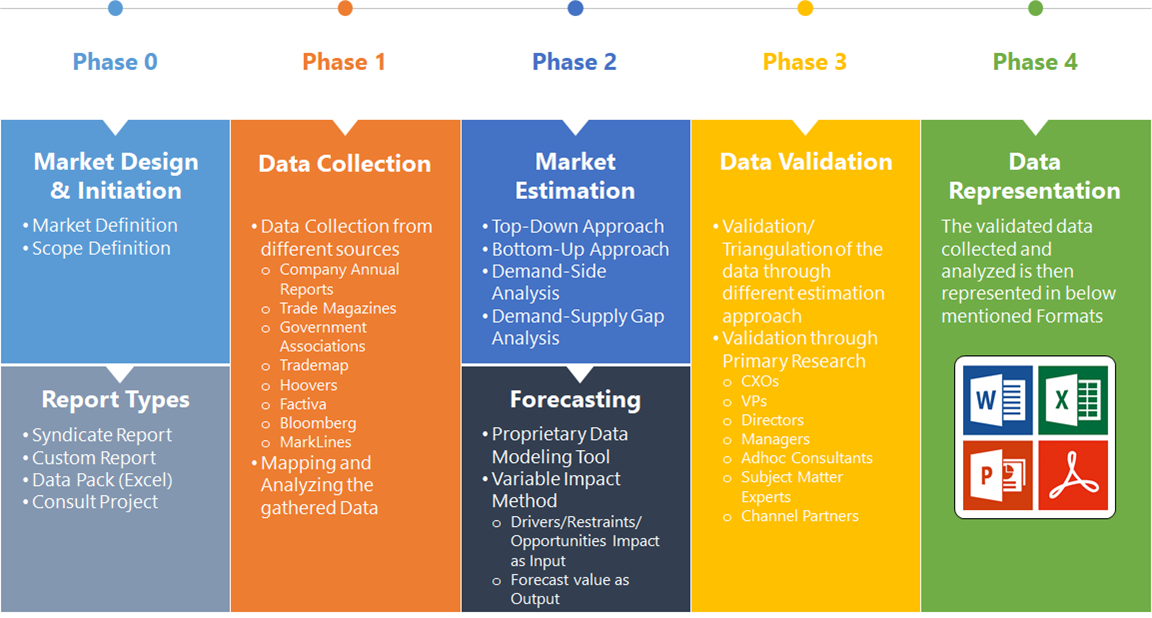
3.1. Data Collection & Validation Approach
3.2. Market Size Estimation and Forecast
CHAPTER 4. Exclusive Analysis
4.1. Market Opportunity Score
4.1.1. Production Method Segement – Market Opportunity Score
4.1.2. Application Segment – Market Opportunity Score
4.1.3. End Use Segment – Market Opportunity Score
4.2. Key Market Influencing Indicators
CHAPTER 5. Market Insights and Trends
5.1. Value Chain Analysis
5.1.1. Raw Material
5.1.2. Manufacturing Process
5.1.3. Distribution Channel
5.1.4. End User
5.2. Porter’s Five Forces Analysis
5.2.1. Bargaining Power of Buyers
5.2.2. Bargaining Power of Suppliers
5.2.3. Threat of New Entrant
5.2.4. Threat of Substitute
5.2.5. Industry Rivalry
5.3. COVID-19 Impact and Post COVID Scenario on Isopropyl Alcohol Market
5.3.1. Impact of COVID-19
5.3.2. Government Support and Industry Revival Policies
5.3.3. Measures Taken by Companies to Mitigate Negative Impact
5.3.4. Post COVID Trend
CHAPTER 6. Market Dynamics
6.1. Introduction
6.2. Drivers
6.2.1. Driver 1
6.2.2. Driver 2
6.2.3. Driver 3
6.3. Restraints
6.3.1. Restraint 1
6.3.2. Restraint 2
6.4. Opportunity
6.4.1. Opportunity 1
CHAPTER 7. Isopropyl Alcohol Market, By Production Method
7.1. Introduction
7.1.1. Indirect Hydration
7.1.2 Direct Hydration
CHAPTER 8 Isopropyl Alcohol Market, By Application
8.1. Introduction
8.1.1. Solvents
8.1.2. Cleaning Agent
8.1.3. Intermediate
8.1.4. Disinfectants
8.1.5 Other
CHAPTER 9. Isopropyl Alcohol Market, By End Use
9.1. Introduction
9.1.1. Cosmetics & Personal Care
9.1.2. Pharmaceuticals
9.1.3. Paints & Coatings
9.1.4. Chemicals
9.1.5. Other
CHAPTER 10. Isopropyl Alcohol Market, By Region
10.1. Introduction
10.2. NORTH AMERICA
10.2.1. North America: Market Size and Forecast, By Country, 2024 – 2034($ Million)
10.2.2. North America: Market Size and Forecast, By Production Method, 2024 – 2034($ Million)
10.2.3. North America: Market Size and Forecast, By Application, 2024 – 2034($ Million)
10.2.4. North America: Market Size and Forecast, By End Use, 2024 – 2034($ Million)
10.2.5. US
10.2.5.1. US: Market Size and Forecast, By Production Method, 2024 – 2034($ Million)
10.2.5.2. US: Market Size and Forecast, By Application, 2024 – 2034($ Million)
10.2.5.3. US: Market Size and Forecast, By End Use, 2024 – 2034($ Million)
10.2.6. CANADA
10.2.6.1. Canada: Market Size and Forecast, By Production Method, 2024 – 2034($ Million)
10.2.6.2. Canada: Market Size and Forecast, By Application, 2024 – 2034($ Million)
10.2.6.3. Canada: Market Size and Forecast, By End Use, 2024 – 2034($ Million)
10.2.7. MEXICO
10.2.7.1. Mexico: Market Size and Forecast, By Production Method, 2024 – 2034($ Million)
10.2.7.2. Mexico: Market Size and Forecast, By Application, 2024 – 2034($ Million)
10.2.7.3. Mexico: Market Size and Forecast, By End Use, 2024 – 2034($ Million)
10.3. Europe
10.3.1. Europe: Market Size and Forecast, By Country, 2024 – 2034($ Million)
10.3.2. Europe: Market Size and Forecast, By Production Method, 2024 – 2034($ Million)
10.3.3. Europe: Market Size and Forecast, By Application, 2024 – 2034($ Million)
10.3.4. Europe: Market Size and Forecast, By End Use, 2024 – 2034($ Million)
10.3.5. U.K.
10.3.5.1. U.K.: Market Size and Forecast, By Production Method, 2024 – 2034($ Million)
10.3.5.2. U.K.: Market Size and Forecast, By Mode of Transport, 2024 – 2034($ Million)
10.3.5.3. U.K.: Market Size and Forecast, By End Use, 2024 – 2034($ Million)
10.3.6. GERMANY
10.3.6.1. Germany: Market Size and Forecast, By Production Method, 2024 – 2034($ Million)
10.3.6.2. Germany: Market Size and Forecast, By Application, 2024 – 2034($ Million)
10.3.6.3. Germany: Market Size and Forecast, By End Use, 2024 – 2034($ Million)
10.3.7. FRANCE
10.3.7.1. France: Market Size and Forecast, By Service Type, 2024 – 2034($ Million)
10.3.7.2. France: Market Size and Forecast, By Application, 2024 – 2034($ Million)
10.3.7.3. France: Market Size and Forecast, By End Use, 2024 – 2034($ Million)
10.3.8. ITALY
10.3.8.1. Italy: Market Size and Forecast, By Production Method, 2024 – 2034($ Million)
10.3.8.2. Italy: Market Size and Forecast, By Application, 2024 – 2034($ Million)
10.3.8.3. Italy: Market Size and Forecast, By End Use, 2024 – 2034($ Million)
10.3.9. SPAIN
10.3.9.1. Spain: Market Size and Forecast, By Production Method, 2024 – 2034($ Million)
10.3.9.2. Spain: Market Size and Forecast, By Application, 2024 – 2034($ Million)
10.3.9.3. Spain: Market Size and Forecast, By End Use, 2024 – 2034($ Million)
10.3.10. BENELUX
10.3.10.1. BeNeLux: Market Size and Forecast, By Production Method, 2024 – 2034($ Million)
10.3.10.2. BeNeLux: Market Size and Forecast, By Application, 2024 – 2034($ Million)
10.3.10.3. BeNeLux: Market Size and Forecast, By End Use, 2024 – 2034($ Million)
10.3.11. RUSSIA
10.3.11.1. Russia: Market Size and Forecast, By Production Method, 2024 – 2034($ Million)
10.3.11.2. Russia: Market Size and Forecast, By Application, 2024 – 2034($ Million)
10.3.11.3. Russia: Market Size and Forecast, By End Use, 2024 – 2034($ Million)
10.3.12. REST OF EUROPE
10.3.12.1. Rest of Europe: Market Size and Forecast, By Production Method, 2024 – 2034($ Million)
10.3.12.2. Rest of Europe: Market Size and Forecast, By Application, 2024 – 2034($ Million)
10.3.12.3. Rest of Europe: Market Size and Forecast, By End Use, 2024 – 2034($ Million)
10.4. Asia Pacific
10.4.1. Asia Pacific: Market Size and Forecast, By Country, 2024 – 2034($ Million)
10.4.2. Asia Pacific: Market Size and Forecast, By Production Method, 2024 – 2034($ Million)
10.4.3. Asia Pacific: Market Size and Forecast, By Application, 2024 – 2034($ Million)
10.4.4. Asia Pacific: Market Size and Forecast, By End Use, 2024 – 2034($ Million)
10.4.5. CHINA
10.4.5.1. China: Market Size and Forecast, By Production Method, 2024 – 2034($ Million)
10.4.5.2. China: Market Size and Forecast, By Application, 2024 – 2034($ Million)
10.4.5.3. China: Market Size and Forecast, By End Use, 2024 – 2034($ Million)
10.4.6. JAPAN
10.4.6.1. Japan: Market Size and Forecast, By Service Type, 2024 – 2034($ Million)
10.4.6.2. Japan: Market Size and Forecast, By Application, 2024 – 2034($ Million)
10.4.6.3. Japan: Market Size and Forecast, By End Use, 2024 – 2034($ Million)
10.4.7. INDIA
10.4.7.1. India: Market Size and Forecast, By Production Method, 2024 – 2034($ Million)
10.4.7.2. India: Market Size and Forecast, By Application, 2024 – 2034($ Million)
10.4.7.3. India: Market Size and Forecast, By End Use, 2024 – 2034($ Million)
10.4.8. SOUTH KOREA
10.4.8.1. South Korea: Market Size and Forecast, By Production Method, 2024 – 2034($ Million)
10.4.8.2. South Korea: Market Size and Forecast, By Application, 2024 – 2034($ Million)
10.4.8.3. South Korea: Market Size and Forecast, By End Use, 2024 – 2034($ Million)
10.4.9. THAILAND
10.4.9.1. Thailand: Market Size and Forecast, By Production Method, 2024 – 2034($ Million)
10.4.9.2. Thailand: Market Size and Forecast, By Application, 2024 – 2034($ Million)
10.4.9.3. Thailand: Market Size and Forecast, By End Use, 2024 – 2034($ Million)
10.4.10. INDONESIA
10.4.10.1. Indonesia: Market Size and Forecast, By Production Method, 2024 – 2034($ Million)
10.4.10.2. Indonesia: Market Size and Forecast, By Application, 2024 – 2034($ Million)
10.4.10.3. Indonesia: Market Size and Forecast, By End Use, 2024 – 2034($ Million)
10.4.11. MALAYSIA
10.4.11.1. Malaysia: Market Size and Forecast, By Production Method, 2024 – 2034($ Million)
10.4.11.2. Malaysia: Market Size and Forecast, By Application, 2024 – 2034($ Million)
10.4.11.3. Malaysia: Market Size and Forecast, By End Use, 2024 – 2034($ Million)
10.4.12. AUSTRALIA
10.4.12.1. Australia: Market Size and Forecast, By Production Method, 2024 – 2034($ Million)
10.4.12.2. Australia: Market Size and Forecast, By Application, 2024 – 2034($ Million)
10.4.12.3. Australia: Market Size and Forecast, By End Use, 2024 – 2034($ Million)
10.4.13. REST FO ASIA PACIFIC
10.4.13.1. Rest fo Asia Pacific: Market Size and Forecast, By Production Method, 2024 – 2034($ Million)
10.4.13.2. Rest fo Asia Pacific: Market Size and Forecast, By Application, 2024 – 2034($ Million)
10.4.13.3. Rest fo Asia Pacific: Market Size and Forecast, By End Use, 2024 – 2034($ Million)
10.5. South America
10.5.1. South America: Market Size and Forecast, By Country, 2024 – 2034($ Million)
10.5.2. South America: Market Size and Forecast, By Production Method, 2024 – 2034($ Million)
10.5.3. South America: Market Size and Forecast, By System, 2024 – 2034($ Million)
10.5.4. South America: Market Size and Forecast, By End Use, 2024 – 2034($ Million)
10.5.5. BRAZIL
10.5.5.1. Brazil: Market Size and Forecast, By Production Method, 2024 – 2034($ Million)
10.5.5.2. Brazil: Market Size and Forecast, By Application, 2024 – 2034($ Million)
10.5.5.3. Brazil: Market Size and Forecast, By End Use, 2024 – 2034($ Million)
10.5.6. ARGENTINA
10.5.6.1. Argentina: Market Size and Forecast, By Production Method, 2024 – 2034($ Million)
10.5.6.2. Argentina: Market Size and Forecast, By Application, 2024 – 2034($ Million)
10.5.6.3. Argentina: Market Size and Forecast, By End Use, 2024 – 2034($ Million)
10.5.7. REST OF SOUTH AMERICA
10.5.7.1. Rest of South America: Market Size and Forecast, By Production Method, 2024 – 2034($ Million)
10.5.7.2. Rest of South America: Market Size and Forecast, By Application, 2024 – 2034($ Million)
10.5.7.3. Rest of South America: Market Size and Forecast, By End Use, 2024 – 2034($ Million)
10.6. Middle East & Africa
10.6.1. Middle East & Africa: Market Size and Forecast, By Country, 2024 – 2034($ Million)
10.6.2. Middle East & Africa: Market Size and Forecast, By Production Method, 2024 – 2034($ Million)
10.6.3. Middle East & Africa: Market Size and Forecast, By Application, 2024 – 2034($ Million)
10.6.4. Middle East & Africa: Market Size and Forecast, By End Use, 2024 – 2034($ Million)
10.6.5. SAUDI ARABIA
10.6.5.1. Saudi Arabia: Market Size and Forecast, By Production Method, 2024 – 2034($ Million)
10.6.5.2. Saudi Arabia: Market Size and Forecast, By Application, 2024 – 2034($ Million)
10.6.5.3. Saudi Arabia: Market Size and Forecast, By End Use, 2024 – 2034($ Million)
10.6.6. UAE
10.6.6.1. UAE: Market Size and Forecast, By Production Method, 2024 – 2034($ Million)
10.6.6.2. UAE: Market Size and Forecast, By Application, 2024 – 2034($ Million)
10.6.6.3. UAE: Market Size and Forecast, By End Use, 2024 – 2034($ Million)
10.6.7. EGYPT
10.6.7.1. Egypt: Market Size and Forecast, By Production Method, 2024 – 2034($ Million)
10.6.7.2. Egypt: Market Size and Forecast, By Application, 2024 – 2034($ Million)
10.6.7.3. Egypt: Market Size and Forecast, By End Use, 2024 – 2034($ Million)
10.6.8. SOUTH AFRICA
10.6.8.1. South Africa: Market Size and Forecast, By Production Method, 2024 – 2034($ Million)
10.6.8.2. South Africa: Market Size and Forecast, By Application, 2024 – 2034($ Million)
10.6.8.3. South Africa: Market Size and Forecast, By End Use, 2024 – 2034($ Million)
10.6.9. REST OF MIDDLE EAST & AFRICA
10.6.9.1. Rest of Middle East & Africa: Market Size and Forecast, By Production Method, 2024 – 2034($ Million)
10.6.9.2. Rest of Middle East & Africa: Market Size and Forecast, By Application, 2024 – 2034($ Million)
10.6.9.3.Rest of Middle East & Africa: Market Size and Forecast, By End Use, 2024 – 2034($ Million)
CHAPTER 12. Competitive Landscape
12.1. Competitior Benchmarking 2023-
12.2. Market Share Analysis
12.3. Key Developments Analysis By Top 5 Companies
12.4. Market Share Acquisition Strategies: Analysis of Key Approaches Employed by Top Players
CHAPTER 13. Company Profiles
13.1. Exxon Mobil Corporation
13.1.1. Hanon Systems
13.1.2. Financial Analysis
13.1.2.1. Business Segment Revenue, 2020, 2021, 2022, $ Million
13.1.2.2. Geographic Revenue Mix, 2022 (% Share)
13.1.3. Product Portfolio
13.1.4. Recent Development and Strategies Adopted
13.1.5. SWOT Analysis
13.2. Royal Dutch Shell Plc
13.3. The Dow Chemical Company
13.4. China Petroleum & Chemical Corporation
13.5. Mitsubishi Chemical Corporation
13.6. Mankind Pharma
13.7. BASF
13.8. Jiangsu Denoir Technology Co. Ltd
13.9 Avantor Inc
13.10 INEOS Enterprises.
Connect To Analyst
Research Methodology
Our Most Viewed Report and gain instant expertise

Fiber Reinforced Composites Market Analysis and Global Forecast 2023-2033
Fiber Reinforced Composites Market Research Report: Information By Fiber Type (Fiber Type, Fiberglass, Aramid Fibers, Boron Fibers), By Matrix (Polymer Matrix Composites, Metal Matrix Composites, Ceramic Composites, Carbon-Carbon Composites, Hybrid Composites), and by Region — Forecast till 2033
Page: 174
High Temperature Composite Resin Market Analysis and Global Forecast 2023-2033
Liquid Synthetic Rubber Market Analysis and Global Forecast 2023-2033
Liquid Synthetic Rubber Market Research Report: Information By Product Type (Liquid Isoprene, Liquid Butadiene, Liquid Styrene Butadiene, Other), By Application (Adhesives, Industrial Rubber Manufacturing, Tire manufacturing, Polymer modification, Other), and by Region — Forecast till 2033
Page: 171