

Procurement-as-a-Service (PaaS) Market Analysis and Global Forecast 2024-2034
Price range: $ 1,390.00 through $ 5,520.00
Procurement-as-a-Service (PaaS) Market Research Report: Information By Component (Transaction Management, Strategic Sourcing, Process Management, Spend Management, Category Management, Contract Management), By Organization Size (Large Scale Enterprise & Small-Medium Enterprise), By Vertical (Travel and Hospitality, Manufacturing, Healthcare, Retail, Consumer Goods Market, Energy & Utilities, Banking, Insurance and Financial Services & IT & Telecom), and by Region — Forecast till 2034
Page: 129
Procurement-as-a-Service (PaaS) Market Overview
The Procurement-as-a-Service (PaaS) Market size accounted for USD 6.87 Billion in 2023 and is estimated to account for 7.14 Billion in 2024. The Market is expected to reach USD 22.36 Billion by 2034 growing at a compound annual growth rate (CAGR) of 12.56% from 2024 to 2034. Procurement-as-a-Service (PaaS) refers to the outsourcing of procurement functions to specialized service providers who offer expertise, technology, and operational support. PaaS providers typically handle sourcing, category management, supplier management, procurement analytics, and transactional procurement. This model helps businesses streamline their procurement processes, reduce costs, and improve efficiency.
The Procurement-as-a-Service (PaaS) market is expanding rapidly as businesses seek flexible, cost-effective, and technologically advanced procurement solutions.
Global Procurement-as-a-Service (PaaS) Market Synopsis
 Procurement-as-a-Service (PaaS) Market Dynamics
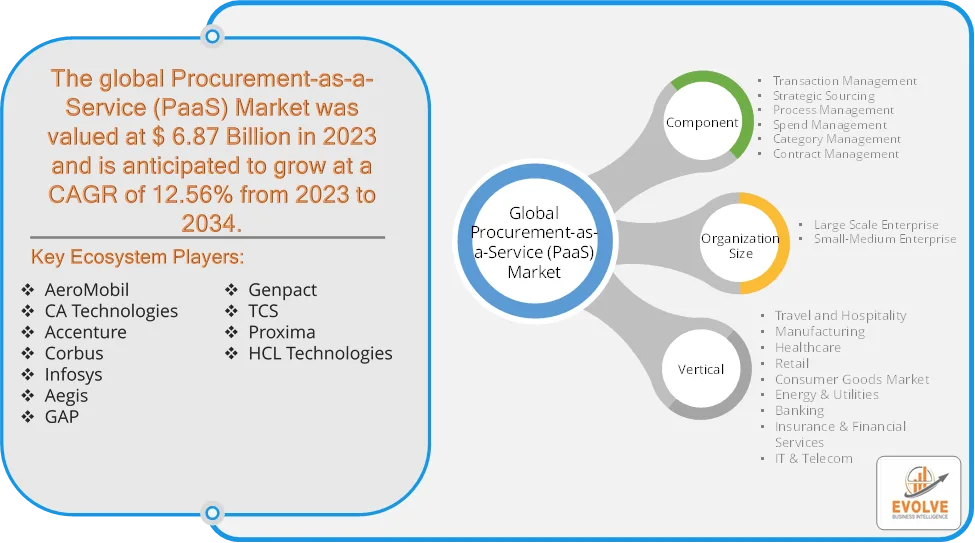
The major factors that have impacted the growth of Procurement-as-a-Service (PaaS) Market are as follows:
Drivers:
Ø Growing Adoption of Digital Procurement Technologies
AI, machine learning, and blockchain enhance supplier risk assessment and fraud detection. Cloud-based procurement platforms improve collaboration and real-time decision-making and Robotic Process Automation (RPA) streamlines repetitive procurement tasks, boosting efficiency. Businesses require procurement solutions that scale with their needs. PaaS allows organizations to outsource specific procurement functions without overhauling their internal processes and Small and medium enterprises (SMEs) benefit from on-demand procurement services.
Restraint:
- Data Security and Privacy Concerns
Sensitive procurement data (pricing, contracts, supplier details) is vulnerable to cybersecurity threats. Cloud-based PaaS solutions raise concerns about data breaches and unauthorized access. A company may hesitate to migrate procurement data to third-party cloud providers due to cybersecurity risks. Advanced procurement services with AI, blockchain, and analytics require significant investment and SMEs and cost-sensitive businesses may struggle to afford PaaS adoption.
Opportunity:
⮚ Rising Adoption of Cloud-Based Procurement Solutions
Cloud-based PaaS offers greater flexibility, scalability, and remote access. More businesses are moving away from on-premise procurement software and cloud solutions enable real-time data access and supplier collaboration. Companies are prioritizing green procurement and sustainable supplier sourcing. PaaS solutions can provide real-time ESG compliance monitoring and carbon footprint tracking and Businesses can meet regulatory and corporate social responsibility (CSR) requirements through PaaS.
Procurement-as-a-Service (PaaS) Market Segment Overview
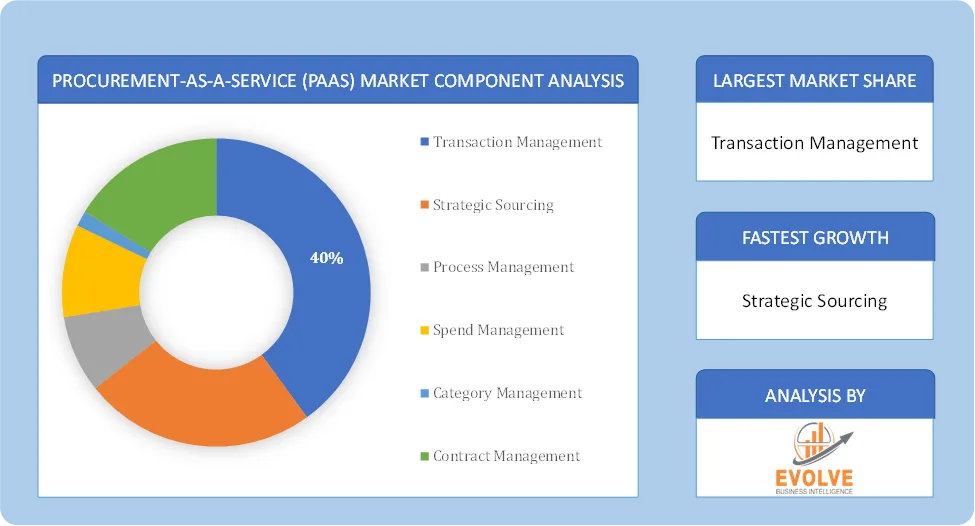 By Component
Based on Component, the market is segmented based on By Transaction Management, Strategic Sourcing, Process Management, Spend Management, Category Management, Contract Management. The strategic sourcing segment dominated the market. The projected period will fuel the market through the expanding need for businesses to use technologies to enhance procurement activities.
By Organization Size
Based on Deployment Type, the market segment has been divided into By Large Scale Enterprise & Small-Medium Enterprise. The large enterprise segment dominant the market. Large enterprises will use these services to handle intricate contract arrangements and beg agreements, absorbing a sizable portion of the overall income share. Large enterprises choose these services because they cut operational costs while simplifying operations.
By Vertical
Based on Application, the market segment has been divided into By Travel and Hospitality, Manufacturing, Healthcare, Retail, Consumer Goods Market, Energy & Utilities, Banking, Insurance and Financial Services & IT & Telecom. The manufacturing segment dominant the market. The category’s growth will be heavily influenced by how supply chains with shorter lead times are managed. Manufacturing will continue to be the main driver for the market for procurement as a service. The manufacturing sector’s services will concentrate on enhancing the supply chain dynamics regarding direct inputs and raw materials.
Global Procurement-as-a-Service (PaaS) Market Regional Analysis
Based on region, the global Procurement-as-a-Service (PaaS) Market has been divided into North America, Europe, Asia-Pacific, the Middle East & Africa, and Latin America. North America is projected to dominate the use of the Procurement-as-a-Service (PaaS) Market followed by the Asia-Pacific and Europe regions.
North America Global Procurement-as-a-Service Market
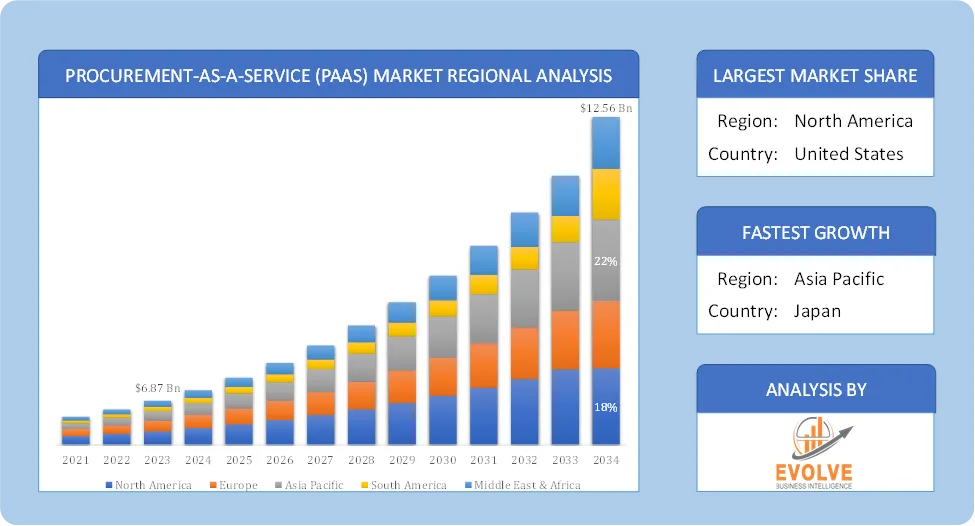
North America holds a dominant position in the Procurement-as-a-Service (PaaS) Market. North America has historically held a significant market share. This is largely due to the region’s advanced technological infrastructure, high adoption rates of cloud-based solutions, and a mature outsourcing industry and the presence of numerous leading technology and consulting firms further strengthens the region’s market position.
Asia-Pacific Global Procurement-as-a-Service Market
The Asia-Pacific region has indeed emerged as the fastest-growing market for the Procurement-as-a-Service (PaaS) Market industry. Rapid industrialization, particularly in countries like China and India, is a major driver. Increasing adoption of digital transformation initiatives and a growing focus on streamlining procurement processes are also contributing factors and Rising number of SMEs and large enterprises seeking to optimize procurement and growing awareness of the benefits of PaaS.
Competitive Landscape
The global Procurement-as-a-Service (PaaS) Market is highly competitive, with numerous players offering a wide range of software solutions. The competitive landscape is characterized by the presence of established companies, as well as emerging startups and niche players. To increase their market position and attract a wide consumer base, the businesses are employing various strategies, such as product launches, and strategic alliances.
Prominent Players:
- CA Technologies
- Accenture
- Corbus
- Infosys
- Aegis
- GAP
- Genpact
- TCS
- Proxima
- HCL Technologies.
Key Development
- In November 2022, IBM and Vodafone collaborated to study Quantum-Safe Cryptography and Quantum Computing.
- In January 2022, Proxima was obtained by Bain & Company, and the latter’s knowledge of the supply chain and procurement industries will enhance Bain & Company’s current range of procurement solutions. Proxima will run its own business within the service division of Bain & Company.
Scope of the Report
Global Procurement-as-a-Service (PaaS) Market, by Component
- Transaction Management
- Strategic Sourcing
- Process Management
- Spend Management
- Category Management
- Contract Management
Global Procurement-as-a-Service (PaaS) Market, by Organization Size
- Large Scale Enterprise
- Small-Medium Enterprise
Global Procurement-as-a-Service (PaaS) Market, by Vertical
- Travel and Hospitality
- Manufacturing
- Healthcare
- Retail
- Consumer Goods Market
- Energy & Utilities
- Banking
- Insurance & Financial Services
- IT & Telecom
Global Procurement-as-a-Service (PaaS) Market, by Region
- North America
- US
- Canada
- Mexico
- Europe
- UK
- Germany
- France
- Italy
- Spain
- Benelux
- Nordic
- Rest of Europe
- Asia Pacific
- China
- Japan
- South Korea
- Indonesia
- Austalia
- Malaysia
- India
- Rest of Asia Pacific
- South America
- Brazil
- Argentina
- Rest of South America
- Middle East & Africa
- Saudi Arabia
- UAE
- Egypt
- South Africa
- Rest of Middle East & Africa
| Parameters | Indicators |
|---|---|
| Market Size | 2034: USD 22.36 Billion |
| CAGR (2024-2034) | 12.56% |
| Base year | 2022 |
| Forecast Period | 2024-2034 |
| Historical Data | 2021 (2017 to 2020 On Demand) |
| Report Coverage | Revenue Forecast, Competitive Landscape, Growth Factors, and Trends |
| Key Segmentations | Component, Organization Size and Vertical |
| Geographies Covered | North America, Europe, Asia-Pacific, South America, Middle East, Africa |
| Key Vendors | CA Technologies, Accenture, Corbus, Infosys, Aegis, GAP, Genpact, TCS, Proxima and HCL Technologies. |
| Key Market Opportunities | · Rising Adoption of Cloud-Based Procurement Solutions · Growing Focus on Sustainable & ESG Procurement |
| Key Market Drivers | · Growing Adoption of Digital Procurement Technologies · Scalability and Flexibility in Procurement Processes |
REPORT CONTENT BRIEF:
- High-level analysis of the current and future Procurement-as-a-Service (PaaS) Market trends and opportunities
- Detailed analysis of current market drivers, restraining factors, and opportunities in the future
- Procurement-as-a-Service (PaaS) Market historical market size for the year 2021, and forecast from 2023 to 2033
- Procurement-as-a-Service (PaaS) Market share analysis at each product level
- Competitor analysis with detailed insight into its product segment, Government & Defense strength, and strategies adopted.
- Identifies key strategies adopted including product launches and developments, mergers and acquisitions, joint ventures, collaborations, and partnerships as well as funding taken and investment done, among others.
- To identify and understand the various factors involved in the global Procurement-as-a-Service (PaaS) Market affected by the pandemic
- To provide a detailed insight into the major companies operating in the market. The profiling will include the Government & Defense health of the company’s past 2-3 years with segmental and regional revenue breakup, product offering, recent developments, SWOT analysis, and key strategies.
Frequently Asked Questions (FAQ)
What is the growth rate of the global Procurement-as-a-Service (PaaS) Market?
The global Procurement-as-a-Service (PaaS) Market is growing at a CAGR of 12.56% over the next 10 years
Which region has the highest growth rate in the market of Procurement-as-a-Service (PaaS) Market?
Asia Pacific is expected to register the highest CAGR during 2024-2034
Which region has the largest share of the global Procurement-as-a-Service (PaaS) Market?
North America holds the largest share in 2022
Who are the key players in the global Procurement-as-a-Service (PaaS) Market?
CA Technologies, Accenture, Corbus, Infosys, Aegis, GAP, Genpact, TCS, Proxima and HCL Technologies. are the major companies operating in the market.
Do you offer Post Sale Support?
Yes, we offer 16 hours of analyst support to solve the queries
Do you sell particular sections of a report?
Yes, we provide regional as well as country-level reports. Other than this we also provide a sectional report. Please get in contact with our sales representatives.
Press Release

Global Pharmaceutical Manufacturing Market to Reach $1.38 Trillion by 2035 with 7.35% CAGR, New Research Shows
The Global Mammography Market Is Estimated To Record a CAGR of Around 10.29% During The Forecast Period
Glue Stick Market to Reach USD 2.35 Billion by 2034
Podiatry Service Market to Reach USD 11.88 Billion by 2034
Microfluidics Technology Market to Reach USD 32.58 Billion by 2034
Ferric Chloride Market to Reach USD 10.65 Billion by 2034
Family Practice EMR Software Market to Reach USD 21.52 Billion by 2034
Electric Hairbrush Market to Reach USD 15.95 Billion by 2034
Daily Bamboo Products Market to Reach USD 143.52 Billion by 2034
Cross-border E-commerce Logistics Market to Reach USD 112.65 Billion by 2034


Table of Contents
CHAPTER 1. Executive Summary
CHAPTER 2. Scope of the Study
2.1. Market Definition
2.2. Market Scope & Segmentation
2.2.1. Objective of Report
CHAPTER 3. Evolve BI Methodology
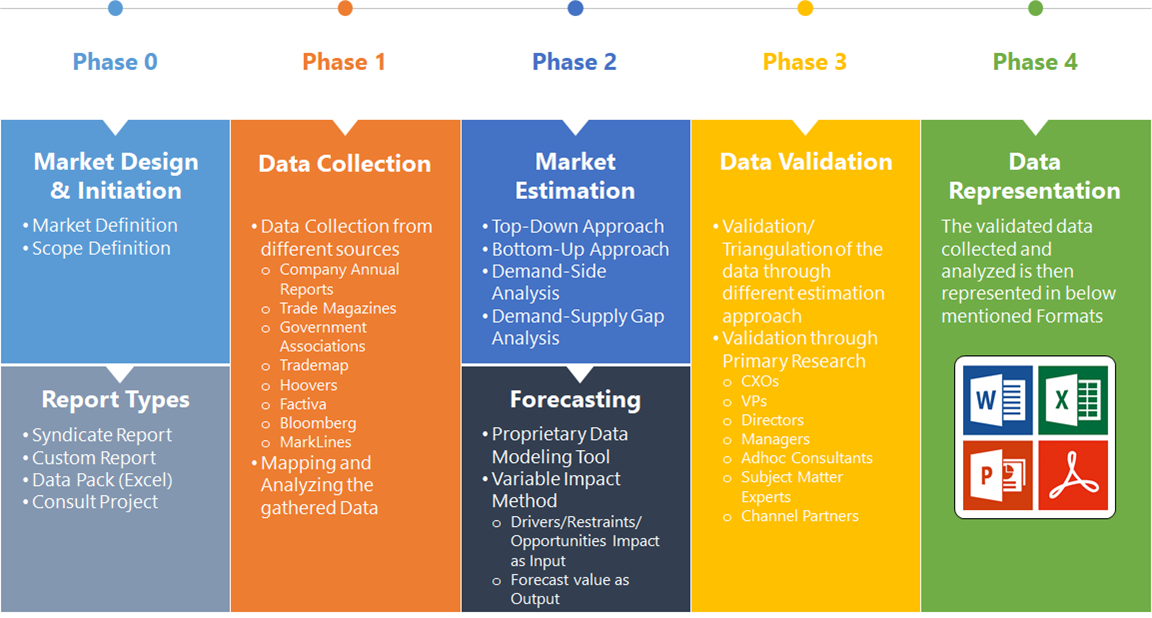
3.1. Data Collection & Validation Approach
3.2. Market Size Estimation and Forecast
CHAPTER 4. Exclusive Analysis
4.1. Market Opportunity Score
4.1.1. Component Segement – Market Opportunity Score
4.1.2. Organization Size Segment – Market Opportunity Score
4.1.3. Vertical Segment – Market Opportunity Score
4.2. Key Market Influencing Indicators
CHAPTER 5. Market Insights and Trends
5.1. Value Chain Analysis
5.1.1. Raw Material
5.1.2. Manufacturing Process
5.1.3. Distribution Channel
5.1.4. End User
5.2. Porter’s Five Forces Analysis
5.2.1. Bargaining Power of Buyers
5.2.2. Bargaining Power of Suppliers
5.2.3. Threat of New Entrant
5.2.4. Threat of Substitute
5.2.5. Industry Rivalry
5.3. COVID-19 Impact and Post COVID Scenario on Procurement-as-a-Service (PaaS) Market
5.3.1. Impact of COVID-19
5.3.2. Government Support and Industry Revival Policies
5.3.3. Measures Taken by Companies to Mitigate Negative Impact
5.3.4. Post COVID Trend
CHAPTER 6. Market Dynamics
6.1. Introduction
6.2. Drivers
6.2.1. Driver 1
6.2.2. Driver 2
6.2.3. Driver 3
6.3. Restraints
6.3.1. Restraint 1
6.3.2. Restraint 2
6.4. Opportunity
6.4.1. Opportunity 1
CHAPTER 7. Procurement-as-a-Service (PaaS) Market, By Component
7.1. Introduction
7.1.1. Transaction Management
7.1.2 Strategic Sourcing
7.1.3 Process Management
7.1.4 Spend Management
7.1.5 Category Management
7.1.6 Contract Management
CHAPTER 8 Procurement-as-a-Service (PaaS) Market, By Organization Size
8.1. Introduction
8.1.1. Large Scale Enterprise
8.1.2. Small-Medium Enterprise
CHAPTER 9. Procurement-as-a-Service (PaaS) Market, By Vertical
9.1. Introduction
9.1.1. Travel and Hospitality
9.1.2. Manufacturing
9.1.3. Healthcare
9.1.4. Retail
9.1.5. Consumer Goods Market
9.1.6. Energy & Utilities
9.1.7. Banking
9.1.8. Insurance and Financial Services
9.1.9. IT & Telecom
CHAPTER 10. Procurement-as-a-Service (PaaS) Market, By Region
10.1. Introduction
10.2. NORTH AMERICA
10.2.1. North America: Market Size and Forecast, By Country, 2024 – 2034($ Million)
10.2.2. North America: Market Size and Forecast, By Component, 2024 – 2034($ Million)
10.2.3. North America: Market Size and Forecast, By Organization Size, 2024 – 2034($ Million)
10.2.4. North America: Market Size and Forecast, By Vertical, 2024 – 2034($ Million)
10.2.5. US
10.2.5.1. US: Market Size and Forecast, By Component, 2024 – 2034($ Million)
10.2.5.2. US: Market Size and Forecast, By Organization Size, 2024 – 2034($ Million)
10.2.5.3. US: Market Size and Forecast, By Vertical, 2024 – 2034($ Million)
10.2.6. CANADA
10.2.6.1. Canada: Market Size and Forecast, By Component, 2024 – 2034($ Million)
10.2.6.2. Canada: Market Size and Forecast, By Organization Size, 2024 – 2034($ Million)
10.2.6.3. Canada: Market Size and Forecast, By Vertical, 2024 – 2034($ Million)
10.2.7. MEXICO
10.2.7.1. Mexico: Market Size and Forecast, By Component, 2024 – 2034($ Million)
10.2.7.2. Mexico: Market Size and Forecast, By Organization Size, 2024 – 2034($ Million)
10.2.7.3. Mexico: Market Size and Forecast, By Vertical, 2024 – 2034($ Million)
10.3. Europe
10.3.1. Europe: Market Size and Forecast, By Country, 2024 – 2034($ Million)
10.3.2. Europe: Market Size and Forecast, By Component, 2024 – 2034($ Million)
10.3.3. Europe: Market Size and Forecast, By Organization Size, 2024 – 2034($ Million)
10.3.4. Europe: Market Size and Forecast, By Vertical, 2024 – 2034($ Million)
10.3.5. U.K.
10.3.5.1. U.K.: Market Size and Forecast, By Component, 2024 – 2034($ Million)
10.3.5.2. U.K.: Market Size and Forecast, By Mode of Transport, 2024 – 2034($ Million)
10.3.5.3. U.K.: Market Size and Forecast, By Vertical, 2024 – 2034($ Million)
10.3.6. GERMANY
10.3.6.1. Germany: Market Size and Forecast, By Production Method, 2024 – 2034($ Million)
10.3.6.2. Germany: Market Size and Forecast, By Organization Size, 2024 – 2034($ Million)
10.3.6.3. Germany: Market Size and Forecast, By Vertical, 2024 – 2034($ Million)
10.3.7. FRANCE
10.3.7.1. France: Market Size and Forecast, By Service Type, 2024 – 2034($ Million)
10.3.7.2. France: Market Size and Forecast, By Organization Size, 2024 – 2034($ Million)
10.3.7.3. France: Market Size and Forecast, By Vertical, 2024 – 2034($ Million)
10.3.8. ITALY
10.3.8.1. Italy: Market Size and Forecast, By Component, 2024 – 2034($ Million)
10.3.8.2. Italy: Market Size and Forecast, By Organization Size, 2024 – 2034($ Million)
10.3.8.3. Italy: Market Size and Forecast, By Vertical, 2024 – 2034($ Million)
10.3.9. SPAIN
10.3.9.1. Spain: Market Size and Forecast, By Component, 2024 – 2034($ Million)
10.3.9.2. Spain: Market Size and Forecast, By Organization Size, 2024 – 2034($ Million)
10.3.9.3. Spain: Market Size and Forecast, By Vertical, 2024 – 2034($ Million)
10.3.10. BENELUX
10.3.10.1. BeNeLux: Market Size and Forecast, By Component, 2024 – 2034($ Million)
10.3.10.2. BeNeLux: Market Size and Forecast, By Organization Size, 2024 – 2034($ Million)
10.3.10.3. BeNeLux: Market Size and Forecast, By Vertical, 2024 – 2034($ Million)
10.3.11. RUSSIA
10.3.11.1. Russia: Market Size and Forecast, By Component, 2024 – 2034($ Million)
10.3.11.2. Russia: Market Size and Forecast, By Organization Size, 2024 – 2034($ Million)
10.3.11.3. Russia: Market Size and Forecast, By Vertical, 2024 – 2034($ Million)
10.3.12. REST OF EUROPE
10.3.12.1. Rest of Europe: Market Size and Forecast, By Component, 2024 – 2034($ Million)
10.3.12.2. Rest of Europe: Market Size and Forecast, By Organization Size, 2024 – 2034($ Million)
10.3.12.3. Rest of Europe: Market Size and Forecast, By Vertical, 2024 – 2034($ Million)
10.4. Asia Pacific
10.4.1. Asia Pacific: Market Size and Forecast, By Country, 2024 – 2034($ Million)
10.4.2. Asia Pacific: Market Size and Forecast, By Component, 2024 – 2034($ Million)
10.4.3. Asia Pacific: Market Size and Forecast, By Organization Size, 2024 – 2034($ Million)
10.4.4. Asia Pacific: Market Size and Forecast, By Vertical, 2024 – 2034($ Million)
10.4.5. CHINA
10.4.5.1. China: Market Size and Forecast, By Component, 2024 – 2034($ Million)
10.4.5.2. China: Market Size and Forecast, By Organization Size, 2024 – 2034($ Million)
10.4.5.3. China: Market Size and Forecast, By Vertical, 2024 – 2034($ Million)
10.4.6. JAPAN
10.4.6.1. Japan: Market Size and Forecast, By Service Type, 2024 – 2034($ Million)
10.4.6.2. Japan: Market Size and Forecast, By Organization Size, 2024 – 2034($ Million)
10.4.6.3. Japan: Market Size and Forecast, By Vertical, 2024 – 2034($ Million)
10.4.7. INDIA
10.4.7.1. India: Market Size and Forecast, By Component, 2024 – 2034($ Million)
10.4.7.2. India: Market Size and Forecast, By Organization Size, 2024 – 2034($ Million)
10.4.7.3. India: Market Size and Forecast, By Vertical, 2024 – 2034($ Million)
10.4.8. SOUTH KOREA
10.4.8.1. South Korea: Market Size and Forecast, By Component, 2024 – 2034($ Million)
10.4.8.2. South Korea: Market Size and Forecast, By Organization Size, 2024 – 2034($ Million)
10.4.8.3. South Korea: Market Size and Forecast, By Vertical, 2024 – 2034($ Million)
10.4.9. THAILAND
10.4.9.1. Thailand: Market Size and Forecast, By Component, 2024 – 2034($ Million)
10.4.9.2. Thailand: Market Size and Forecast, By Organization Size, 2024 – 2034($ Million)
10.4.9.3. Thailand: Market Size and Forecast, By Vertical, 2024 – 2034($ Million)
10.4.10. INDONESIA
10.4.10.1. Indonesia: Market Size and Forecast, By Component, 2024 – 2034($ Million)
10.4.10.2. Indonesia: Market Size and Forecast, By Organization Size, 2024 – 2034($ Million)
10.4.10.3. Indonesia: Market Size and Forecast, By Vertical, 2024 – 2034($ Million)
10.4.11. MALAYSIA
10.4.11.1. Malaysia: Market Size and Forecast, By Component, 2024 – 2034($ Million)
10.4.11.2. Malaysia: Market Size and Forecast, By Organization Size, 2024 – 2034($ Million)
10.4.11.3. Malaysia: Market Size and Forecast, By Vertical, 2024 – 2034($ Million)
10.4.12. AUSTRALIA
10.4.12.1. Australia: Market Size and Forecast, By Component, 2024 – 2034($ Million)
10.4.12.2. Australia: Market Size and Forecast, By Organization Size, 2024 – 2034($ Million)
10.4.12.3. Australia: Market Size and Forecast, By Vertical, 2024 – 2034($ Million)
10.4.13. REST FO ASIA PACIFIC
10.4.13.1. Rest fo Asia Pacific: Market Size and Forecast, By Component, 2024 – 2034($ Million)
10.4.13.2. Rest fo Asia Pacific: Market Size and Forecast, By Organization Size, 2024 – 2034($ Million)
10.4.13.3. Rest fo Asia Pacific: Market Size and Forecast, By Vertical, 2024 – 2034($ Million)
10.5. South America
10.5.1. South America: Market Size and Forecast, By Country, 2024 – 2034($ Million)
10.5.2. South America: Market Size and Forecast, By Component, 2024 – 2034($ Million)
10.5.3. South America: Market Size and Forecast, By System, 2024 – 2034($ Million)
10.5.4. South America: Market Size and Forecast, By Vertical, 2024 – 2034($ Million)
10.5.5. BRAZIL
10.5.5.1. Brazil: Market Size and Forecast, By Component, 2024 – 2034($ Million)
10.5.5.2. Brazil: Market Size and Forecast, By Organization Size, 2024 – 2034($ Million)
10.5.5.3. Brazil: Market Size and Forecast, By Vertical, 2024 – 2034($ Million)
10.5.6. ARGENTINA
10.5.6.1. Argentina: Market Size and Forecast, By Component, 2024 – 2034($ Million)
10.5.6.2. Argentina: Market Size and Forecast, By Organization Size, 2024 – 2034($ Million)
10.5.6.3. Argentina: Market Size and Forecast, By Vertical, 2024 – 2034($ Million)
10.5.7. REST OF SOUTH AMERICA
10.5.7.1. Rest of South America: Market Size and Forecast, By Component, 2024 – 2034($ Million)
10.5.7.2. Rest of South America: Market Size and Forecast, By Organization Size, 2024 – 2034($ Million)
10.5.7.3. Rest of South America: Market Size and Forecast, By Vertical, 2024 – 2034($ Million)
10.6. Middle East & Africa
10.6.1. Middle East & Africa: Market Size and Forecast, By Country, 2024 – 2034($ Million)
10.6.2. Middle East & Africa: Market Size and Forecast, By Component, 2024 – 2034($ Million)
10.6.3. Middle East & Africa: Market Size and Forecast, By Organization Size, 2024 – 2034($ Million)
10.6.4. Middle East & Africa: Market Size and Forecast, By Vertical, 2024 – 2034($ Million)
10.6.5. SAUDI ARABIA
10.6.5.1. Saudi Arabia: Market Size and Forecast, By Component, 2024 – 2034($ Million)
10.6.5.2. Saudi Arabia: Market Size and Forecast, By Organization Size, 2024 – 2034($ Million)
10.6.5.3. Saudi Arabia: Market Size and Forecast, By Vertical, 2024 – 2034($ Million)
10.6.6. UAE
10.6.6.1. UAE: Market Size and Forecast, By Component, 2024 – 2034($ Million)
10.6.6.2. UAE: Market Size and Forecast, By Organization Size, 2024 – 2034($ Million)
10.6.6.3. UAE: Market Size and Forecast, By Vertical, 2024 – 2034($ Million)
10.6.7. EGYPT
10.6.7.1. Egypt: Market Size and Forecast, By Component, 2024 – 2034($ Million)
10.6.7.2. Egypt: Market Size and Forecast, By Organization Size, 2024 – 2034($ Million)
10.6.7.3. Egypt: Market Size and Forecast, By Vertical, 2024 – 2034($ Million)
10.6.8. SOUTH AFRICA
10.6.8.1. South Africa: Market Size and Forecast, By Component, 2024 – 2034($ Million)
10.6.8.2. South Africa: Market Size and Forecast, By Organization Size, 2024 – 2034($ Million)
10.6.8.3. South Africa: Market Size and Forecast, By Vertical, 2024 – 2034($ Million)
10.6.9. REST OF MIDDLE EAST & AFRICA
10.6.9.1. Rest of Middle East & Africa: Market Size and Forecast, By Component, 2024 – 2034($ Million)
10.6.9.2. Rest of Middle East & Africa: Market Size and Forecast, By Organization Size, 2024 – 2034($ Million)
10.6.9.3.Rest of Middle East & Africa: Market Size and Forecast, By Vertical, 2024 – 2034($ Million)
CHAPTER 12. Competitive Landscape
12.1. Competitior Benchmarking 2023-
12.2. Market Share Analysis
12.3. Key Developments Analysis By Top 5 Companies
12.4. Market Share Acquisition Strategies: Analysis of Key Approaches Employed by Top Players
CHAPTER 13. Company Profiles
13.1. CA Technologies
13.1.1. Hanon Systems
13.1.2. Financial Analysis
13.1.2.1. Business Segment Revenue, 2020, 2021, 2022, $ Million
13.1.2.2. Geographic Revenue Mix, 2022 (% Share)
13.1.3. Product Portfolio
13.1.4. Recent Development and Strategies Adopted
13.1.5. SWOT Analysis
13.2. Accenture
13.3. Corbus
13.4. Infosys
13.5. Aegis
13.6. GAP
13.7. Genpact
13.8. TCS
13.9 Proxima
13.10 HCL Technologies.
Connect To Analyst
Research Methodology
Our Most Viewed Report and gain instant expertise