
Airport Robots Market Analysis and Global Forecast 2023-2033
Price range: $ 1,390.00 through $ 5,520.00
Airport Robots Market Research Report: Information By Application (Landside, Terminal), and by Region — Forecast till 2033
Page: 176
Airport Robots Market Overview
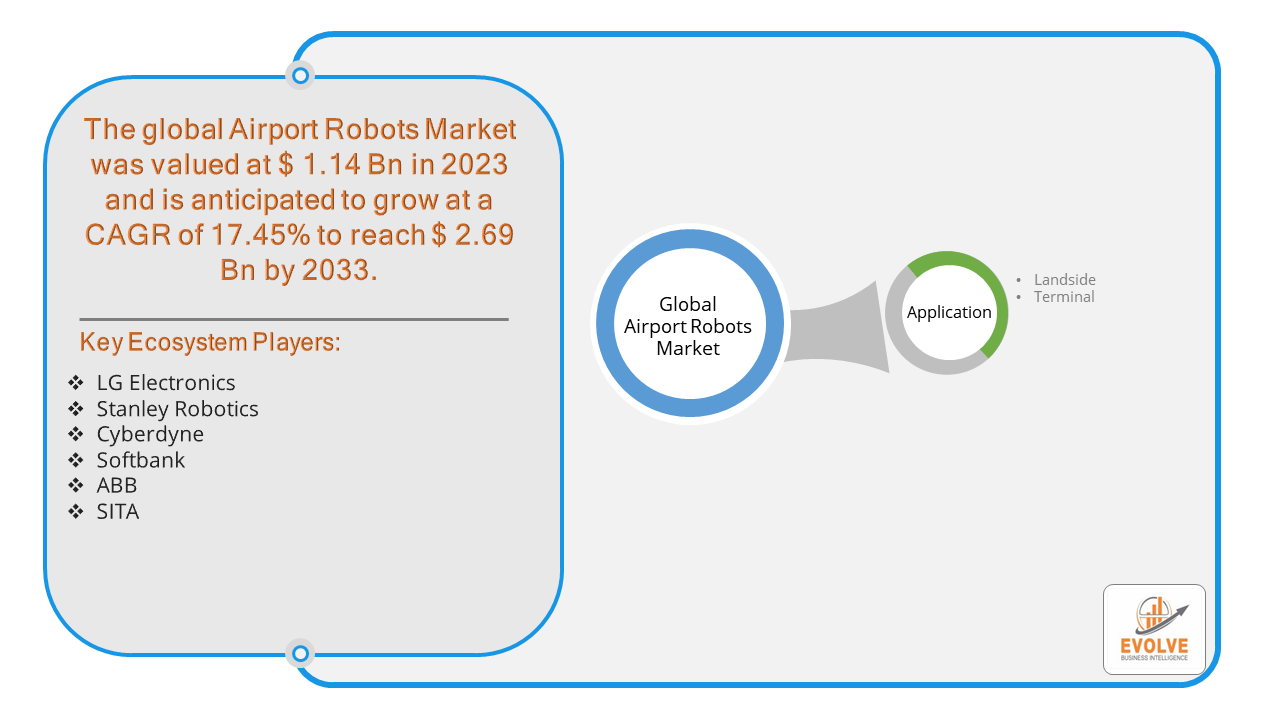
The Airport Robots Market Size is expected to reach USD 2.69 Billion by 2033. The Airport Robots industry size accounted for USD 1.14 Billion in 2023 and is expected to expand at a compound annual growth rate (CAGR) of 17.45% from 2023 to 2033. The airport robots market encompasses the development, deployment, and utilization of robotic systems designed to enhance operational efficiency, safety, and passenger experience in airports. These robots perform a variety of tasks, including luggage handling, security checks, cleaning, customer service, and navigation assistance. The market is driven by advancements in artificial intelligence, machine learning, and automation technologies, along with the increasing demand for contactless solutions and improved airport management. As airports seek to streamline operations and reduce human error, the adoption of robotic systems is expected to grow, contributing to the modernization of the aviation industry.
Global Airport Robots Market Synopsis
 COVID-19 Impact Analysis
The COVID-19 pandemic has led to supply chain disruptions leading to supply shortages or lower demand in the Airport Robots market. The travel restrictions and social-distancing measures have resulted in a sharp drop in consumer and business spending and this pattern is to continue for some time. The end-user trend and preferences have changed due to the pandemic and have resulted in manufacturers, developers, and service providers to adopt various strategies to stabilize the company.
Airport Robots Market Dynamics
The major factors that have impacted the growth of Airport Robots are as follows:
Drivers:
Ø rising airport security robots
As airport security robots become more prevalent, human labor is still necessary to handle the more sensitive applications, which drives up overall costs. On the other hand, the use of robots is improving efficacy and lowering security costs. Over the course of the projected period, this will further fuel the expansion of the global market for airport robots. Robotics is growing quickly because of how well it performs in security, housekeeping, and entertainment.
Restraint:
- high cost of production
The high cost of production airport robots is likely to hamper the growth of the airport robots market and can be considered as a major restraint of the global market.
Opportunity:
⮚ increasing adaptation of automation technologies
The adoption of automation technology, such as artificial intelligence, to handle airline reservations is expected to generate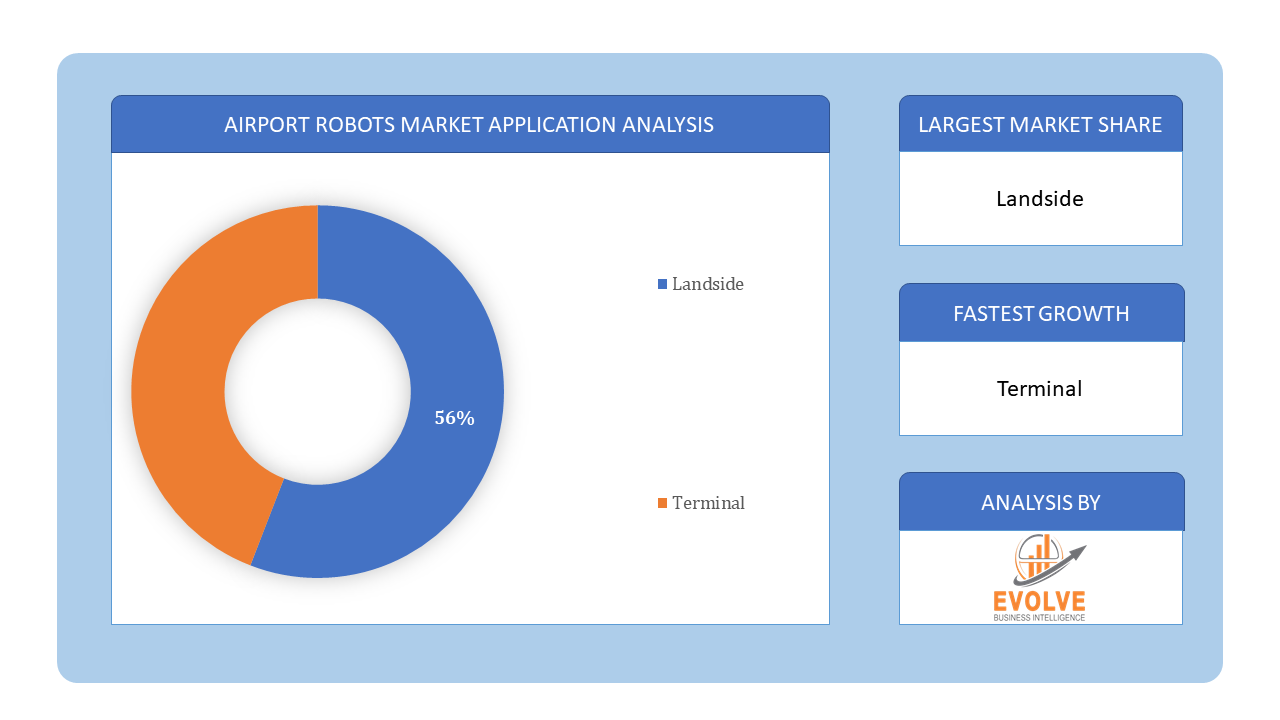 profitable prospects for the leading companies in the worldwide airport robots industry.
Airport Robots Segment Overview
By Application
Based on Applications, the market has been divided into the Landside and Terminal. In the airport robots market, the Terminal segment dominates, as these robots are extensively used for tasks such as customer service, security, and navigation assistance within passenger terminals, enhancing the overall passenger experience and operational efficiency.
Global Airport Robots Market Regional Analysis
Based on region, the global Airport Robots market has been divided into North America, Europe, Asia-Pacific, the Middle East & Africa, and Latin America. North America is projected to dominate the use of the Airport Robots market followed by the Asia-Pacific and Europe regions.
 Airport Robots North America Market
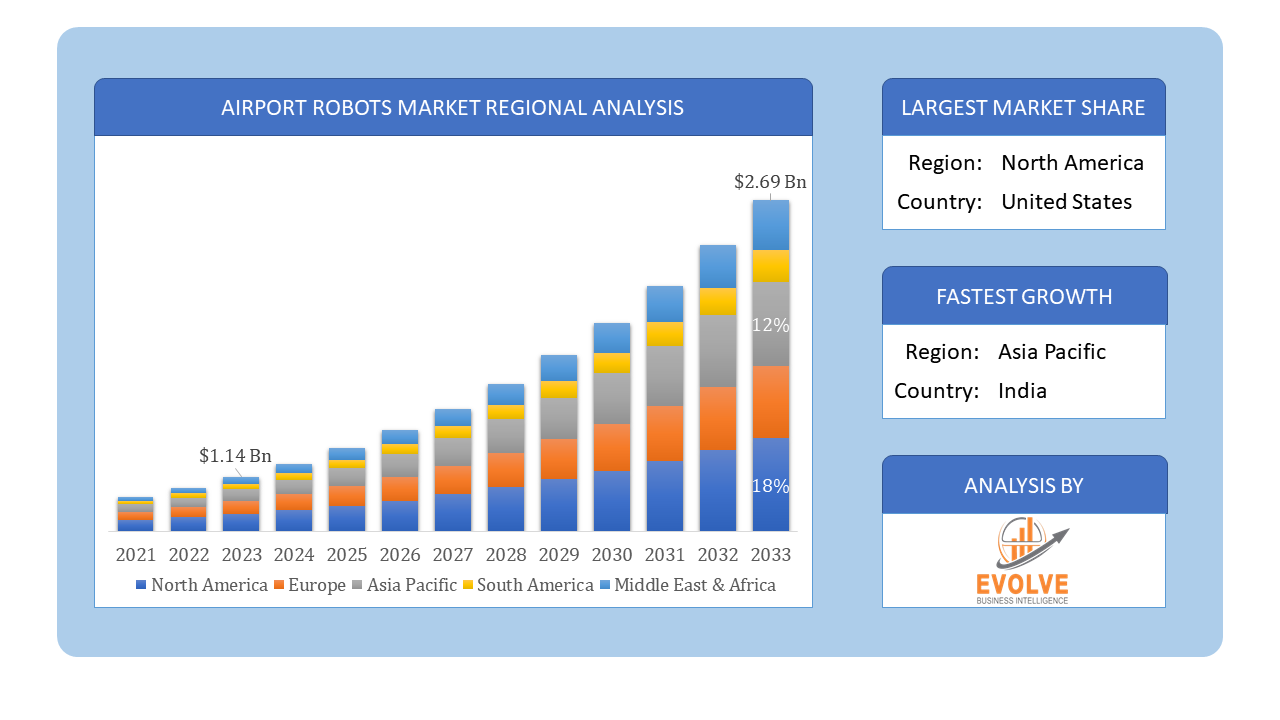
North America holds a dominant position in the Airport Robots Market. Due to the presence of major competitors in the market and the growing level of automation at airports, North America is predicted to lead the market for airport robots. Since North America is home to the world’s busiest airport, it is projected that government spending on safety measures would rise sharply. Because of its early adoption of airport automation technologies, the European region is anticipated to experience tremendous growth.
Airport Robots Asia-Pacific Market
The Asia-Pacific region has indeed emerged as the fastest-growing market for the Airport Robots industry. Because of the increasing adoption of automation technology at airports in nations like South Korea, Japan, and China, the Asia Pacific area is expected to show a high compound annual growth rate (CAGR) during the projected period. The Middle East and Africa region’s robot market is seeing growth because to increased defense spending by nations like Israel, Saudi Arabia, and the United Arab Emirates. Among the most popular travel destinations in the world are the United Arab Emirates and Saudi Arabia, which are fueling the expansion of the worldwide market in this region.
Competitive Landscape
The global Airport Robots market is highly competitive, with numerous players offering a wide range of software solutions. The competitive landscape is characterized by the presence of established companies, as well as emerging startups and niche players. To increase their market position and attract a wide consumer base, the businesses are employing various strategies, such as product launches, and strategic alliances.
Prominent Players:
- LG Electronics
- Stanley Robotics
- Cyberdyne
- Softbank
- ABB
- SITA
Key Development
Due to incorporated sensors, the robot may move alongside the passenger, reducing their burden. Robots may scan the bags’ radio-frequency identification tags and transmit the data to robots at the destination airport, simplifying luggage processing. Robots can effectively handle and greatly ease the passenger’s issues regarding luggage in this fashion.
Scope of the Report
Global Airport Robots Market, by Application
- Landside
- Terminal
Global Airport Robots Market, by Region
- North America
- US
- Canada
- Mexico
- Europe
- UK
- Germany
- France
- Italy
- Spain
- Benelux
- Nordic
- Rest of Europe
- Asia Pacific
- China
- Japan
- South Korea
- Indonesia
- Austalia
- Malaysia
- India
- Rest of Asia Pacific
- South America
- Brazil
- Argentina
- Rest of South America
- Middle East & Africa
- Saudi Arabia
- UAE
- Egypt
- South Africa
- Rest of Middle East & Africa
| Parameters | Indicators |
|---|---|
| Market Size | 2033: $2.69 Billion/strong> |
| CAGR | 17.45% CAGR (2023-2033) |
| Base year | 2022 |
| Forecast Period | 2023-2033 |
| Historical Data | 2021 |
| Report Coverage | Revenue Forecast, Competitive Landscape, Growth Factors, and Trends |
| Key Segmentations | Application |
| Geographies Covered | North America, Europe, Asia-Pacific, Latin America, Middle East, Africa |
| Key Vendors | LG Electronics, Stanley Robotics, Cyberdyne, Softbank, ABB, SITA |
| Key Market Opportunities | • The rise of e-commerce |
| Key Market Drivers | • Technological Advancements • Increasing Urbanization |
REPORT CONTENT BRIEF:
- High-level analysis of the current and future Airport Robots market trends and opportunities
- Detailed analysis of current market drivers, restraining factors, and opportunities in the future
- Airport Robots market historical market size for the year 2021, and forecast from 2023 to 2033
- Airport Robots market share analysis at each product level
- Competitor analysis with detailed insight into its product segment, Government & Defense strength, and strategies adopted.
- Identifies key strategies adopted including product launches and developments, mergers and acquisitions, joint ventures, collaborations, and partnerships as well as funding taken and investment done, among others.
- To identify and understand the various factors involved in the global Airport Robots market affected by the pandemic
- To provide a detailed insight into the major companies operating in the market. The profiling will include the Government & Defense health of the company’s past 2-3 years with segmental and regional revenue breakup, product offering, recent developments, SWOT analysis, and key strategies.
Press Release

Global Pharmaceutical Manufacturing Market to Reach $1.38 Trillion by 2035 with 7.35% CAGR, New Research Shows
The Global Mammography Market Is Estimated To Record a CAGR of Around 10.29% During The Forecast Period
Glue Stick Market to Reach USD 2.35 Billion by 2034
Podiatry Service Market to Reach USD 11.88 Billion by 2034
Microfluidics Technology Market to Reach USD 32.58 Billion by 2034
Ferric Chloride Market to Reach USD 10.65 Billion by 2034
Family Practice EMR Software Market to Reach USD 21.52 Billion by 2034
Electric Hairbrush Market to Reach USD 15.95 Billion by 2034
Daily Bamboo Products Market to Reach USD 143.52 Billion by 2034
Cross-border E-commerce Logistics Market to Reach USD 112.65 Billion by 2034


Frequently Asked Questions (FAQ)
2.What is the growth rate of the global Airport Robots market?
- The global Airport Robots market is growing at a CAGR of 17.45% over the next 10 years
3.Which region has the highest growth rate in the market of Airport Robots?
- Asia Pacific is expected to register the highest CAGR during 2023-2033
4.Which region has the largest share of the global Airport Robots market?
- North America holds the largest share in 2022
5.Who are the key players in the global Airport Robots market?
LG Electronics, Stanley Robotics, Cyberdyne, Softbank, ABB, SITA are the major companies operating in the market
6.Do you offer Post Sale Support?
- Yes, we offer 16 hours of analyst support to solve the queries
7.Do you sell particular sections of a report?
Yes, we provide regional as well as country-level reports. Other than this we also provide a sectional report. Please get in contact with our sales representatives
Table of Content
Chapter 1. Executive Summary Chapter 2. Scope Of The Study 2.1. Market Definition 2.2. Scope Of The Study 2.2.1. Objectives of Report 2.2.2. Limitations 2.3. Market Structure Chapter 3. Evolve BI Methodology Chapter 4. Market Insights and Trends 4.1. Supply/ Value Chain Analysis 4.1.1. Raw Applications Providers 4.1.2. Manufacturing Process 4.1.3. Distributors/Retailers 4.1.4. End-Use Industry 4.2. Porter’s Five Forces Analysis 4.2.1. Threat Of New Entrants 4.2.2. Bargaining Power Of Buyers 4.2.3. Bargaining Power Of Suppliers 4.2.4. Threat Of Substitutes 4.2.5. Industry Rivalry 4.3. Impact Of COVID-19 on the Airport Robots Market 4.3.1. Impact on Market Size 4.3.2. End-Use Industry Trend, Preferences, and Budget Impact 4.3.3. Regulatory Framework/Government Policies 4.3.4. Key Players' Strategy to Tackle Negative Impact 4.3.5. Opportunity Window 4.4. Technology Overview 12.28. Macro factor 4.6. Micro Factor 4.7. Demand Supply Gap Analysis of the Airport Robots Market 4.8. Import Analysis of the Airport Robots Market 4.9. Export Analysis of the Airport Robots Market Chapter 5. Market Dynamics 5.1. Introduction 5.2. DROC Analysis 5.2.1. Drivers 5.2.2. Restraints 5.2.3. Opportunities 5.2.4. Challenges 5.3. Patent Analysis 5.4. Industry Roadmap 5.5. Parent/Peer Market Analysis Chapter 6. Global Airport Robots Market, By Application 6.1. Introduction 6.2. Landside 6.3. Terminal Chapter 7. Global Airport Robots Market, By Region 7.1. Introduction 7.2. North America 7.2.1. Introduction 7.2.2. Driving Factors, Opportunity Analyzed, and Key Trends 7.2.3. Market Size and Forecast, By Country, 2023-2033 7.2.4. Market Size and Forecast, By Product Type, 2023-2033 7.2.5. Market Size and Forecast, By Application, 2023-2033 7.2.6. US 7.2.6.1. Introduction 7.2.6.2. Driving Factors, Opportunity Analyzed, and Key Trends 7.2.6.3. Market Size and Forecast, By Application, 2023-2033 7.2.7. Canada 7.2.7.1. Introduction 7.2.7.2. Driving Factors, Opportunity Analyzed, and Key Trends 7.2.7.3. Market Size and Forecast, By Application, 2023-2033 7.3. Europe 7.3.1. Introduction 7.3.2. Driving Factors, Opportunity Analyzed, and Key Trends 7.3.3. Market Size and Forecast, By Country, 2023-2033 7.3.4. Market Size and Forecast, By Application, 2023-2033 7.3.5. Germany 7.3.5.1. Introduction 7.3.5.2. Driving Factors, Opportunity Analyzed, and Key Trends 7.3.5.3. Market Size and Forecast, By Application, 2023-2033 7.3.6. France 7.3.6.1. Introduction 7.3.6.2. Driving Factors, Opportunity Analyzed, and Key Trends 7.3.6.3 Market Size and Forecast, By Application, 2023-2033 7.3.7. UK 7.3.7.1. Introduction 7.3.7.2. Driving Factors, Opportunity Analyzed, and Key Trends 7.3.7.3. Market Size and Forecast, By Application, 2023-2033 7.3.8. Italy 7.3.8.1. Introduction 7.3.8.2. Driving Factors, Opportunity Analyzed, and Key Trends 7.3.8.3. Market Size and Forecast, By Application, 2023-2033 7.3.9. Rest Of Europe 7.3.9.1. Introduction 7.3.9.2. Driving Factors, Opportunity Analyzed, and Key Trends 7.3.9.3. Market Size and Forecast, By Application, 2023-2033 7.4. Asia-Pacific 7.4.1. Introduction 7.4.2. Driving Factors, Opportunity Analyzed, and Key Trends 8.4.3. Market Size and Forecast, By Country, 2023-2033 7.4.4. Market Size and Forecast, By Application, 2023-2033 7.4.5. China 7.4.5.1. Introduction 7.4.5.2. Driving Factors, Opportunity Analyzed, and Key Trends 7.4.5.3. Market Size and Forecast, By Application, 2023-2033 7.4.6. India 7.4.6.1. Introduction 7.4.6.2. Driving Factors, Opportunity Analyzed, and Key Trends 7.4.6.3. Market Size and Forecast, By Application, 2023-2033 7.4.7. Japan 7.4.7.1. Introduction 7.4.7.2. Driving Factors, Opportunity Analyzed, and Key Trends 7.4.7.3. Market Size and Forecast, By Application, 2023-2033 7.4.8. South Korea 7.4.8.1. Introduction 7.4.8.2. Driving Factors, Opportunity Analyzed, and Key Trends 7.4.8.4. Market Size and Forecast, By Application, 2023-2033 7.4.9. Rest Of Asia-Pacific 7.4.9.1. Introduction 7.4.9.2. Driving Factors, Opportunity Analyzed, and Key Trends 7.4.9.3. Market Size and Forecast, By Application, 2023-2033 7.5. Rest Of The World (RoW) 7.5.1. Introduction 7.5.2. Driving Factors, Opportunity Analyzed, and Key Trends 7.5.3. Market Size and Forecast, By Application, 2023-2033 Chapter 8. Company Landscape 8.1. Introduction 8.2. Vendor Share Analysis 8.3. Key Development Analysis 8.4. Competitor Dashboard Chapter 9. Company Profiles 9.1. LG Electronics 9.1.1. Business Overview 9.1.2. Government & Defense Analysis 9.1.2.1. Government & Defense – Existing/Funding 9.1.3. Product Portfolio 9.1.4. Recent Development and Strategies Adopted 9.1.5. SWOT Analysis 9.2. Stanley Robotics 9.2.1. Business Overview 9.2.2. Government & Defense Analysis 9.2.2.1. Government & Defense – Existing/Funding 9.2.3. Product Portfolio 9.2.4. Recent Development and Strategies Adopted 9.2.5. SWOT Analysis 9.3. Cyberdyne 9.3.1. Business Overview 9.3.2. Government & Defense Analysis 9.3.2.1. Government & Defense – Existing/Funding 9.3.3. Product Portfolio 9.3.4. Recent Development and Strategies Adopted 9.3.5. SWOT Analysis 9.4. Softbank 9.4.1. Business Overview 9.4.2. Government & Defense Analysis 9.4.2.1. Government & Defense – Existing/Funding 9.4.3. Product Portfolio 9.4.4. Recent Development and Strategies Adopted 9.4.5. SWOT Analysis 9.5. ABB 9.5.1. Business Overview 9.5.2. Government & Defense Analysis 9.5.2.1. Government & Defense – Existing/Funding 9.5.3. Product Portfolio 9.5.4. Recent Development and Strategies Adopted 9.5.5. SWOT Analysis 9.6. SITA 9.6.1. Business Overview 9.6.2. Government & Defense Analysis 9.6.2.1. Government & Defense – Existing/Funding 9.6.3. Product Portfolio 9.6.4. Recent Development and Strategies Adopted 9.6.5. SWOT Analysis 9.7. Cargill Incorporated 9.7.1. Business Overview 9.7.2. Government & Defense Analysis 9.7.2.1. Government & Defense – Existing/Funding 9.7.3. Product Portfolio 9.7.4. Recent Development and Strategies Adopted 9.7.5. SWOT Analysis 9.8 Associated British Foods 9.8.1. Business Overview 9.8.2. Government & Defense Analysis 9.8.2.1. Government & Defense – Existing/Funding 9.8.3. Product Portfolio 9.8.4. Recent Development and Strategies Adopted 9.8.5. SWOT Analysis 9.9 The Kraft Heinz Company 9.9.1. Business Overview 9.9.2. Government & Defense Analysis 9.9.2.1. Government & Defense – Existing/Funding 9.9.3. Product Portfolio 9.9.4. Recent Development and Strategies Adopted 9.9.5. SWOT Analysis 9.10. JBS S.A. 9.10.1. Business Overview 9.10.2. Government & Defense Analysis 9.10.2.1. Government & Defense – Existing/Funding 9.10.3. Product Portfolio 9.10.4. Recent Development and Strategies Adopted 9.10.5. SWOT Analysis
Connect to Analyst
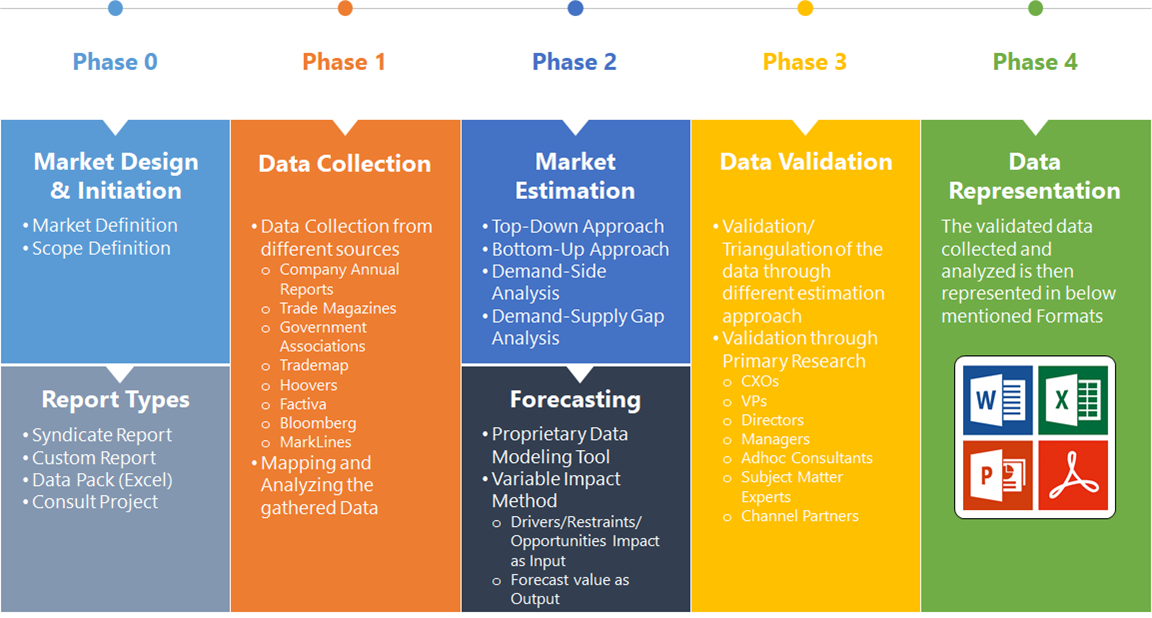
Research Methodology
Our Most Viewed Report and gain instant expertise

Aircraft Propeller Market Analysis and Global Forecast 2023-2033
Aircraft Propeller Market Research Report: Information By Aircraft Type (Military Aircraft, Civil & Commercial Aircraft), By Component (Blades, Hubs, Spinners, Others), By Propeller Type (Fixed Pitch Propeller, Varying Pitch Propeller), By End Use (Original Equipment Manufacturer, Aftermarket), and by Region — Forecast till 2033
Page: 179 Airport Information Systems Market Analysis and Global Forecast 2023-2033
Airport Information Systems Market Research Report: Information By System (Airport Operation Control Center, Departure Control System), By Application (Finance & Operations, Maintenance, Security, Others), By Airport (Class A Airports, Class B Airports, Class C Airports, Class D Airports), and by Region — Forecast till 2033
Page: 173 Hydrographic Survey Equipment Market Analysis and Global Forecast 2023-2033
Hydrographic Survey Equipment Market Research Report: By Platform (Surface Vehicles, UUVs & USVs, Aircraft), By Type (Sensing Systems, Positioning Systems, Subsea Sensors, Others), By Application (Charting Application, Offshore Oil & Gas Survey, Port & Harbor Management, Others), and by Region — Forecast till 2033
Page: 157