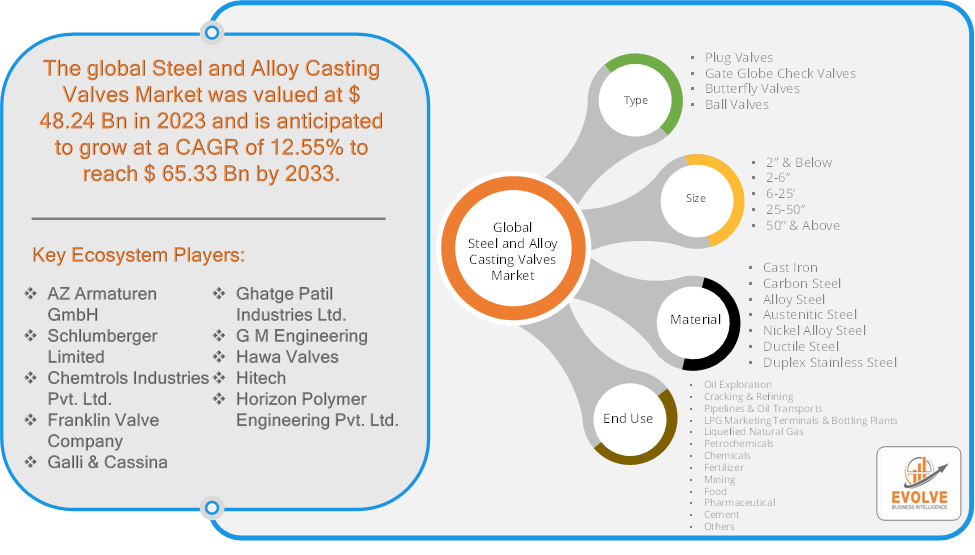
Steel and Alloy Casting Valves Market Soars: 12.55% CAGR

Evolve Business Intelligence has published a research report on the Global Steel and Alloy Casting Valves Market, 2023–2033. The global Steel and Alloy Casting Valves market is projected to exhibit a CAGR of around 12.55%during the forecast period of 2023 to 2033.

Evolve Business Intelligence has recognized the following companies as the key players in the global Steel and Alloy Casting Valves Market: AZ Armaturen GmbH, Schlumberger Limited, Chemtrols Industries Pvt. Ltd., Franklin Valve Company, Galli & Cassina, Ghatge Patil Industries Ltd., G M Engineering, Hawa Valves, Hitech, Horizon Polymer Engineering Pvt. Ltd.
Steel and Alloy Casting Valves MarketMore Information: https://evolvebi.com/report/steel-and-alloy-casting-valves-market-analysis/

Market Highlights

The Global Steel and Alloy Casting Valves market is projected to be valued at USD 65.33 Billion by 2033, recording a CAGR of around 12.55% during the forecast period. The Steel and Alloy Casting Valves Market focuses on the production and distribution of valves made from steel and various alloys, offering superior strength, durability, and resistance to extreme conditions. These valves are crucial for controlling the flow of liquids, gases, and slurries in industries such as oil and gas, power generation, chemical processing, and water treatment. Their high performance in high-pressure and high-temperature environments makes them indispensable in industrial applications where reliability and longevity are critical. The market is driven by increasing industrialization and the demand for robust, corrosion-resistant valves.

The COVID-19 pandemic has led to supply chain disruptions leading to supply shortages or lower demand in the Steel and Alloy Casting Valves market. The travel restrictions and social-distancing measures have resulted in a sharp drop in consumer and business spending and this pattern is to continue for some time. The end-user trend and preferences have changed due to the pandemic and have resulted in manufacturers, developers, and service providers to adopt various strategies to stabilize the company.

Segmental Analysis

The global Steel and Alloy Casting Valves market has been segmented based on Type, Size, Material, End Use

Based on the Type, the market is segmented based on Plug Valves, Gate Globe Check Valves, Butterfly Valves, Ball Valves. Ball Valves often dominate due to their reliable performance, ease of operation, and suitability for a wide range of applications, including high-pressure and high-temperature environments.

Based on Size, the market has been divided into 2” & Below, 2-6’’, 6-25’’, 25-50’’, 50’’ & Above. the 6-25’’ size segment typically dominates, as it caters to a broad range of industrial applications requiring mid-sized valves for various operational needs.

Based on the Material, the market has been divided into Cast Iron, Carbon Steel, Alloy Steel, Austenitic Steel, Nickel Alloy Steel, Ductile Steel, Duplex Stainless Steel. Carbon Steel often dominates due to its cost-effectiveness and versatile performance across a wide range of industrial applications, making it a preferred choice for many valve manufacturers.

Based on End Use, the market has been divided into Oil Exploration, Cracking & Refining, Pipelines & Oil Transports, LPG Marketing Terminals & Bottling Plants, Liquefied Natural Gas, Petrochemicals, Chemicals , Fertilizer, Mining, Food, Pharmaceutical, Cement, Others. the Oil Exploration segment often dominates due to its high demand for durable and reliable valves that can withstand harsh conditions in exploration and extraction processes. This sector’s need for robust equipment drives significant market share compared to other end-use segments.

More Information: https://evolvebi.com/report/steel-and-alloy-casting-valves-market-analysis/

Regional Analysis

The Steel and Alloy Casting Valves market is divided into five regions: North America, Europe, Asia-Pacific, South America, and the Middle East, &Africa. The North American region holds a dominant position in the Steel and Alloy Casting Valves market. In North America, the Steel and Alloy Casting Valves Market is driven by robust industrial activity, including oil and gas extraction, power generation, and chemical processing. The region’s focus on infrastructure upgrades, energy sector advancements, and stringent safety regulations boosts demand for high-quality valves. Additionally, North America’s emphasis on technological innovation and advanced manufacturing processes supports the growth of the market. The presence of major valve manufacturers and a well-established supply chain further strengthens the market in this region. The Asia-Pacific region is witnessing rapid growth and emerging as a significant market for the Steel and Alloy Casting Valves industry. In the Asia-Pacific region, the Steel and Alloy Casting Valves Market is propelled by rapid industrialization, infrastructure development, and growing energy needs. Countries like China and India drive demand through extensive investments in oil and gas exploration, power generation, and water treatment facilities. The region’s expanding manufacturing base and increasing urbanization also contribute to the market’s growth.
Emergency Medical Supplies Market Is Estimated To Record a CAGR of Around 6.14%

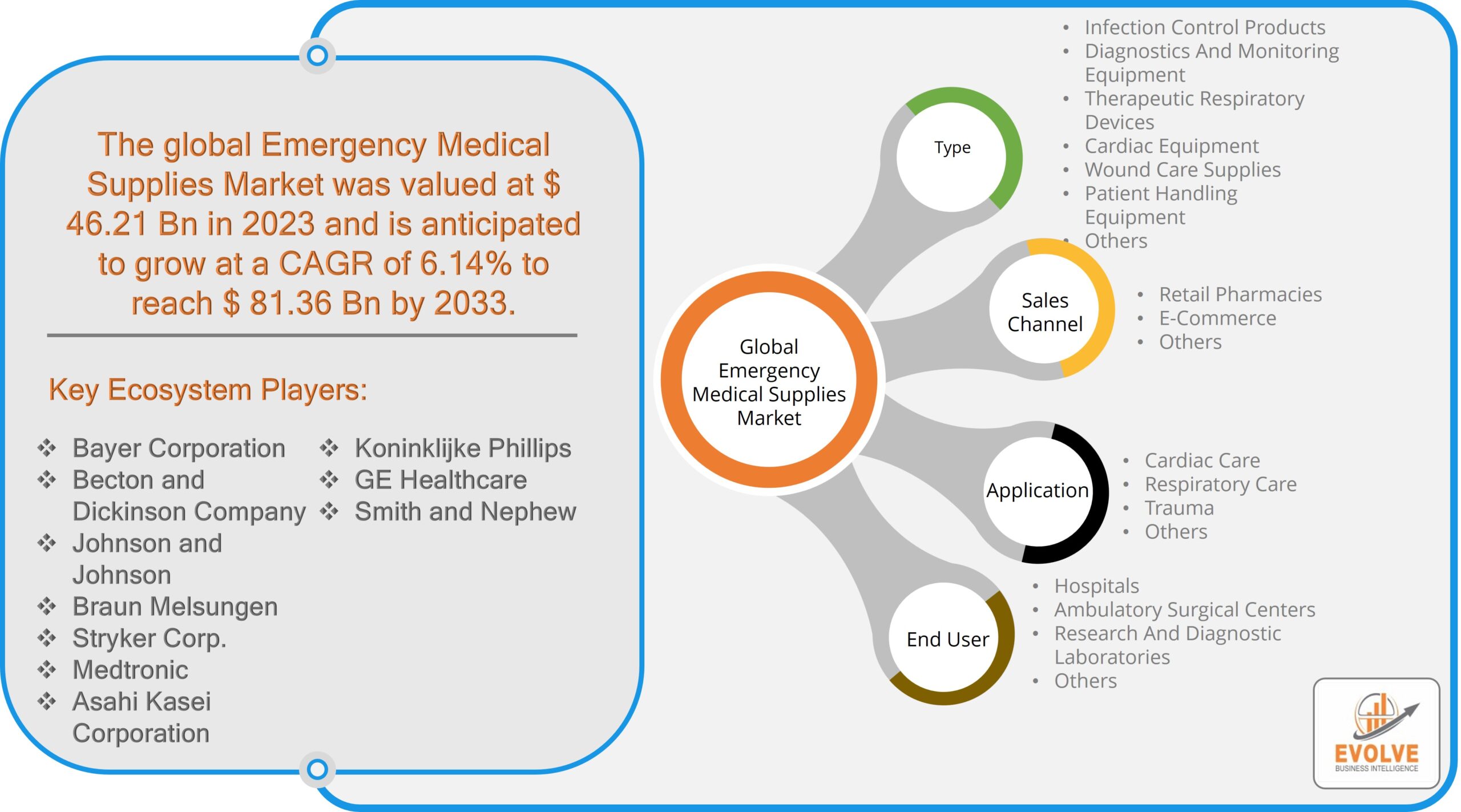
Evolve Business Intelligence has published a research report on the Global Emergency Medical Supplies Market, 2023–2033. The global Emergency Medical Supplies Market is projected to exhibit a CAGR of around 6.14% during the forecast period of 2023 to 2033.

Evolve Business Intelligence has recognized the following companies as the key players in the global Emergency Medical Supplies Market: Bayer Corporation, Becton and Dickinson Company, Johnson and Johnson, Braun Melsungen, Stryker Corp., Medtronic, Asahi Kasei Corporation, Koninklijke Phillips, GE Healthcare and Smith and Nephew.

Emergency Medical Supplies Market

For More Information: https://evolvebi.com/report/emergency-medical-supplies-market-analysis/

Emergency Medical Supplies Market Highlights

The Global Emergency Medical Supplies Market is projected to be valued at USD 81.36 Billion by 2033, recording a CAGR of around 6.14% during the forecast period. The Emergency Medical Supplies Market refers to the sector involved in the production, distribution, and sale of medical products and equipment designed for use in emergency situations. This market encompasses a wide range of supplies that are crucial for the immediate response and treatment of injuries and medical conditions during emergencies.

The market is driven by factors such as increasing awareness about emergency preparedness, rising incidences of accidents and natural disasters, and advancements in medical technology. It caters to various end-users including hospitals, ambulances, emergency response teams, and individual consumers.

The COVID-19 pandemic significantly impacted the Emergency Medical Supplies Market. There was a dramatic increase in demand for various emergency medical supplies, particularly personal protective equipment (PPE) like masks, gloves, gowns, and face shields. Hospitals, healthcare workers, and frontline responders needed these supplies in unprecedented quantities to manage the influx of COVID-19 patients and prevent the spread of the virus. The pandemic caused significant disruptions in global supply chains. Lockdowns, restrictions, and logistical challenges affected the production and distribution of emergency medical supplies. This led to shortages and delays in delivering essential items to where they were most needed. The high demand and limited supply resulted in price spikes for many medical supplies. This volatility impacted both procurement costs for healthcare facilities and affordability for consumers. The pandemic highlighted the importance of emergency preparedness and resilience in healthcare systems. As a result, there has been a heightened focus on building stockpiles, improving supply chain management, and investing in emergency medical infrastructure.

Segmental Analysis

The global Emergency Medical Supplies Market has been segmented based on Type, Application, End User and Sales Channel.

Based on Type, the Emergency Medical Supplies Market is segmented into Infection Control Products, Diagnostics And Monitoring Equipment, Therapeutic Respiratory Devices, Cardiac Equipment, Wound Care Supplies, Patient Handling Equipment and Others. The Therapeutic Respiratory Devices segment is anticipated to dominate the market.

Based on Application, the Emergency Medical Supplies Market is segmented into Cardiac Care, Respiratory Care, Trauma and Others. The Cardiac Care segment is anticipated to dominate the market.

Based on End User, the Emergency Medical Supplies Market is segmented into Hospitals, Ambulatory Surgical Centers, Research And Diagnostic Laboratories and Others. The Hospitals segment is anticipated to dominate the market.

Based on Sales Channel, the global Emergency Medical Supplies Market has been divided into Retail Pharmacies, E-Commerce and Others. The Retail Pharmacies segment is anticipated to dominate the market.

For More Information: https://evolvebi.com/report/emergency-medical-supplies-market-analysis/

Regional Analysis

The Emergency Medical Supplies Market is divided into five regions: North America, Europe, Asia-Pacific, South America, and the Middle East, & Africa.  In North America region, advanced healthcare infrastructure, high demand for cutting-edge medical technologies, and significant government and institutional investments. Growth in telemedicine, smart medical devices, and innovations in PPE. Strong focus on preparedness and resilience due to the high frequency of natural disasters and health emergencies. In Europe region, Demand for advanced emergency medical supplies, especially in response to health crises and natural disasters. Innovation in medical technology and PPE. In Asia-Pacific region, rapidly growing healthcare markets, increasing investment in healthcare infrastructure, and rising awareness of emergency preparedness. Expanding market due to increasing healthcare investments and population growth. Significant demand for affordable and accessible emergency medical supplies. In Latin America region, Developing healthcare infrastructure with varying levels of emergency preparedness. Increasing focus on improving healthcare services. Growing demand for emergency medical supplies driven by health emergencies and natural disasters. Potential for market expansion and investments in healthcare infrastructure. In Middle East and Africa region, diverse healthcare markets with varying levels of infrastructure development and emergency preparedness. Increased focus on improving healthcare services and emergency response capabilities.

COVID-19 Sample Collection Kits Market Is Estimated To Record a CAGR of Around 2.34%

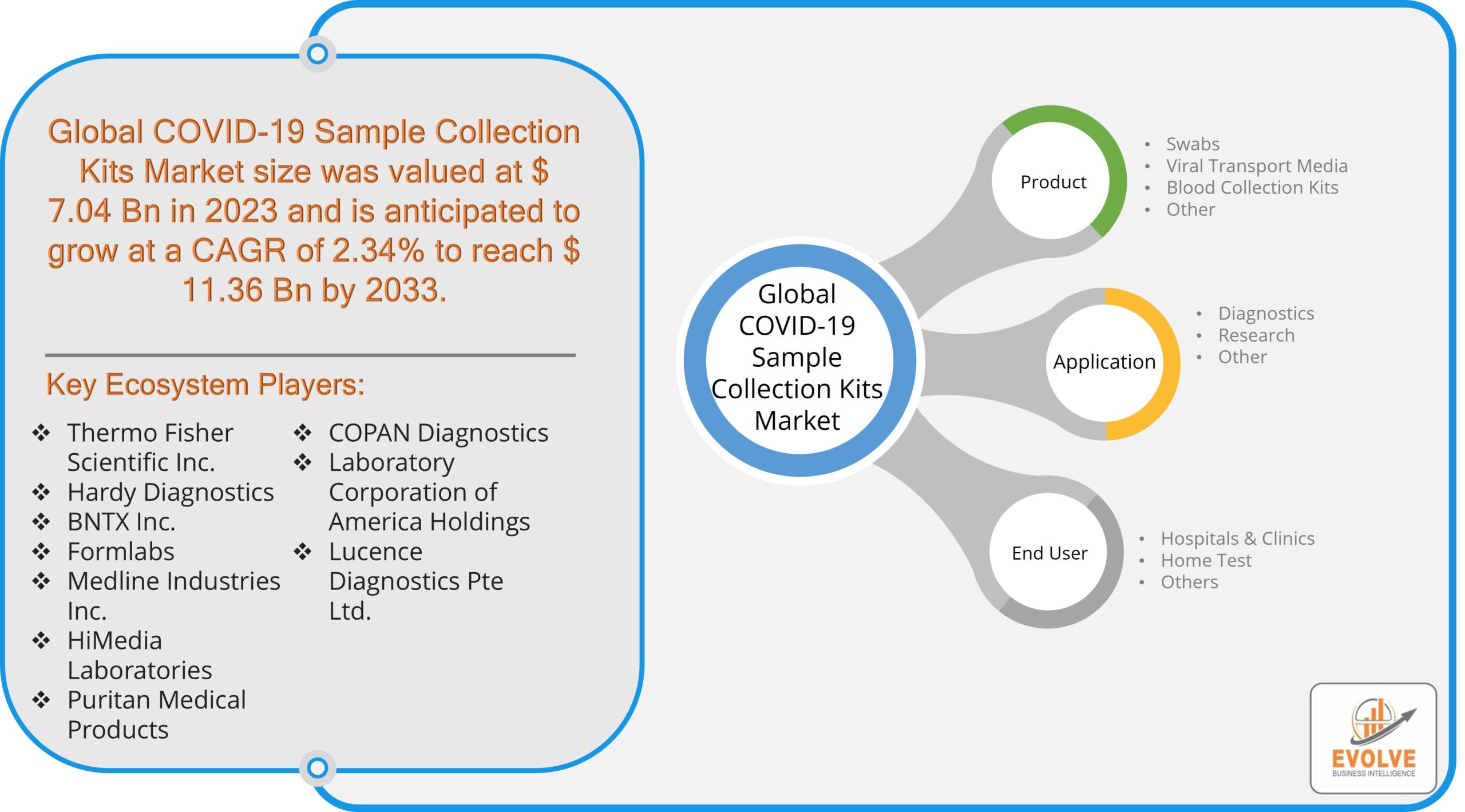
The global COVID-19 Sample Collection Kits Market is projected to exhibit a CAGR of around 2.34% during the forecast period of 2023 to 2033. Evolve Business Intelligence has published a research report on the Global COVID-19 Sample Collection Kits Market, 2023–2033. 

Evolve Business Intelligence has recognized the following companies as the key players in the global COVID-19 Sample Collection Kits Market: Thermo Fisher Scientific Inc., Hardy Diagnostics, BNTX Inc., Formlabs, Medline Industries Inc., HiMedia Laboratories, Puritan Medical Products, COPAN Diagnostics, Laboratory Corporation of America Holdings and Lucence Diagnostics Pte Ltd.

COVID-19 Sample Collection Kits Market

For More Information: https://evolvebi.com/report/covid-19-sample-collection-kits-market-analysis/

COVID-19 Sample Collection Kits Market Highlights

The Global COVID-19 Sample Collection Kits Market is projected to be valued at USD 11.36 Billion by 2033, recording a CAGR of around 2.34% during the forecast period. The COVID-19 Sample Collection Kits Market refers to the segment of the healthcare and medical supplies industry that focuses on the production, distribution, and sales of kits used to collect biological samples for COVID-19 testing. These kits are essential for diagnosing and managing the spread of COVID-19 and typically include swabs, vials, transport media, and other necessary components for safely collecting and transporting samples, such as nasal or throat swabs, saliva, or blood, to testing laboratories.

The COVID-19 Sample Collection Kits Market has been critical in the global response to the pandemic, facilitating widespread testing and helping to inform public health decisions.

The COVID-19 pandemic had a significant impact on the COVID-19 Sample Collection Kits Market. The pandemic created an unprecedented demand for COVID-19 testing, leading to a substantial increase in the production and distribution of sample collection kits. The pandemic drove the globalization of the sample collection kits market, with kits being distributed to both developed and developing regions. International collaborations and partnerships were formed to enhance the production capacity and distribution network. The initial phases of the pandemic saw disruptions in supply chains due to lockdowns and restrictions, affecting the availability of raw materials and components. The rapid scale-up of production and distribution posed logistical challenges, including transportation bottlenecks and regulatory hurdles. Innovations in packaging and storage solutions were developed to ensure the safe and effective transport of kits. Integration of digital technologies to streamline the testing process, such as automated sample processing and digital tracking systems, became more prevalent. The high demand for testing kits led to significant revenue growth for companies in this market. Rapid regulatory approvals were necessary to expedite the availability of testing kits, leading to streamlined processes for emergency use authorizations.

Segmental Analysis

The global COVID-19 Sample Collection Kits Market has been segmented based on Product Type, Application and End User.

Based on Product Type, the COVID-19 Sample Collection Kits Market is segmented into Swabs, Viral Transport Media, Blood Collection Kits and Other. The Swabs segment is anticipated to dominate the market.

Based on Application, the COVID-19 Sample Collection Kits Market is segmented into Diagnostics, Research and Other. The Diagnostics segment is anticipated to dominate the market.

Based on End User, the global COVID-19 Sample Collection Kits Market has been divided into Hospitals & Clinics, Home Test and Others. The Hospitals & Clinics segment is anticipated to dominate the market.

For More Information: https://evolvebi.com/report/covid-19-sample-collection-kits-market-analysis/

Regional Analysis

The COVID-19 Sample Collection Kits Market is divided into five regions: North America, Europe, Asia-Pacific, South America, and the Middle East, & Africa. North America has seen significant demand for COVID-19 sample collection kits due to widespread testing initiatives and government funding. The region has a robust healthcare infrastructure and a proactive approach to testing. The presence of major biotechnology and pharmaceutical companies in the U.S. has led to rapid innovation and development of advanced testing kits. European countries implemented extensive testing programs, supported by government initiatives and funding to control the spread of COVID-19. The European Union’s harmonized regulatory framework has facilitated the rapid approval and distribution of testing kits across member states. Asia-Pacific has experienced rapid growth in the sample collection kits market due to large population sizes and high testing needs. Many countries in this region have boosted local manufacturing capabilities to meet domestic demand and reduce dependency on imports. Latin America has been working on expanding healthcare infrastructure to support widespread testing and improve access to sample collection kits. The region faces challenges such as economic constraints and supply chain issues, but there is significant growth potential as governments prioritize testing and healthcare investments. In the Middle East, government initiatives and funding have driven the market for COVID-19 testing kits, particularly in Gulf countries with strong healthcare systems. In Africa, the market is developing, with efforts to improve testing capacity and access to sample collection kits through international collaborations and aid.

Audio Codec Market: 3.45% CAGR Expected

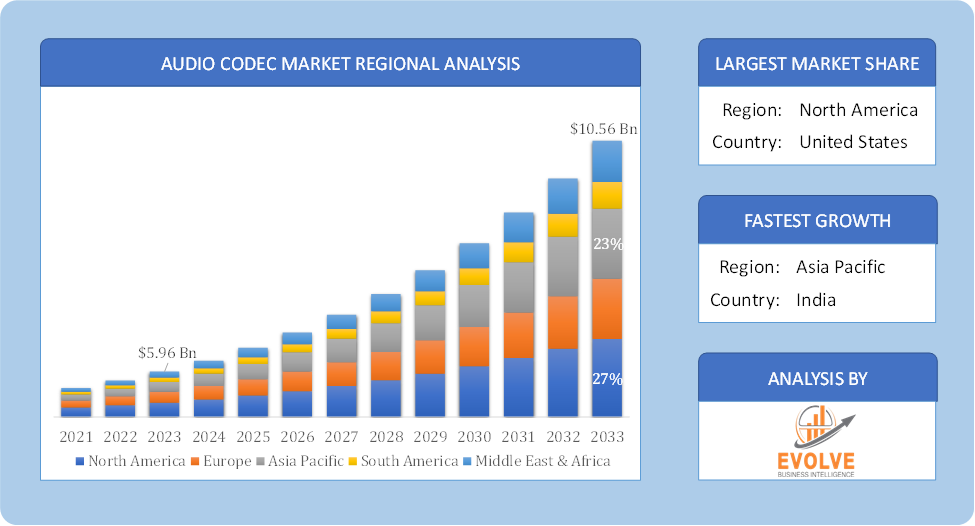
Evolve Business Intelligence has published a research report on the Global Audio Codec Market, 2023–2033. The global Audio Codec Market is projected to exhibit a CAGR of around 3.45% during the forecast period of 2023 to 2033.

Evolve Business Intelligence has recognized the following companies as the key players in the global Audio Codec Market: Analog Devices, Cirrus Logic, Maxim Integrated, Qualcomm, Realtek Semiconductor, STMicroelectronics, Texas Instruments, DSP Group, Dolby Laboratories and Technicolor.

More Information: https://evolvebi.com/report/audio-codec-market-analysis/

Market Highlights

The Global Audio Codec Market is projected to be valued at USD 10.56 Billion by 2033, recording a CAGR of around 3.45% during the forecast period. The Audio Codec Market refers to the global market for devices and software that encode or decode audio signals. An audio codec (compressor-decompressor) is used to compress digital audio data to reduce file size and bandwidth usage while maintaining audio quality and to decompress the audio for playback or further processing. The market encompasses various types of codecs used in applications such as smartphones, tablets, computers, home entertainment systems, automotive audio systems, and other consumer electronics.

The audio codec market is a growing market, driven by the increasing demand for digital audio. This demand is being fueled by the popularity of streaming services, such as Spotify and Apple Music, as well as the growing use of mobile devices for listening to music and watching videos.

The COVID-19 pandemic had a significant impact on the Audio Codec Market. With lockdowns and social distancing measures in place, there was a surge in demand for consumer electronics such as smartphones, tablets, laptops, and home entertainment systems. This, in turn, increased the demand for audio codecs, as these devices rely on high-quality audio processing. The shift to remote work and the rise in online communication platforms (e.g., Zoom, Microsoft Teams) led to increased demand for audio codecs that support clear and reliable audio transmission. This trend boosted the market for both hardware and software audio codecs used in communication devices and applications. The pandemic caused significant disruptions in global supply chains, affecting the production and distribution of electronic components, including audio codecs. Manufacturing slowdowns, transportation restrictions, and shortages of raw materials led to delays and increased costs in the supply chain. With people spending more time at home, there was a notable increase in the consumption of digital media and streaming services. This trend drove the demand for audio codecs that support high-quality audio streaming, enhancing the user experience in music, movies, and online content.

Segmental Analysis

The global Audio Codec Market has been segmented based on Component Type and Application.

Based on Component Type, the Audio Codec Market is segmented into Hardware and Software. The Hardware segment is anticipated to dominate the market.

Based on Application, the global Audio Codec Market has been divided into the Desktop and Laptop, Mobile Phone and Tablet, Television and Gaming Console and Automotive Infotainment. The Desktop and Laptop segment is anticipated to dominate the market.

More Information: https://evolvebi.com/report/audio-codec-market-analysis/

Regional Analysis

The Audio Codec Market is divided into five regions: North America, Europe, Asia-Pacific, South America, and the Middle East, & Africa. North America is a significant market for audio codecs due to the high adoption rate of advanced technologies and consumer electronics. The presence of major tech companies, high consumer spending on electronics, and the widespread use of streaming services drive the market. Growth in remote work and telehealth services has boosted the need for high-quality audio solutions. Europe has a mature market with a strong presence of automotive, consumer electronics, and professional audio industries. Increasing focus on sustainable and energy-efficient technologies in line with EU regulations. Asia-Pacific is the fastest-growing region due to rapid industrialization, urbanization, and increasing disposable incomes. Strong growth in IoT devices and smart home applications, along with expanding 5G networks. Latin America region is emerging market with growing adoption of digital technologies and consumer electronics. Increasing internet penetration, rising popularity of streaming services, and growing middle-class population. Middle East & Africa region is developing market with potential for growth driven by technological adoption and infrastructure development. Increasing smartphone penetration, growth in digital media consumption, and rising demand for automotive infotainment systems.

Smart Buildings Market Is Estimated To Record a CAGR of Around 29.47%

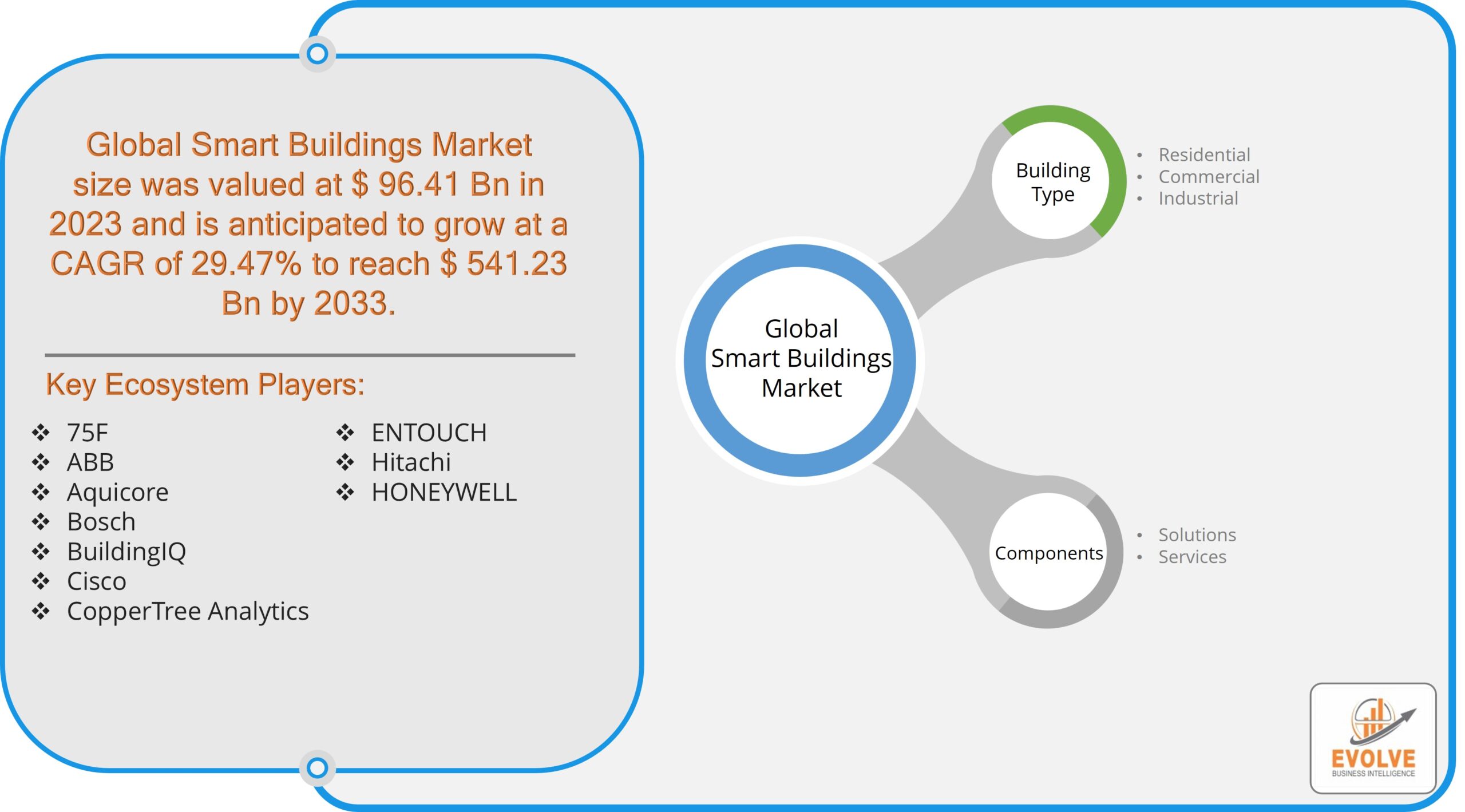
Evolve Business Intelligence has published a research report on the Global Smart Buildings Market, 2023–2033. The global Smart Buildings market is projected to exhibit a CAGR of around 29.47%during the forecast period of 2023 to 2033.

Evolve Business Intelligence has recognized the following companies as the key players in the global Smart Buildings Market: 75F, ABB, Aquicore, Bosch, BuildingIQ, Cisco, CopperTree Analytics, ENTOUCH, Hitachi, HONEYWELL.

Smart Buildings Market

For More Information: https://evolvebi.com/report/smart-buildings-market-analysis/

Smart Buildings Market Highlights

The Global Smart Buildings market is projected to be valued at USD 541.23 Billion by 2033, recording a CAGR of around 29.47% during the forecast period. The smart buildings market refers to the sector focused on the development and integration of advanced technologies within building infrastructures to enhance their efficiency, sustainability, and functionality. Smart buildings leverage IoT devices, automation systems, and data analytics to optimize energy usage, improve security, and enhance the comfort and productivity of occupants. Key components include smart lighting, HVAC systems, energy management systems, and advanced building management software. The market is driven by increasing urbanization, the need for energy efficiency, and the growing emphasis on sustainable development practices.

The COVID-19 pandemic has led to supply chain disruptions leading to supply shortages or lower demand in the Smart Buildings market. The travel restrictions and social-distancing measures have resulted in a sharp drop in consumer and business spending and this pattern is to continue for some time. The end-user trend and preferences have changed due to the pandemic and have resulted in manufacturers, developers, and service providers adopting various strategies to stabilize the company.

Segmental Analysis

The global Smart Buildings market has been segmented based on Building Type, Component

Based on Building Type, the market is segmented based on Residential, Commercial, Industrial. the Commercial segment typically dominates. This is driven by the widespread adoption of smart technologies in office buildings, retail spaces, and hospitality sectors, where efficiency, sustainability, and enhanced occupant experience are crucial.

Based on Components, the market has been divided into Solutions and Services. These encompass hardware and software technologies such as IoT devices, building management systems, and energy management platforms. Services, which include consulting, integration, and maintenance, complement these solutions to ensure optimal performance and integration within building infrastructures.

For More Information: https://evolvebi.com/report/smart-buildings-market-analysis/

Regional Analysis

The Smart Buildings market is divided into five regions: North America, Europe, Asia-Pacific, South America, and the Middle East, &Africa. North America holds a dominant position in the Smart Buildings Market. America is made up of the US, Canada, and Mexico. In the area, smart building technologies are being adopted and deployed more regularly. A significant amount of the market share in North America can be attributed to the high number of early adopters in the US and Canada. The area is expected to lead the global market during the course of the forecast due to its developed infrastructure, which can support smart automation solutions in both the residential and commercial segments. The Asia-Pacific region has indeed emerged as the fastest-growing market for the Smart Buildings industry. The companies operating in the Asia Pacific market additionally hope to enhance smart building services by developing IoT-enabled building management systems across the region. Japan, China, and India are key participants in the advancement of regional technology.


The Product Information Management Market Is Estimated To Record a CAGR of Around 19.14%

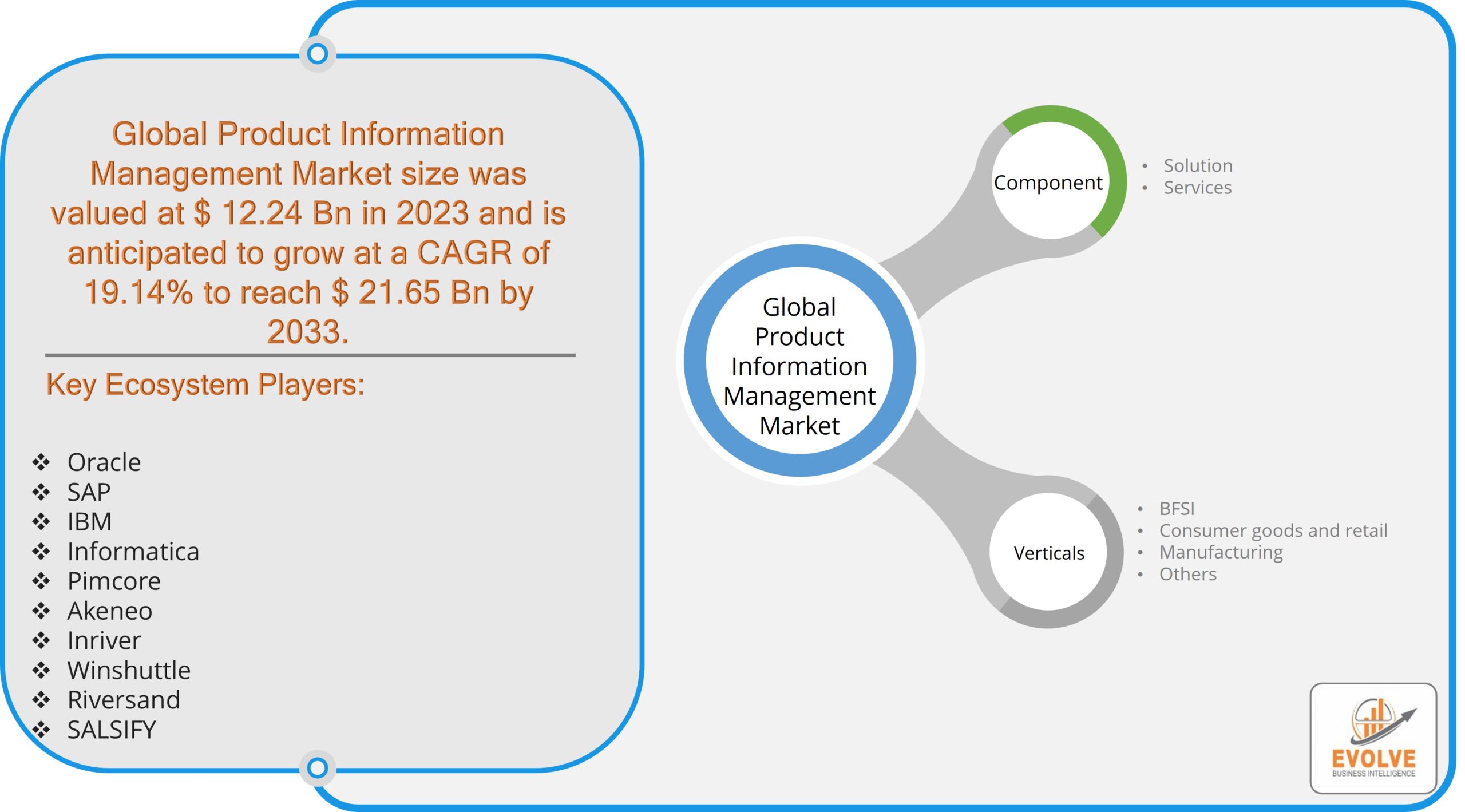
Evolve Business Intelligence has published a research report on the Global Product Information Management Market, 2023–2033. The global Product Information Management market is projected to exhibit a CAGR of around 19.14%during the forecast period of 2023 to 2033.

Evolve Business Intelligence has recognized the following companies as the key players in the global Product Information Management Market: Oracle, SAP, IBM, Informatica, Pimcore, Akeneo, Inriver, Winshuttle, Riversand, SALSIFY

Product Information Management Market

For More Information: https://evolvebi.com/report/product-information-management-market-analysis/

Product Information Management Market Highlights

The Global Product Information Management market is projected to be valued at USD 21.65 Billion by 2033, recording a CAGR of around 19.14% during the forecast period. The Product Information Management (PIM) market focuses on systems and processes that manage all the information required to market and sell products through distribution channels. PIM solutions centralize and manage product data, ensuring accuracy, consistency, and up-to-date information across multiple channels. These systems are crucial for businesses with extensive product catalogs, helping streamline product management, improve data quality, and enhance customer experiences. PIM supports various functions including data collection, data enrichment, catalog management, and data distribution. The market is driven by the growing need for efficient product data management and the increasing complexity of product information across various industries

The COVID-19 pandemic has led to supply chain disruptions leading to supply shortages or lower demand in the Product Information Management market. The travel restrictions and social-distancing measures have resulted in a sharp drop in consumer and business spending and this pattern is to continue for some time. The end-user trend and preferences have changed due to the pandemic and have resulted in manufacturers, developers, and service providers to adopt various strategies to stabilize the company.

Segmental Analysis

The global Product Information Management market has been segmented based on Component, Verticals

Based on Component, the market is segmented based on Solution, Services. the Solution segment dominates. This is due to the critical need for robust PIM software solutions that centralize and manage comprehensive product data, ensuring accuracy and consistency across multiple distribution channels.

Based on Verticalss, the market has been divided into the BFSI, Consumer goods and retail, Manufacturing, Others. the Consumer Goods and Retail sector dominates the Product Information Management (PIM) market. This dominance is driven by the sector’s high demand for accurate and consistent product data across multiple channels to enhance customer experience and support extensive product catalogs.

For More Information: https://evolvebi.com/report/product-information-management-market-analysis/

Regional Analysis

The Product Information Management market is divided into five regions: North America, Europe, Asia-Pacific, South America, and the Middle East, &Africa. North America holds a dominant position in the Product Information Management Market. Due to rising e-commerce traffic and the growing adoption of this solution in the retail and e-commerce industries, which boosts e-commerce sales in North American nations like the United States and Canada, the North American PIM market area is expected to lead this market. Furthermore, the increasing quantity of fitness centers and health clubs opening will fuel market expansion in this area. The Asia-Pacific region has indeed emerged as the fastest-growing market for the Product Information Management industry. From 2023 to 2032, the Asia-Pacific Production Information Management (PIM) Market is anticipated to develop at the quickest compound annual growth rate (CAGR). This is a result of the rise in online commerce and the usage of high-speed broadband and the internet by additional countries in the region. In the e-commerce industry, this software is highly needed because to the growing number of foreign e-commerce companies operating in China and India, such as Amazon, Alibaba, Flipkart, Snapdeal, and many more.

Electrolyzer Market Is Estimated To Grow a CAGR of Around 27.41%

Evolve Business Intelligence has published a research report on the Global Electrolyzer Market, 2023–2033. The global Electrolyzer market is projected to exhibit a CAGR of around 27.41%during the forecast period of 2023 to 2033.

Evolve Business Intelligence has recognized the following companies as the key players in the global Electrolyzer Market: Nel, Proton Onsite, Siemens, Toshiba Energy Systems & Solutions Corporation, Air Liquide, Plug Power Inc., McPhy Energy, ITM Power, Idroenergy, HYDROGENICS CORPORATION

Electrolyzer Market

For More Information: https://evolvebi.com/report/electrolyzer-market-analysis/

Electrolyzer Market Highlights

The Global Electrolyzer market is projected to be valued at USD 274.36 Billion by 2033, recording a CAGR of around 27.41% during the forecast period. Electrolyzer refers to food products that have been preserved through the process of freezing, wherein the food is subjected to extremely low temperatures, typically below 0 degrees Celsius (32 degrees Fahrenheit), to maintain its quality, nutritional value, and sensory attributes for an extended period. This preservation technique inhibits the growth of microorganisms and enzymatic activity, thereby slowing down the deterioration of the food. Electrolyzer encompasses a wide range of products, including raw ingredients, pre-cooked meals, snacks, desserts, and fully prepared dishes, which are typically packaged in airtight containers or bags to prevent freezer burn and maintain product integrity. The Electrolyzer industry is characterized by its convenience, extended shelf life, and diverse product offerings catering to consumer preferences and needs.

The COVID-19 pandemic has led to supply chain disruptions leading to supply shortages or lower demand in the Electrolyzer market. The travel restrictions and social-distancing measures have resulted in a sharp drop in consumer and business spending and this pattern is to continue for some time. The end-user trend and preferences have changed due to the pandemic and have resulted in manufacturers, developers, and service providers adopting various strategies to stabilize the company.

Segmental Analysis

The global Electrolyzer market has been segmented based on Product Type, Application

Based on Product Type, the market is segmented based on Alkaline Electrolyzer, PEM Electrolyzer, Solid Oxide Electrolyzer, Others. The PEM (Proton Exchange Membrane) electrolyzer segment dominates the electrolyzer market. PEM electrolyzers are preferred for their efficiency, scalability, and suitability for intermittent renewable energy sources, making them ideal for various applications including transportation and industry feedstock.

Based on Applications, the market has been divided into the Power Generation, Transportation, Industry Energy, Industry Feedstock, Building Heat & Power, Others. the “Industry Feedstock” segment dominates. This segment includes applications where hydrogen serves as a crucial feedstock in industrial processes such as chemical manufacturing and refining, driving significant demand for electrolyzers

For More Information: https://evolvebi.com/report/electrolyzer-market-analysis/

Regional Analysis

The Electrolyzer market is divided into five regions: North America, Europe, Asia-Pacific, South America, and the Middle East, &Africa. North America holds a dominant position in the Electrolyzer Market. Electrolyzer’s main market, North America, has emerged due to demand from a variety of industry applications. Hydrogen is widely used in the region’s thriving power sector, which generates significant income. With over 59% of all renewable energy consumed in the US in 2021, the electric power industry was a major player in the country’s renewable energy scene. The Asia-Pacific region has indeed emerged as the fastest-growing market for the Electrolyzer industry. According to forecasts, the Asia-Pacific Electrolyzers Market would expand at the quickest rate of growth between 2023 and 2032. Asia-Pacific governments are realizing more and more how crucial hydrogen and electrolysis technology are to meeting sustainable energy targets and cutting carbon emissions. Numerous nations in the area are initiating programs, providing incentives, and funding the construction of hydrogen infrastructure in order to assist these efforts. The Electrolyzers Market is expanding thanks in part to these initiatives spearheaded by the government.


The Blockchain in Energy Market Is Estimated To Record a CAGR of Around 78.24%

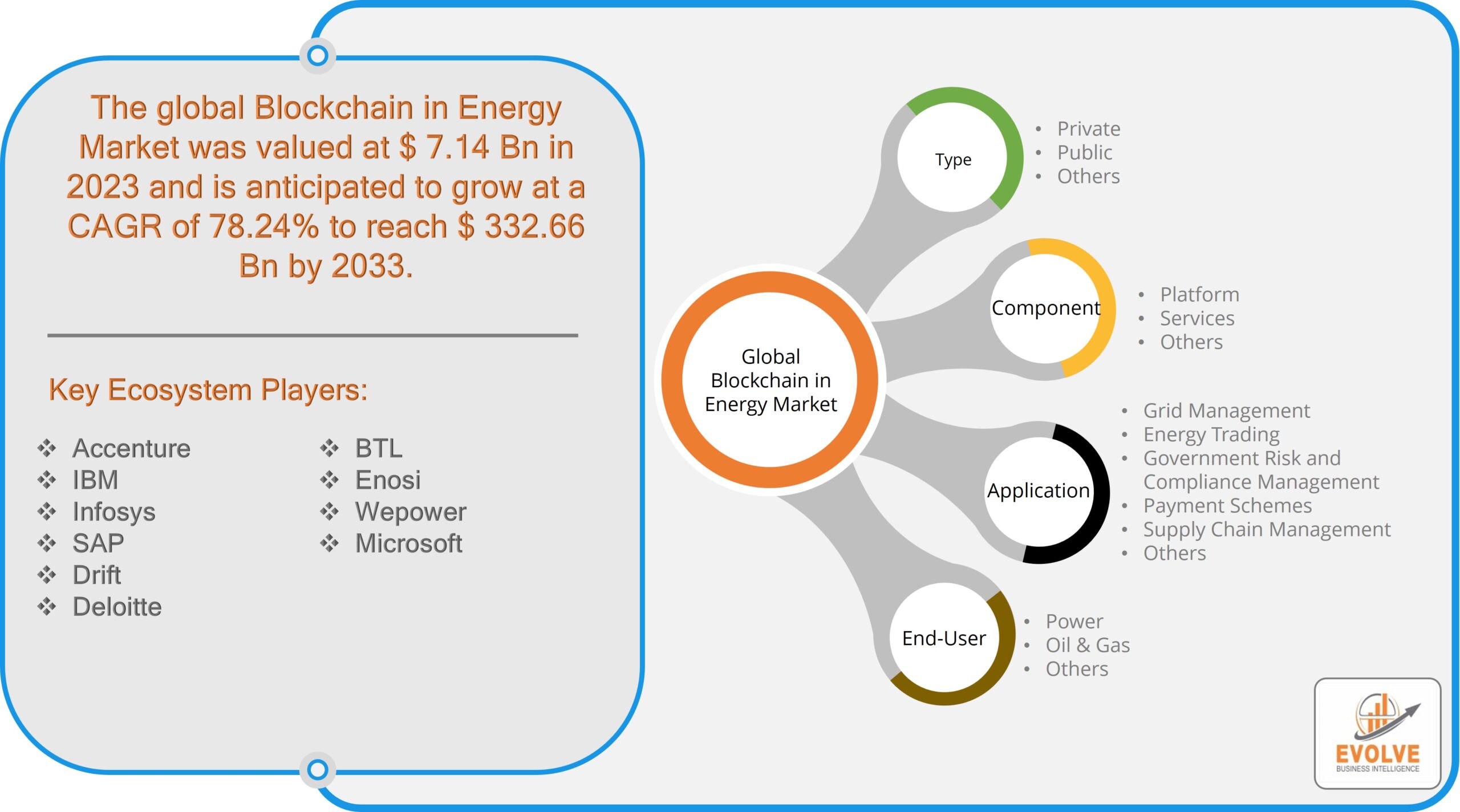
Evolve Business Intelligence has published a research report on the Global Blockchain in Energy Market, 2023–2033. The global Blockchain in Energy market is projected to exhibit a CAGR of around 78.24%during the forecast period of 2023 to 2033.

Evolve Business Intelligence has recognized the following companies as the key players in the global Blockchain in Energy Market: Accenture, IBM, Infosys, SAP, Drift, Deloitte, BTL, Enosi, Wepower, Microsoft

Blockchain in Energy Market

For More Information: https://evolvebi.com/report/blockchain-in-energy-market-analysis/

Blockchain in Energy Market Highlights

The Global Blockchain in Energy market is projected to be valued at USD 332.66 Billion by 2033, recording a CAGR of around 78.24% during the forecast period. The Smart Buildings market encompasses buildings equipped with advanced technologies and integrated systems to optimize operations, enhance energy efficiency, and improve occupant comfort and safety. These buildings utilize IoT (Internet of Things), AI (Artificial Intelligence), and automation solutions to monitor and control various systems such as HVAC, lighting, security, and more. Key benefits include reduced energy consumption, lower operating costs, and increased sustainability. The market is driven by increasing urbanization, regulatory mandates for energy efficiency, and growing awareness of environmental impacts.

The COVID-19 pandemic has led to supply chain disruptions leading to supply shortages or lower demand in the Blockchain in Energy market. The travel restrictions and social-distancing measures have resulted in a sharp drop in consumer and business spending and this pattern is to continue for some time. The end-user trend and preferences have changed due to the pandemic and have resulted in manufacturers, developers, and service providers adopting various strategies to stabilize the company.

Segmental Analysis

The global Blockchain in Energy market has been segmented based on Type, Component, Application, End-User

Based on the Type, the market is segmented based on Private, Public, Others. the “Private” sector generally dominates the type segment. Private entities, including commercial real estate developers, corporate offices, and residential buildings, lead in adopting smart building technologies to enhance operational efficiency, sustainability, and occupant comfort.

Based on Component, the market has been divided into Platform, Services, Others. Services” typically dominate the component segment. These services include installation, maintenance, consulting, and managed services related to smart building technologies.

Based on the Application, the market has been divided into Grid Management, Energy Trading, Government Risk And Compliance Management, Payment Schemes, Supply Chain Management, Others. Energy Trading” typically dominates. This segment involves the buying and selling of electricity or other forms of energy, facilitated by smart building technologies that optimize energy usage, storage, and distribution, thereby enhancing efficiency and cost-effectiveness within the energy sector.

Based on End-User, the market has been divided into Power, Oil & Gas, Others. the “Others” category typically dominates among end-users, encompassing a diverse range of sectors including commercial real estate, healthcare facilities, educational institutions, and government buildings.

For More Information: https://evolvebi.com/report/blockchain-in-energy-market-analysis/

Regional Analysis

The Blockchain in Energy market is divided into five regions: North America, Europe, Asia-Pacific, South America, and the Middle East, &Africa. The North American region holds a dominant position in the Blockchain in Energy market. North America is a leading region in the smart buildings market, characterized by robust adoption of advanced technologies and stringent regulations promoting energy efficiency and sustainability. Major cities like New York, San Francisco, and Toronto are hubs for smart building innovation, driven by the demand for optimized building management, enhanced occupant experience, and cost savings. Key players in the region focus on IoT integration, AI-driven analytics, and smart energy management solutions to cater to diverse sectors including commercial, residential, and government buildings. The market’s growth is supported by favorable government initiatives, technological advancements, and a strong emphasis on environmental stewardship across the continent. The Asia-Pacific region is witnessing rapid growth and emerging as a significant market for the Blockchain in Energy industry. Asia Pacific is a rapidly growing region in the smart buildings market, driven by urbanization, infrastructure development, and increasing awareness of sustainability. Countries like China, Japan, and India lead in adopting smart building technologies to address energy efficiency, reduce operational costs, and improve building performance. Key factors influencing the market include government initiatives promoting smart city development, rapid urban population growth, and advancements in IoT and AI technologies. The region sees significant investments in smart building solutions across commercial, residential, and industrial sectors, with a focus on enhancing urban living standards and environmental sustainability.

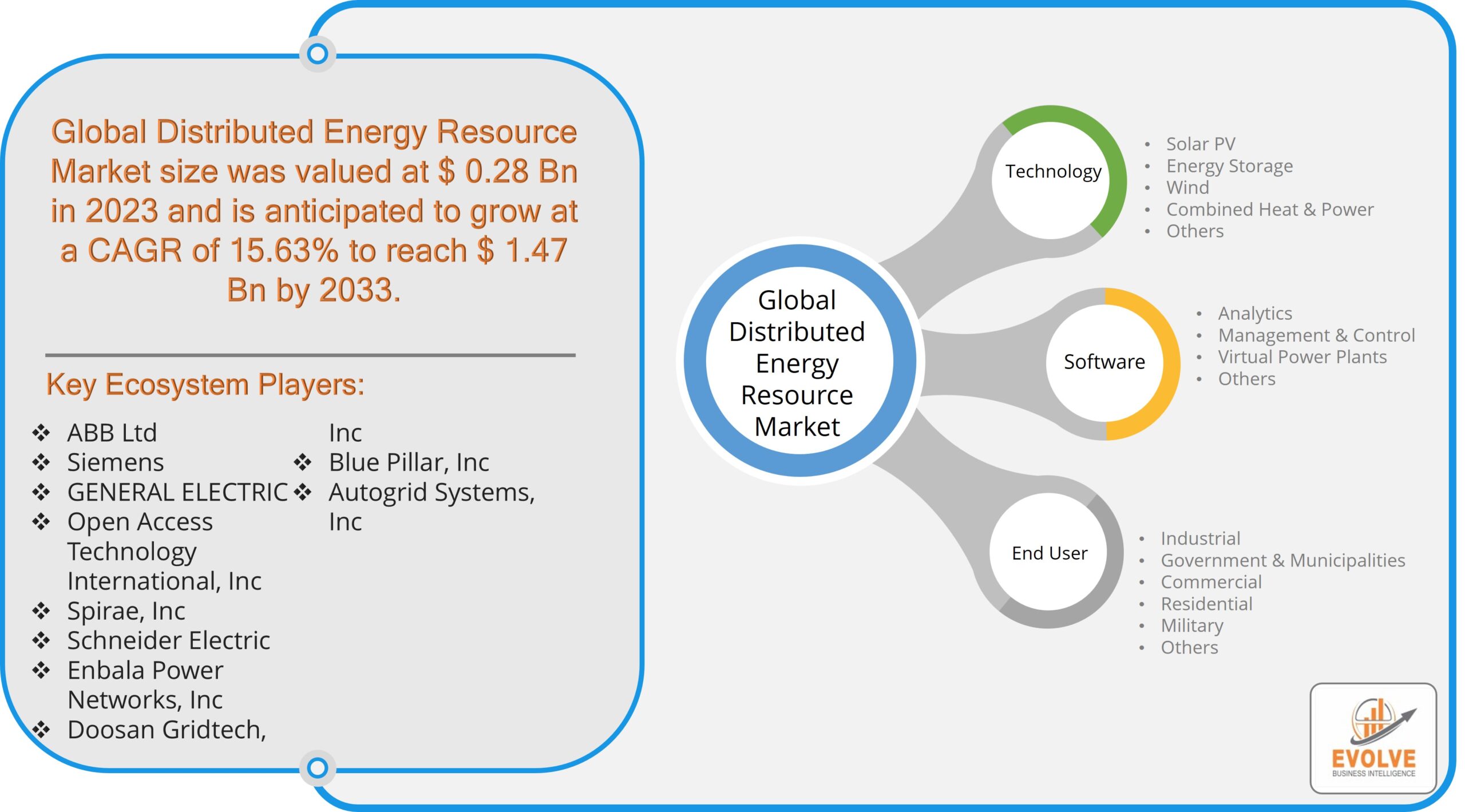
The Distributed Energy Resource Market Is Estimated To Record a CAGR of Around 15.63%

Evolve Business Intelligence has published a research report on the Global Distributed Energy Resource Market, 2023–2033. The global Distributed Energy Resource market is projected to exhibit a CAGR of around 15.63%during the forecast period of 2023 to 2033.

Evolve Business Intelligence has recognized the following companies as the key players in the global Distributed Energy Resource Market: ABB Ltd., Siemens, GENERAL ELECTRIC, Open Access Technology International, Inc., Spirae, Inc., Schneider Electric, Enbala Power Networks, Inc., Doosan Gridtech, Inc., Blue Pillar, Inc., Autogrid Systems, Inc.

Distributed Energy Resource Market

More Information: https://evolvebi.com/report/distributed-energy-resource-market-analysis/

Global Distributed Energy Resource Market Highlights

The Global Distributed Energy Resource market is projected to be valued at USD 1.47 Billion by 2033, recording a CAGR of around 15.63% during the forecast period. The Distributed Energy Resource (DER) market refers to a decentralized approach to energy generation, storage, and consumption. It encompasses a diverse range of technologies such as solar PV, wind turbines, battery storage systems, and demand response mechanisms. DERs are typically located close to where energy is used, reducing transmission losses and enhancing grid resilience. They empower consumers to generate their own electricity, participate in energy markets, and optimize energy usage. Key drivers include advancements in technology, policy support for renewable energy integration, and the need for more reliable and sustainable energy solutions in both developed and developing economies.

The COVID-19 pandemic has led to supply chain disruptions leading to supply shortages or lower demand in the Distributed Energy Resource market. The travel restrictions and social-distancing measures have resulted in a sharp drop in consumer and business spending and this pattern is to continue for some time. The end-user trend and preferences have changed due to the pandemic and have resulted in manufacturers, developers, and service providers adopting various strategies to stabilize the company.

Segmental Analysis

The global Distributed Energy Resource market has been segmented based on Technology, Software, End-User

Based on the Technology, the market is segmented based on Solar PV, Energy Storage, Wind, Combined Heat & Power, Others. Energy Storage” solutions typically dominate. Energy storage systems, including batteries and other storage technologies, play a crucial role in enhancing grid stability, integrating intermittent renewable energy sources like solar and wind, and providing flexibility for demand-side management and grid services.

Based on the Software, the market has been divided into Analytics, Management & Control, Virtual Power Plants, Others. Management & Control” software solutions typically dominate. These platforms enable centralized monitoring, optimization, and coordination of diverse DER assets, ensuring efficient operation, grid integration, and participation in energy markets like virtual power plants (VPPs).

Based on End-User, the market has been divided into Industrial, Government & Municipalities, Commercial, Residential, Military, Others. the commercial sector typically dominates. Commercial entities, including businesses, office buildings, retail centers, and hotels, often lead in adopting DER technologies due to cost-saving opportunities, sustainability goals, and the ability to hedge against electricity price volatility.

More Information: https://evolvebi.com/report/distributed-energy-resource-market-analysis/

Regional Analysis

The Distributed Energy Resource market is divided into five regions: North America, Europe, Asia-Pacific, South America, and the Middle East, &Africa. Asia-Pacific dominates the Distributed Energy Resource market due to several factors. With a market share of USD 0.12 billion in 2020, the Asia Pacific region is the largest market for distributed energy resource management systems. The market is driven by the rise in solar and wind power generation as well as the rising need for energy as a result of industrialization throughout Asia Pacific. The North America region has been witnessing remarkable growth in recent years. The distributed energy resource management market in the United States is one of the largest in North America. By 2050, the US has committed to have net zero emissions. To accomplish this sustainable goal, the federal government invests in renewable energy projects at a quick pace.

Railway Maintenance Machinery Market Grows: 6.57% CAGR

Evolve Business Intelligence has published a research report on the Global Railway Maintenance Machinery Market, 2023–2033. The global Railway Maintenance Machinery Market is projected to exhibit a CAGR of around 6.57% during the forecast period of 2023 to 2033.

Evolve Business Intelligence has recognized the following companies as the key players in the global Railway Maintenance Machinery Market: China Railway Construction Corporation Limited, China State Railway Group Co Ltd, System 7- Railsupport GmbH, Harsco Corporation, Geatech Group s.r.l, Plasser & Theurer, Export von Bahnbaumaschinen, Gesellschaft m.b.H and Sinara-Transport Machines Holding.

Railway Maintenance Machinery MarketMore Information: https://evolvebi.com/report/railway-maintenance-machinery-market-analysis/

Market Highlights

The Global Railway Maintenance Machinery Market is projected to be valued at USD 7.25 Billion by 2033, recording a CAGR of around 6.57% during the forecast period. The Railway Maintenance Machinery Market refers to the global industry focused on the production, distribution, and servicing of machinery and equipment used for the maintenance and repair of railway infrastructure. This market encompasses a wide range of specialized machines designed for tasks such as track inspection, rail grinding, tamping, ballast cleaning, and more, ensuring the safe and efficient operation of rail networks.

The market is driven by factors such as the expansion of rail networks, increasing focus on safety and efficiency, technological advancements in machinery, and the growing need for automated and efficient maintenance solutions. It is also influenced by investments in high-speed rail and the modernization of existing railway infrastructure. Key players in the market include manufacturers of railway maintenance machinery, service providers, and suppliers of components and parts.

The COVID-19 pandemic had a significant impact on the Railway Maintenance Machinery Market. The pandemic caused widespread disruptions in global supply chains, affecting the production and delivery of railway maintenance machinery. Manufacturing facilities were forced to close or operate at reduced capacity, leading to delays in the production and shipment of machinery and components. With reduced rail traffic during the pandemic, many railway operators prioritized essential maintenance over new investments or non-essential upgrades. This led to a focus on maintaining existing infrastructure rather than expanding or modernizing, affecting the market for certain types of maintenance machinery. The pandemic slowed down research and development activities within the industry. Companies were forced to cut costs, which often meant reducing investments in innovation and the development of new technologies in railway maintenance machinery. The pandemic has led to strategic shifts in the railway industry, with increased emphasis on automation, remote monitoring, and predictive maintenance. This could drive future demand for advanced maintenance machinery, despite the initial setbacks caused by COVID-19.

Segmental Analysis

The global Railway Maintenance Machinery Market has been segmented based on Product Type and Application.

Based on Product Type, the Railway Maintenance Machinery Market is segmented into Tamping Machine, Stabilizing Machinery, Rail Handling Machinery and Others. The Tamping Machine segment is anticipated to dominate the market.

Based on Application, the global Railway Maintenance Machinery Market has been divided into Ballast Track and Non-ballast Track. The Ballast Track segment is anticipated to dominate the market.

More Information: https://evolvebi.com/report/railway-maintenance-machinery-market-analysis/

Regional Analysis

The Railway Maintenance Machinery Market is divided into five regions: North America, Europe, Asia-Pacific, South America, and the Middle East, & Africa. North America has a well-established railway infrastructure, particularly in the U.S. and Canada. The region is focused on maintaining and upgrading its extensive freight rail network, which is one of the most advanced in the world. The focus on enhancing rail safety, increasing freight transportation, and government investments in infrastructure are key drivers in this region. The adoption of advanced technologies and automation in railway maintenance machinery is also growing. Europe has a mature railway network, with extensive passenger and freight rail systems. Countries like Germany, France, and the UK are leaders in rail technology and innovation and focus on high-speed rail and modernization of existing infrastructure drives market growth. Asia-Pacific is the fastest-growing region in the Railway Maintenance Machinery Market, driven by rapid urbanization, economic growth, and significant investments in rail infrastructure, particularly in China, India, and Southeast Asia and the expansion of urban rail networks, high-speed rail projects, and government initiatives to improve public transportation are major drivers in this region. China, in particular, has a massive high-speed rail network that requires continuous maintenance. The Middle East and Africa region has a mix of developing and mature railway markets. While some countries have well-developed rail systems, others are in the early stages of developing their networks. Latin America has a developing railway network, with some countries like Brazil and Argentina having relatively established rail systems. However, the region’s rail infrastructure is generally underdeveloped compared to other parts of the world.

Exit mobile version