Power Bank Market Grows: 8.40% CAGR

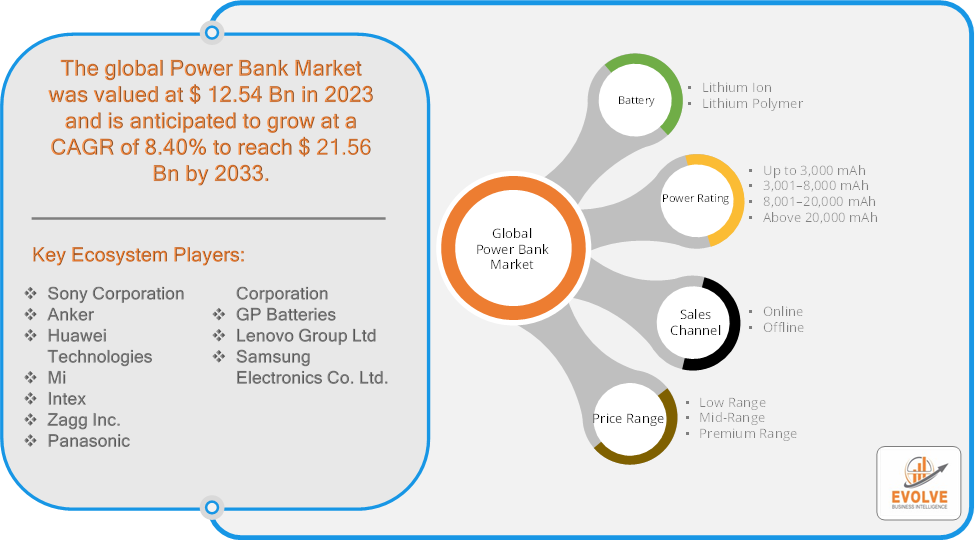
Evolve Business Intelligence has published a research report on the Global Power Bank Market, 2023–2033. The global Power Bank Market is projected to exhibit a CAGR of around 8.40% during the forecast period of 2023 to 2033.

Evolve Business Intelligence has recognized the following companies as the key players in the global Power Bank Market: Sony Corporation, Anker, Huawei Technologies, Mi, Intex, Zagg Inc., Panasonic Corporation, GP Batteries, Lenovo Group Ltd and Samsung Electronics Co. Ltd.
Power Bank MarketMore Information: https://evolvebi.com/report/power-bank-market-analysis/

Market Highlights

The Global Power Bank Market is projected to be valued at USD 21.56 Billion by 2033, recording a CAGR of around 8.40% during the forecast period. The Power Bank Market refers to the global industry involved in the production, distribution, and sale of portable battery chargers, commonly known as power banks. These devices are used to recharge electronic gadgets such as smartphones, tablets, laptops, and other USB-powered devices when access to a power outlet is unavailable.

The Power Bank Market is expected to continue growing due to the increasing reliance on mobile electronics and the demand for convenient charging solutions.

The COVID-19 pandemic had a significant impact on the Power Bank Market. During the early stages of the pandemic, especially during lockdowns, there was a sharp decline in demand for power banks. This was largely due to reduced outdoor activities, travel restrictions, and people spending more time at home, where access to regular charging outlets is readily available. As remote work became the norm, the need for portable charging devices decreased. People were less reliant on power banks since they were primarily working from home, where they could charge their devices directly. With physical stores closed or operating at limited capacity, there was a significant shift towards online shopping. E-commerce platforms saw an increase in power bank sales, compensating for the drop in brick-and-mortar sales. The pandemic heightened awareness of hygiene, leading some manufacturers to introduce power banks with antimicrobial coatings or designs that minimize surface contact. As travel and outdoor activities resume post-pandemic, the demand for power banks is expected to grow, driven by a renewed focus on portable electronics.

Segmental Analysis

The global Power Bank Market has been segmented based on Battery, Power Rating, Sales Channel and End User.

Based on Battery, the Power Bank Market is segmented into Lithium Ion and Lithium Polymer. The Lithium Ion segment is anticipated to dominate the market.

Based on Power Rating, the global Power Bank Market has been divided into the Up to 3,000 mAh, 3,001–8,000 mAh, 8,001–20,000 mAh and Above 20,000 mAh. The 8,001–20,000 mAh segment is anticipated to dominate the market.

Based on sales Channel, the global Power Bank Market has been divided into the Online and Offline. The Online segment is anticipated to dominate the market.

Based on Price Range, the global Power Bank Market has been divided into the Low Range, Mid-Range and Premium Range. The Mid-Range segment is anticipated to dominate the market.

More Information: https://evolvebi.com/report/power-bank-market-analysis/

Regional Analysis

The Power Bank Market is divided into five regions: North America, Europe, Asia-Pacific, South America, and the Middle East, & Africa. North America, particularly the United States and Canada, has a mature power bank market with a high level of technology adoption. The market is driven by high smartphone penetration, increased use of portable electronics, and the popularity of fast-charging solutions. There is a demand for high-capacity, fast-charging, and multi-functional power banks. Wireless charging and eco-friendly products are also gaining traction. Europe has a well-established power bank market with varying demand across countries. Western Europe, including Germany, France, and the UK, leads in market size due to high disposable income and tech adoption. Europe has stringent regulations regarding electronic waste and safety standards, which impact product design and manufacturing practices. Asia-Pacific is the largest and fastest-growing market for power banks, driven by high smartphone penetration, rapid urbanization, and increasing disposable incomes. China, India, and Japan are key markets in the region. Asia-Pacific is a major manufacturing hub for power banks, particularly China, which hosts many production facilities and contributes to global supply. The market in Latin America is growing, driven by increasing smartphone usage and expanding urban areas. Brazil and Mexico are the largest markets in the region. There is a rising demand for affordable and durable power banks. Features like high capacity and multi-functional designs are gaining popularity as more consumers seek reliable power solutions. The Power Bank Market in the Middle East and Africa is developing, with growth driven by increasing mobile device usage and improving economic conditions. Countries like South Africa, UAE, and Saudi Arabia are key markets.
 

Paint Roller Market: 3.14% CAGR Expected

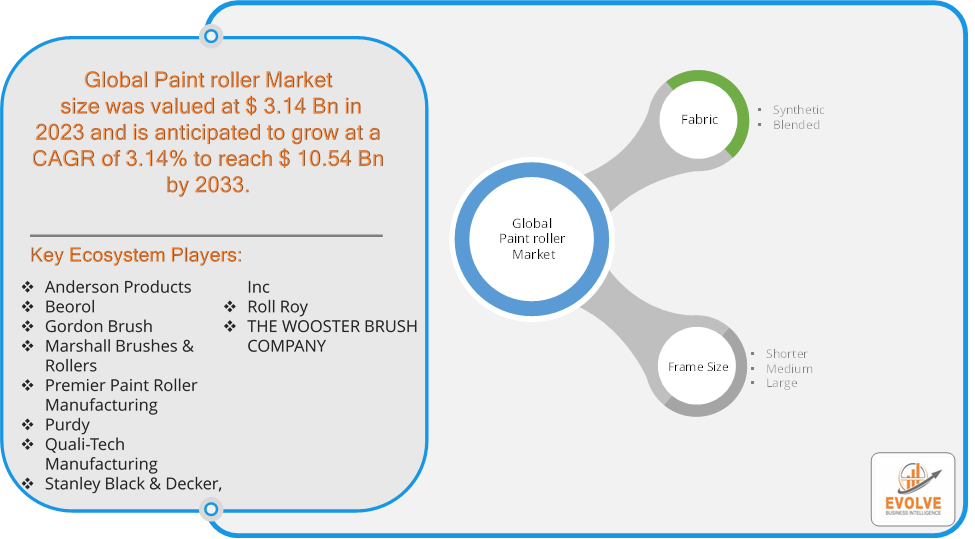
Evolve Business Intelligence has published a research report on the Global Paint roller Market, 2023–2033. The global Paint roller market is projected to exhibit a CAGR of around 3.14%during the forecast period of 2023 to 2033.

Evolve Business Intelligence has recognized the following companies as the key players in the global Paint roller Market: Anderson Products, Beorol, Gordon Brush, Marshall Brushes & Rollers, Premier Paint Roller Manufacturing, Purdy, Quali-Tech Manufacturing, Stanley Black & Decker, Inc, Roll Roy, THE WOOSTER BRUSH COMPANY.

Paint Roller MarketMore Information: https://evolvebi.com/report/paint-roller-market-analysis/

Market Highlights

The Global Paint roller market is projected to be valued at USD 10.54 Billion by 2033, recording a CAGR of around 3.14% during the forecast period. The paint roller market involves tools designed for applying paint to surfaces, commonly used in residential and commercial painting. The market includes various types of rollers, such as foam, woven, and microfiber, catering to different painting needs. Key factors influencing the market include the growing demand for DIY home improvement projects, advancements in roller technology, and increasing construction activities. Market segments are often based on roller size, material, and application type. Major players in the industry focus on innovation, product durability, and ease of use to capture market share. Trends like eco-friendly materials and ergonomic designs are shaping the market’s growth.

The COVID-19 pandemic has led to supply chain disruptions leading to supply shortages or lower demand in the Paint roller market. The travel restrictions and social-distancing measures have resulted in a sharp drop in consumer and business spending and this pattern is to continue for some time. The end-user trend and preferences have changed due to the pandemic and have resulted in manufacturers, developers, and service providers to adopt various strategies to stabilize the company.

Segmental Analysis

The global Paint roller market has been segmented based on Fabric, Frame Size

Based on Fabric, the market is segmented based on Synthetic, Blended. synthetic fabrics tend to dominate due to their durability, consistent performance, and suitability for a variety of paints and surfaces

Based on Frame Size s, the market has been divided into the Shorter, Medium, Large. the medium frame size segment generally dominates due to its versatility, making it suitable for a wide range of painting tasks and surfaces.

More Information: https://evolvebi.com/report/paint-roller-market-analysis/

Regional Analysis

The Paint roller market is divided into five regions: North America, Europe, Asia-Pacific, South America, and the Middle East, &Africa. North America holds a dominant position in the Paint roller Market. In North America, the paint roller market is driven by a strong DIY culture, increased home renovation activities, and a robust construction sector. The market benefits from high demand for quality and innovative painting tools, supported by a large number of home improvement retailers and online sales channels. Technological advancements and a growing focus on eco-friendly products also contribute to market growth. The Asia-Pacific region has indeed emerged as the fastest-growing market for the Paint roller industry. In the Asia-Pacific region, the paint roller market is expanding due to rapid urbanization, increasing construction activities, and growing home improvement trends. The rising middle class and higher disposable incomes are driving demand for quality painting tools. Additionally, the market benefits from a burgeoning DIY culture and infrastructure development projects. Manufacturers are also exploring opportunities in emerging markets within the region to cater to diverse consumer needs and preferences.


Packaging Market Growth: 2.56% CAGR Forecast

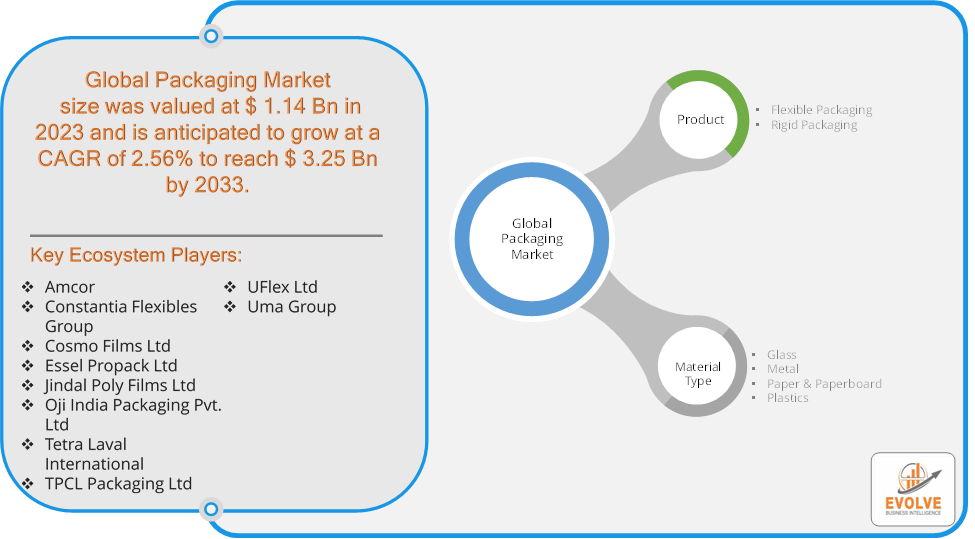
Evolve Business Intelligence has published a research report on the Global Packaging Market, 2023–2033. The global Packaging Market is projected to exhibit a CAGR of around 2.56% during the forecast period of 2023 to 2033.

Evolve Business Intelligence has recognized the following companies as the key players in the global Packaging Market: Amcor, Constantia Flexibles Group, Cosmo Films Ltd, Essel Propack Ltd, Jindal Poly Films Ltd, Oji India Packaging Pvt. Ltd, Tetra Laval International, TPCL Packaging Ltd, UFlex Ltd and Uma Group.

Packaging MarketMore Information: https://evolvebi.com/report/packaging-market-analysis/

Market Highlights

The Global Packaging Market is projected to be valued at USD 3.25 Billion by 2033, recording a CAGR of around 2.56% during the forecast period. The Packaging Market refers to the global industry involved in the design, production, and distribution of materials and containers used to protect, preserve, and transport goods. Packaging plays a crucial role in various industries, including food and beverages, pharmaceuticals, personal care, electronics, and industrial products.

The Packaging Market is driven by factors such as consumer demand, technological advancements, environmental regulations, and the need for innovation in packaging solutions.

The COVID-19 pandemic had a significant impact on the Packaging Market. With lockdowns and social distancing measures, online shopping and food delivery surged, leading to increased demand for packaging materials, especially for corrugated boxes, flexible packaging, and other shipping materials. The need for medical supplies, personal protective equipment (PPE), and pharmaceuticals rose sharply, driving demand for specialized packaging to ensure safe transport and storage of these critical items. Lockdowns and restrictions affected the production and transportation of raw materials, leading to shortages and delays in packaging production. The pandemic caused labor disruptions in manufacturing plants, which impacted production schedules and increased lead times for packaging orders. The pandemic raised awareness of environmental issues, leading to increased consumer demand for sustainable and eco-friendly packaging solutions. Companies began accelerating their efforts to develop biodegradable, recyclable, and reusable packaging. The pandemic accelerated the adoption of smart packaging solutions, including QR codes and RFID tags, to provide consumers with information about product origin, safety, and authenticity.

Segmental Analysis

The global Packaging Market has been segmented based on Product and Material Type.

Based on Product, the Packaging Market is segmented into Flexible Packaging and Rigid Packaging. The Rigid Packaging segment is anticipated to dominate the market.

Based on Material Type, the global Packaging Market has been divided into the Glass, Metal, Paper & Paperboard and Plastics. The Paper & Paperboard segment is anticipated to dominate the market.

More Information: https://evolvebi.com/report/packaging-market-analysis/

Regional Analysis

The Packaging Market is divided into five regions: North America, Europe, Asia-Pacific, South America, and the Middle East, & Africa. North America, particularly the United States and Canada, is a mature market with a strong emphasis on sustainability and innovation in packaging. The region has a high demand for packaging solutions driven by robust e-commerce growth, consumer goods, food and beverages, and pharmaceuticals. Europe is a leader in sustainable packaging, driven by stringent environmental regulations and strong consumer demand for eco-friendly products. The region has a well-established recycling infrastructure, and there is significant pressure on companies to reduce packaging waste and improve recyclability. Asia-Pacific is the fastest-growing region in the Packaging Market, driven by rapid industrialization, urbanization, and rising disposable incomes, particularly in China, India, and Southeast Asia. The region has a diverse market, with demand for packaging spanning across food and beverages, consumer electronics, pharmaceuticals, and personal care products. The Latin American Packaging Market is growing steadily, driven by economic development, urbanization, and increasing consumer demand for packaged goods. There is a growing awareness of environmental issues, leading to a slow but steady adoption of sustainable packaging materials. The MEA region presents a mixed market, with mature packaging markets in countries like the UAE and Saudi Arabia, and emerging markets in Africa. The demand for packaging is driven by the food and beverage industry, pharmaceuticals, and consumer goods, with a growing focus on convenience and functionality.

Wave Energy Market Is Estimated To Record a CAGR of Around 17.3%

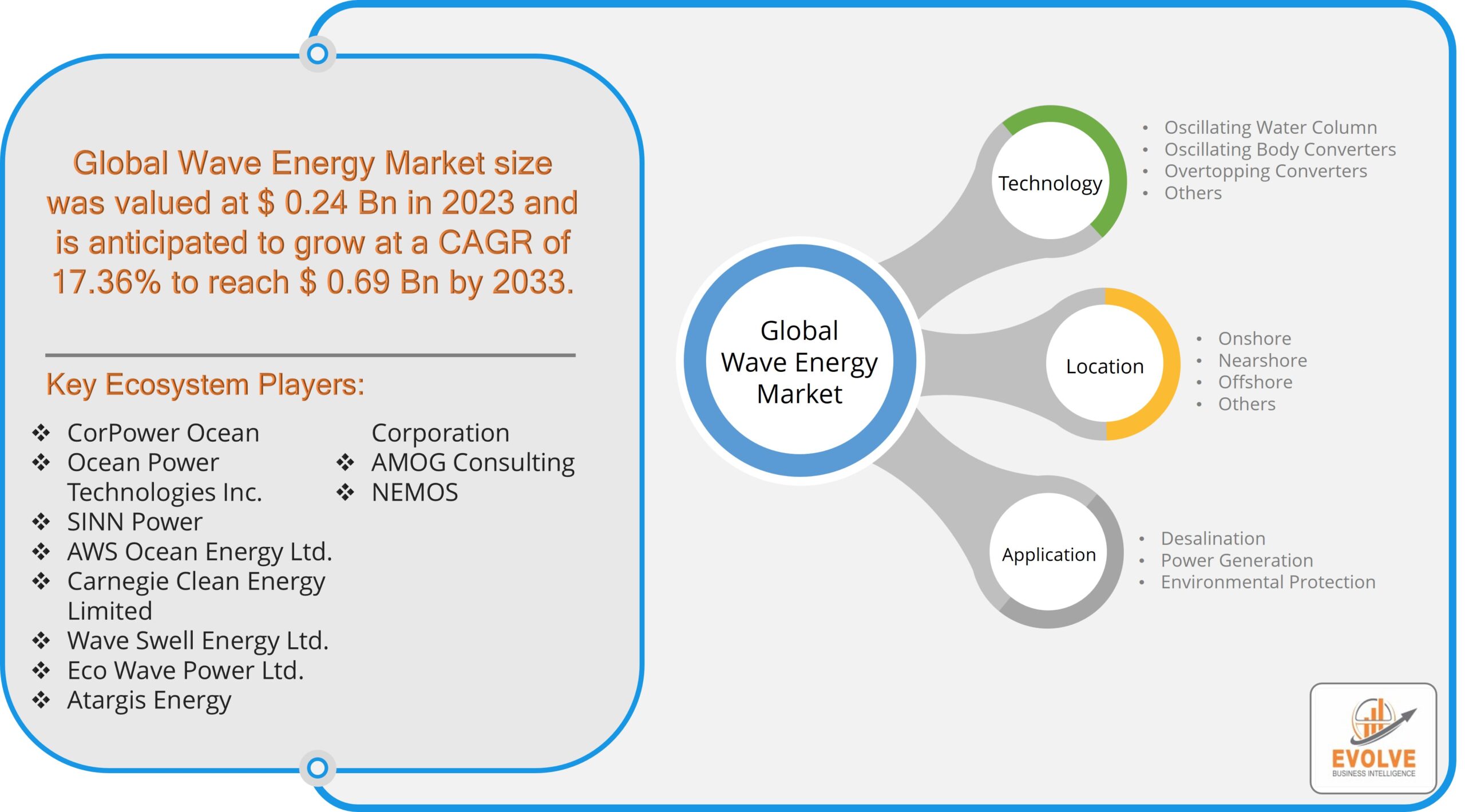
Evolve Business Intelligence has published a research report on the Global Wave Energy Market, 2023–2033. The global Wave Energy Market is projected to exhibit a CAGR of around 17.36% during the forecast period of 2023 to 2033.

Evolve Business Intelligence has recognized the following companies as the key players in the global Wave Energy Market: CorPower Ocean, Ocean Power Technologies Inc., SINN Power, AWS Ocean Energy Ltd., Carnegie Clean Energy Limited, Wave Swell Energy Ltd., Eco Wave Power Ltd., Atargis Energy Corporation, AMOG Consulting, and NEMOS.

Wave Energy Market

For More Information: https://evolvebi.com/report/wave-energy-market-analysis/

Global Wave Energy Market Highlights

The Global Wave Energy Market is projected to be valued at USD 0.69 Billion by 2033, recording a CAGR of around 17.36% during the forecast period. The Wave Energy Market refers to the sector of the energy industry focused on harnessing the energy generated by ocean waves to produce electricity. This market involves the development, production, and deployment of technologies that convert the kinetic energy of waves into usable electrical power.

The wave energy market aims to provide a renewable and sustainable energy source, contributing to the reduction of greenhouse gas emissions and dependence on fossil fuels. Governments around the world are increasingly investing in renewable energy, and wave energy has the potential to be a major part of the future energy mix.

The COVID-19 pandemic had significant impacts on the Wave Energy Market. The pandemic caused delays and interruptions in the development and deployment of wave energy projects due to supply chain disruptions, restrictions on travel, and shutdowns of manufacturing facilities. Economic uncertainties and financial constraints during the pandemic led to challenges in securing funding and investment for new-wave energy projects. Many investors became cautious, affecting the flow of capital into the sector.

R&D activities in wave energy technology faced setbacks due to reduced workforce availability, restricted access to laboratories, and disruptions in testing and prototype development. The overall market uncertainty and fluctuations in energy demand during the pandemic led to a shift in priorities for some stakeholders, potentially impacting the long-term planning and commitment to wave energy initiatives. The pandemic also accelerated the adoption of digital technologies and remote monitoring, which could benefit the wave energy sector by enhancing operational efficiency and reducing costs.

Segmental Analysis

The global Wave Energy Market has been segmented based on Technology, Location, and Application.

Based on Technology, the Wave Energy Market is segmented into Oscillating Water Column, Oscillating Body Converters, Overtopping Converters, and Others. The Oscillating Water Column segment is anticipated to dominate the market.

Based on Location, the global Wave Energy Market has been divided into the Onshore, Nearshore, Offshore, and Others. The Nearshore segment is anticipated to dominate the market.

Based on Application, the global Wave Energy Market has been divided into Desalination, Power Generation, and Environmental Protection. The Power Generation segment is anticipated to dominate the market.

For More Information: https://evolvebi.com/report/wave-energy-market-analysis/

Regional Analysis

The Wave Energy Market is divided into five regions: North America, Europe, Asia-Pacific, South America, and the Middle East, & Africa. North America has several research initiatives and pilot projects, particularly in the U.S. Pacific Northwest and Canada’s west coast. The focus is on developing and testing new technologies. Supportive policies in certain states, such as California, and the potential for significant wave energy resources on both coasts provide growth opportunities.

Europe is a leader in wave energy research and deployment, with several pilot projects and commercial installations. The European Union has strong policies and funding programs supporting renewable energy. In the Asia Pacific region, Australia has substantial wave energy potential and is actively exploring wave energy projects. Japan and South Korea are also investing in research and pilot projects. High wave energy potential in coastal areas, growing interest in renewable energy, and governmental support are key drivers in this region.

In the Latin America region, Chile has one of the highest wave energy potentials in the world and is exploring wave energy projects. Brazil is also evaluating its wave energy resources. Significant wave energy resources and an increasing focus on renewable energy provide growth potential, though investment and development are still in the early stages. In the Middle East and Africa region, South Africa has some wave energy potential and is beginning to explore its options for renewable energy integration. Emerging interest in diversifying energy sources and addressing energy security challenges offer growth opportunities, though development is currently limited.

Massive MIMO Market Booms: 36.12% CAGR

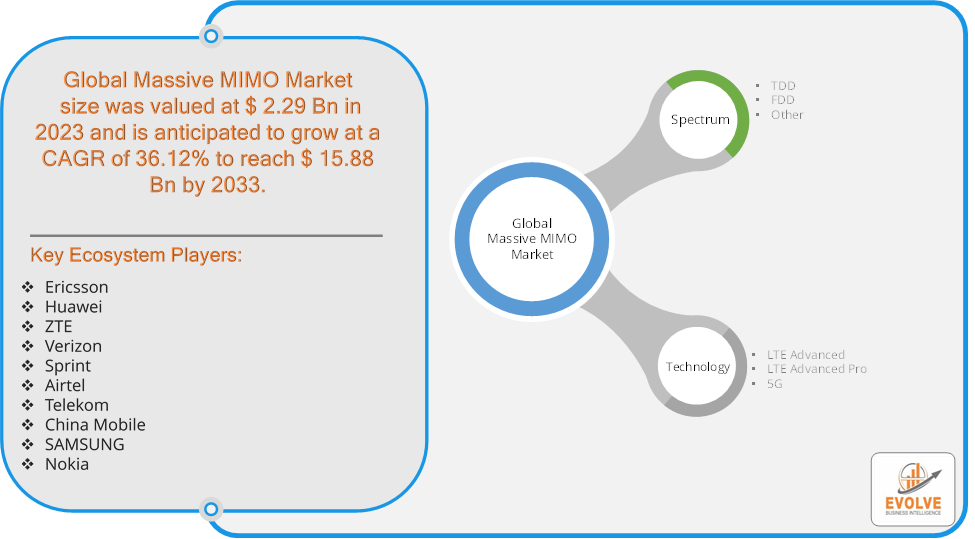
Evolve Business Intelligence has published a research report on the Global Massive MIMO Market, 2023–2033. The global Massive MIMO Market is projected to exhibit a CAGR of around 36.12% during the forecast period of 2023 to 2033.

Evolve Business Intelligence has recognized the following companies as the key players in the global Massive MIMO Market: Ericsson, Huawei, ZTE, Verizon, Sprint, Airtel, Telekom, China Mobile, SAMSUNG and Nokia.

Massive MIMO MarketMore Information: https://evolvebi.com/report/massive-mimo-market-analysis/

Market Highlights

The Global Massive MIMO Market is projected to be valued at USD 15.88 Billion by 2033, recording a CAGR of around 36.12% during the forecast period. The Massive MIMO (Multiple-Input Multiple-Output) is a wireless communication technology that employs a large number of antennas at both the transmitter and receiver ends. This technology significantly enhances the capacity, throughput, and coverage of wireless networks. By using advanced techniques like spatial multiplexing and beamforming, Massive MIMO enables multiple users to simultaneously share the same frequency spectrum, leading to improved network efficiency and user experience.

The Massive MIMO market encompasses the entire ecosystem of technologies, companies, and applications related to the deployment and utilization of Massive MIMO systems, which are crucial for meeting the demands of modern and future wireless communication networks.

The COVID-19 pandemic had a significant impact on the Massive MIMO market. With the shift to remote work and online learning, there was a surge in demand for high-speed, reliable internet connections. This heightened need for better network infrastructure accelerated the adoption of advanced technologies like Massive MIMO. The pandemic led to increased data traffic as people used streaming services, video conferencing, and online collaboration tools more frequently. The pandemic underscored the importance of robust connectivity, leading to increased investments in 5G infrastructure, where Massive MIMO plays a critical role. The pandemic prompted accelerated research and development in telecom technologies, including Massive MIMO, to support the growing demand for high-capacity networks. The pandemic caused significant disruptions in global supply chains, affecting the production and delivery of components needed for Massive MIMO systems, such as antennas and base station equipment. Restrictions on movement and labour shortages affected the progress of network infrastructure projects, including those involving Massive MIMO technology.

Segmental Analysis

The global Massive MIMO Market has been segmented based on Spectrum and Technology.

Based on Spectrum, the Massive MIMO Market is segmented into TDD, FDD and Other. The TDD segment is anticipated to dominate the market.

Based on Technology, the global Massive MIMO Market has been divided into the LTE Advanced, LTE Advanced Pro and 5G. The LTE Advanced segment is anticipated to dominate the market.

More Information: https://evolvebi.com/report/massive-mimo-market-analysis/

Regional Analysis

The Massive MIMO Market is divided into five regions: North America, Europe, Asia-Pacific, South America, and the Middle East, & Africa. North America is a leading region in the adoption of Massive MIMO technology, driven by aggressive 5G deployment and high demand for advanced network infrastructure. Major telecom operators and technology companies are actively investing in and deploying Massive MIMO systems to enhance network performance and capacity. In Europe region, Countries like Germany, the UK, France, and Spain are at the forefront of Massive MIMO adoption. Europe has a strong focus on 5G deployment and smart city initiatives, which drives the demand for advanced network solutions. While the adoption rate is slower compared to Western Europe, there is growing interest in upgrading network infrastructure to support 5G and enhance connectivity. Asia-Pacific is a major growth region for Massive MIMO due to the large-scale rollout of 5G networks and rapid urbanization. China, in particular, has heavily invested in 5G infrastructure and is a leading adopter of Massive MIMO technology. India is also expanding its 5G capabilities, though the pace of adoption is varied. The Latin American market is gradually adopting Massive MIMO technology, with a focus on expanding 5G networks and improving connectivity. Brazil and Mexico are leading the charge in this region. Growing demand for improved connectivity, investment in 5G infrastructure, and urbanization. However, economic constraints and regulatory challenges can impact the pace of adoption. The Middle East and Africa region, Countries like Saudi Arabia, the UAE, and Qatar are investing in advanced telecom technologies, including Massive MIMO, as part of their 5G strategies and smart city initiatives. Adoption is slower compared to other regions, but there is growing interest in improving network infrastructure and connectivity.

Industrial Air Blower Market: 3.85% CAGR Expected

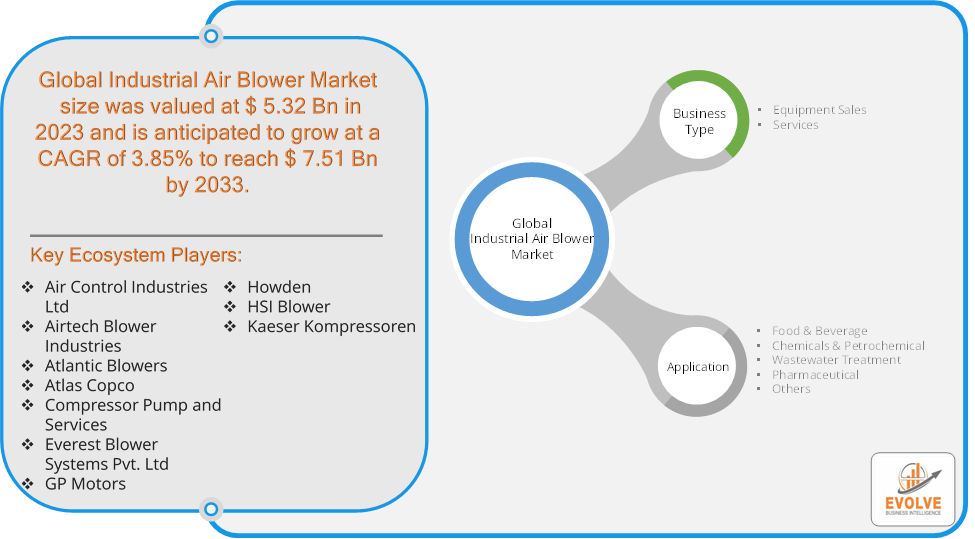
Evolve Business Intelligence has published a research report on the Global Industrial Air Blower Market, 2023–2033. The global Industrial Air Blower Market is projected to exhibit a CAGR of around 3.85% during the forecast period of 2023 to 2033.

Evolve Business Intelligence has recognized the following companies as the key players in the global Industrial Air Blower Market: Air Control Industries Ltd, Airtech Blower Industries, Atlantic Blowers, Atlas Copco, Compressor Pump and Services, Everest Blower Systems Pvt. Ltd, GP Motors, Howden, HSI Blower and Kaeser Kompressoren.

Industrial Air Blower MarketMore Information: https://evolvebi.com/report/industrial-air-blower-market-analysis/

Market Highlights

The Global Industrial Air Blower Market is projected to be valued at USD 7.51 Billion by 2033, recording a CAGR of around 3.85% during the forecast period. The Industrial Air Blower Market refers to the commercial sector that focuses on the production, distribution, and utilization of air blowers used in various industrial applications. Air blowers are mechanical devices designed to move large volumes of air or gas to achieve specific operational goals. They are essential in numerous industries for tasks such as ventilation, cooling, and material handling.

The Industrial Air Blower Market encompasses a wide range of air-moving equipment used across various industries for ventilation, cooling, and material handling. The market is driven by industrial growth, technological advancements, and energy efficiency trends, with opportunities and challenges varying by region and application.

The COVID-19 pandemic had a significant impact on the Industrial Air Blower Market.  The pandemic heightened the need for advanced air handling and ventilation systems in hospitals and pharmaceutical manufacturing facilities to ensure clean air and proper infection control. The pandemic accelerated the adoption of automation and smart technologies, including advanced air blower systems integrated with IoT for remote monitoring and control. Restrictions on movement and health concerns affected the availability of skilled labor for installation, maintenance, and service of air blower systems. Rising costs for materials and disruptions in the supply chain contributed to higher overall costs for air blower systems. Increased emphasis on improving indoor air quality and ventilation systems post-pandemic may drive long-term demand for advanced air blowers and air purification systems. Continued investment in healthcare infrastructure and pharmaceutical manufacturing facilities will likely support sustained demand for industrial air blowers. The growth in data centers, driven by increased digitalization and remote work, may drive demand for efficient cooling systems, including air blowers. The trend toward smart and connected industrial solutions may lead to increased adoption of advanced air blower systems with IoT integration and real-time monitoring capabilities.

Segmental Analysis

The global Industrial Air Blower Market has been segmented based on Business Type and Application.

Based on Business Type, the Industrial Air Blower Market is segmented into Equipment Sales and Services. The Equipment Sales segment is anticipated to dominate the market.

Based on Application, the global Industrial Air Blower Market has been divided into the Food & Beverage, Chemicals & Petrochemical, Wastewater Treatment, Pharmaceutical and Others. The Chemicals & Petrochemical segment is anticipated to dominate the market.

More Information: https://evolvebi.com/report/industrial-air-blower-market-analysis/

Regional Analysis

The Industrial Air Blower Market is divided into five regions: North America, Europe, Asia-Pacific, South America, and the Middle East, & Africa. North America is a mature market with a strong focus on advanced technology and energy efficiency. The region’s robust industrial sector, including manufacturing, chemical processing, and pharmaceuticals, drives the demand for industrial air blowers. In Europe region, Countries like Germany, France, the UK, and Spain are key markets with a strong emphasis on environmental sustainability and advanced technology. The European market benefits from stringent energy efficiency regulations and a focus on green building practices. Emerging markets in Eastern Europe are experiencing gradual growth in industrial activities and infrastructure development. Asia-Pacific is the fastest-growing region for industrial air blowers due to rapid industrialization, urbanization, and infrastructure development. China is a major player with significant investments in manufacturing and infrastructure. Key markets in Latin America with significant industrial and infrastructure development. The region is witnessing growth in manufacturing and construction, driving the demand for industrial air blowers. In Middle East and Africa region, countries like Saudi Arabia, the UAE, and Qatar are investing in advanced technologies and infrastructure, including industrial air blowers, as part of their economic diversification efforts. Market growth is slower but is expected to increase with rising industrial activities and infrastructure development.

Steam Turbine Market Is Estimated To Record a CAGR of Around 2.57%

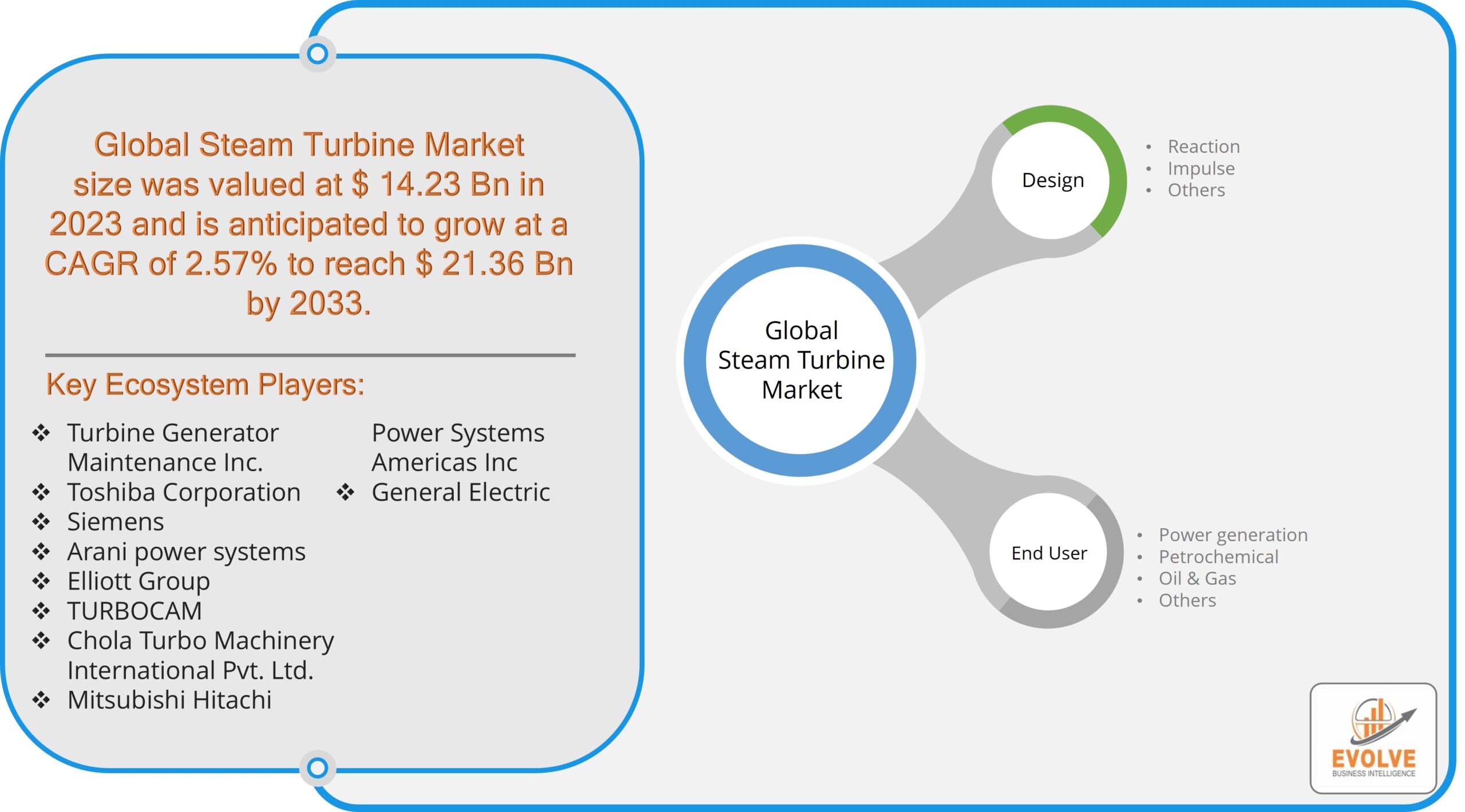
Evolve Business Intelligence has published a research report on the Global Steam Turbine Market, 2023–2033. The global Steam Turbine market is projected to exhibit a CAGR of around 2.57%during the forecast period of 2023 to 2033.

Evolve Business Intelligence has recognized the following companies as the key players in the global Steam Turbine Market: Turbine Generator Maintenance Inc., Toshiba Corporation, Siemens, Arani power systems, Elliott Group, TURBOCAM, Chola Turbo Machinery International Pvt. Ltd., Mitsubishi Hitachi Power Systems Americas Inc, General Electric.

Steam Turbine Market

For More Information: https://evolvebi.com/report/steam-turbine-market-analysis/

Global Steam Turbine Market Highlights

The Global Steam Turbine market is projected to be valued at USD 21.36 Billion by 2033, recording a CAGR of around 2.57% during the forecast period. The steam turbine market encompasses the global industry involved in the production, distribution, and maintenance of steam turbines, which are critical components in power generation, industrial applications, and marine propulsion. Steam turbines convert thermal energy from steam into mechanical energy, which is then used to generate electricity or drive machinery. The market is driven by the demand for energy efficiency, renewable energy integration, and advancements in turbine technology. Key sectors include power plants, refineries, and chemical plants. Regional market dynamics vary, with Asia-Pacific being a significant growth region due to industrialization and energy needs.

The COVID-19 pandemic has caused supply chain hiccups, which have decreased demand or created shortages in the steam turbine sector. Spending by consumers and businesses has decreased significantly as a result of the travel restrictions and social distancing measures, and this trend is expected to persist for some time. The epidemic has altered end-user trends and tastes, leading manufacturers, developers, and service providers to implement several measures in an attempt to stabilize their businesses.

Segmental Analysis

The global Steam Turbine market has been segmented based on Design, End User

Based on Design, the market is segmented into Reaction, and Impulse, among others. The impulse steam turbines segment dominates the market due to their simpler design, efficiency at converting high-pressure steam into mechanical energy, and widespread use in power generation and various industrial applications.

Based on End Users, the market has been divided into Power Generation, Petrochemical, and Oil & Gas, among others. The power generation segment dominates the steam turbine market, as steam turbines are crucial for large-scale electricity production in both traditional fossil fuel and nuclear power plants, as well as in renewable energy applications like biomass and concentrated solar power.

For More Information: https://evolvebi.com/report/steam-turbine-market-analysis/

Regional Analysis

The Steam Turbine market is divided into five regions: North America, Europe, Asia-Pacific, South America, and the Middle East, &Africa. North America holds a dominant position in the Steam Turbine Market. In North America, the steam turbine market is driven by the need for efficient and reliable power generation infrastructure. The region’s focus on upgrading aging power plants, coupled with investments in renewable energy projects such as biomass and concentrated solar power, supports market growth. Technological advancements and stringent environmental regulations also drive demand for modern, high-efficiency steam turbines. The presence of major industry players and ongoing industrial activities further contribute to the market’s development in this region.

The Asia-Pacific region has indeed emerged as the fastest-growing market for the Steam Turbine industry. The steam turbine market in Asia-Pacific is experiencing significant growth due to rapid industrialization, urbanization, and increasing energy demand in countries like China and India. Investments in power generation infrastructure, including coal, nuclear, and renewable energy projects, are driving market expansion. Government initiatives to enhance energy efficiency and reduce emissions are also promoting the adoption of advanced steam turbine technologies. Additionally, the region’s large-scale industrial activities and ongoing infrastructure development create a robust market environment for steam turbines.


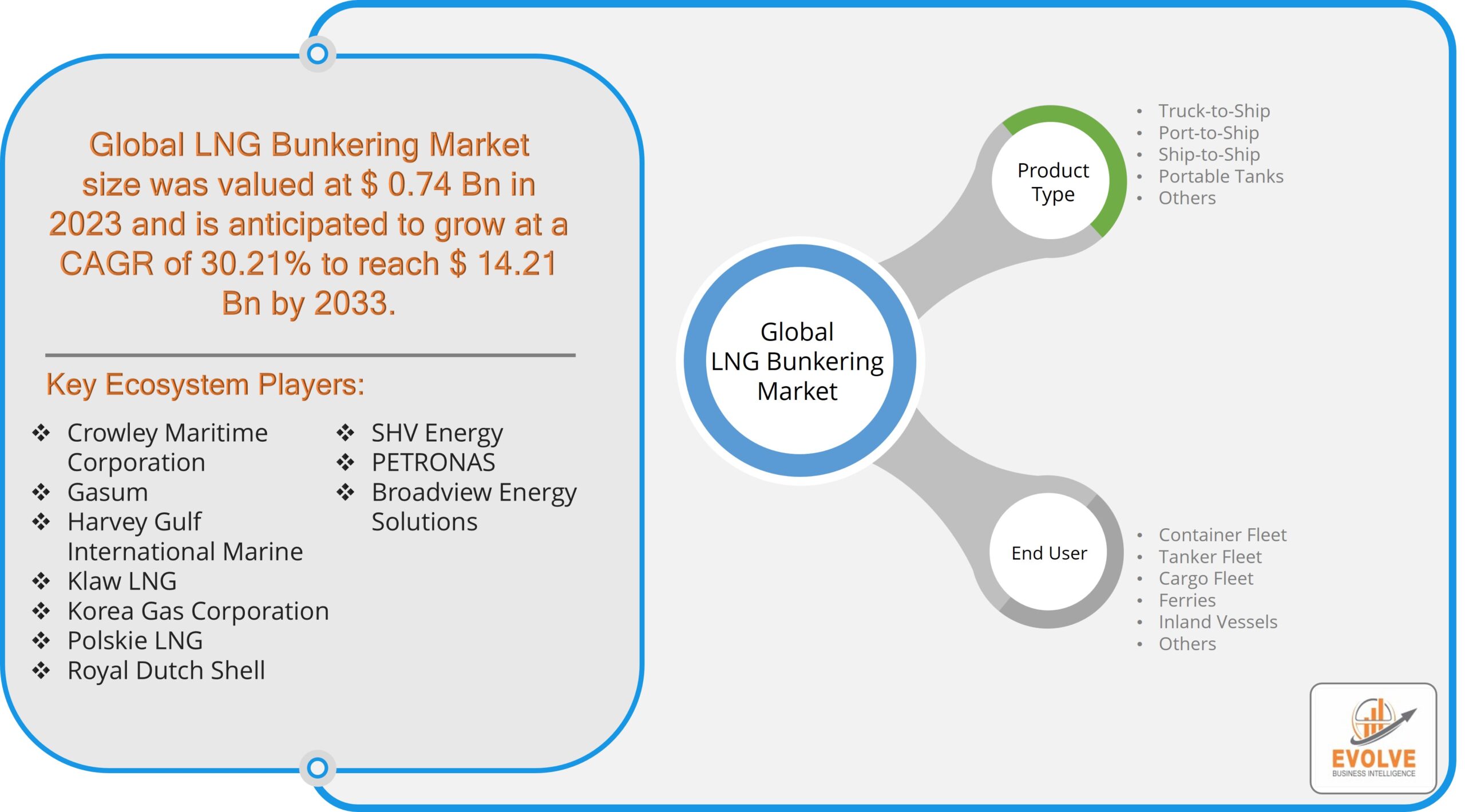
LNG Bunkering Market Is Estimated To Grow a CAGR of Around 30.21%

Evolve Business Intelligence has published a research report on the Global LNG Bunkering Market, 2023–2033. The global LNG Bunkering Market is projected to exhibit a CAGR of around 30.21% during the forecast period of 2023 to 2033.

Evolve Business Intelligence has recognized the following companies as the key players in the global LNG Bunkering Market: Crowley Maritime Corporation, Gasum, Harvey Gulf International Marine, Klaw LNG, Korea Gas Corporation, Polskie LNG, Royal Dutch Shell, SHV Energy, PETRONAS and Broadview Energy Solutions.

LNG Bunkering Market

For More Information: https://evolvebi.com/report/lng-bunkering-market-analysis/

Global LNG Bunkering Market Highlights

The Global LNG Bunkering Market is projected to be valued at USD 14.21 Billion by 2033, recording a CAGR of around 30.21% during the forecast period. The LNG Bunkering Market refers to the industry involved in the supply of liquefied natural gas (LNG) as a fuel for ships. LNG is considered a cleaner alternative to traditional marine fuels, such as heavy fuel oil, because it produces lower emissions of sulfur oxides (SOx), nitrogen oxides (NOx), and carbon dioxide (CO2).

The LNG Bunkering Market is positioned for growth as the shipping industry seeks to meet stricter environmental standards and reduce its carbon footprint. the LNG bunkering market is seen as a key driver in the transition towards cleaner and more sustainable maritime transportation.

The COVID-19 pandemic had a significant impact on the LNG Bunkering Market. The pandemic led to a global economic slowdown, which resulted in decreased shipping activity. This reduction in maritime trade affected the demand for LNG as a marine fuel. Many LNG bunkering infrastructure projects faced delays due to disruptions in supply chains, labor shortages, and restrictions on movement, impacting the growth of the market. Restrictions and lockdowns led to operational challenges in transporting and supplying LNG, affecting the consistency and reliability of LNG bunkering services. LNG production facilities also faced disruptions due to workforce limitations and safety protocols, influencing the availability of LNG for bunkering.

The pandemic contributed to fluctuations in LNG prices, affecting the cost competitiveness of LNG compared to other marine fuels. This volatility made it challenging for shipping companies to plan long-term fuel strategies. Despite the challenges, the pandemic highlighted the importance of sustainability and the need to reduce emissions in the maritime sector. This continued focus on environmental goals-maintained interest in LNG as a cleaner fuel option.

Segmental Analysis

The global LNG Bunkering Market has been segmented based on Product Type and Application.

Based on Product Type, the LNG Bunkering Market is segmented into Truck-to-Ship, Port-to-Ship, Ship-to-Ship, Portable Tanks and Others. The Ship-to-Ship segment is anticipated to dominate the market.

Based on Application, the global LNG Bunkering Market has been divided into Container Fleet, Tanker Fleet, Cargo Fleet, Ferries, Inland Vessels and Others. The Tanker Fleet segment is anticipated to dominate the market.

For More Information: https://evolvebi.com/report/lng-bunkering-market-analysis/

Regional Analysis

The LNG Bunkering Market is divided into five regions: North America, Europe, Asia-Pacific, South America, and the Middle East, & Africa. In North America region, The United States and Canada are the primary markets in North America. The U.S. has several key ports, including Houston and Los Angeles, that are investing in LNG bunkering infrastructure. Canada is also exploring LNG bunkering opportunities, particularly in the Pacific Northwest.

In Asia-pacific region, there is a major maritime hub with significant shipping activity, driving demand for LNG bunkering. Ports like Singapore and Shanghai are expanding their LNG bunkering infrastructure to accommodate the growing fleet of LNG-powered vessels. China, Japan, South Korea, and Singapore are key players in the Asia-Pacific LNG bunkering market. Europe has implemented stringent environmental regulations, such as the IMO 2020 sulfur cap, which encourages the use of cleaner fuels like LNG. Several European ports are developing or have already established LNG bunkering facilities. There is a focus on creating a network of LNG bunkering hubs across Europe, including the development of the North Sea and Baltic Sea regions as LNG bunkering hotspots.

In Latin America region, Brazil’s growing maritime industry and its interest in cleaner fuels are driving developments in LNG bunkering infrastructure. The Port of Santos and the Port of Rio de Janeiro are key locations for potential LNG bunkering development. The Middle East is a major LNG producer, and there is increasing interest in developing LNG bunkering infrastructure to leverage the region’s LNG supply. Ports like Fujairah and Dubai are exploring LNG bunkering options.

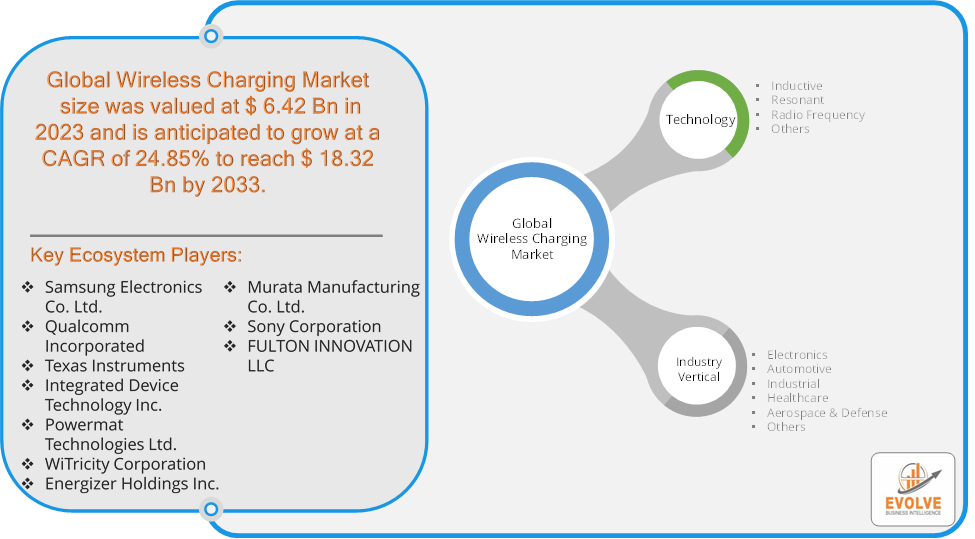
Wireless Charging Market Surges: 24.85% CAGR

Evolve Business Intelligence has published a research report on the Global Wireless Charging Market, 2023–2033. The global Wireless Charging market is projected to exhibit a CAGR of around 24.85%during the forecast period of 2023 to 2033.

Evolve Business Intelligence has recognized the following companies as the key players in the global Wireless Charging Market: Samsung Electronics Co. Ltd., Qualcomm Incorporated, Texas Instruments, Integrated Device Technology Inc., Powermat Technologies Ltd., WiTricity Corporation, Energizer Holdings Inc., Murata Manufacturing Co. Ltd., Sony Corporation, FULTON INNOVATION LLC.

Wireless Charging MarketMore Information: https://evolvebi.com/report/wireless-charging-market-analysis/

Market Highlights

The Global Wireless Charging market is projected to be valued at USD 18.32 Billion by 2033, recording a CAGR of around 24.85% during the forecast period. The Wireless Charging Market refers to the technology and systems that enable the transfer of energy from a power source to a device without the need for physical connectors or cables. This is typically achieved through electromagnetic induction, resonant inductive coupling, or radio frequency-based charging. The market includes a wide range of applications, such as smartphones, electric vehicles, medical devices, and wearable technology. Growth in this market is driven by the increasing adoption of consumer electronics, the push for wireless infrastructure, and the development of more efficient and faster-charging solutions.

The COVID-19 pandemic has led to supply chain disruptions leading to supply shortages or lower demand in the Wireless Charging market. The travel restrictions and social-distancing measures have resulted in a sharp drop in consumer and business spending and this pattern is to continue for some time. The end-user trend and preferences have changed due to the pandemic and have resulted in manufacturers, developers, and service providers to adopt various strategies to stabilize the company.

Segmental Analysis

The global Wireless Charging market has been segmented based on Technology, Industry Vertical

Based on Technology, the market is segmented based on Inductive, Resonant, Radio Frequency, Others. the Inductive technology segment dominates, primarily due to its early adoption, reliability, and widespread use in consumer electronics, such as smartphones and wearables, supported by established standards like Qi

Based on Industry Verticals, the market has been divided into the Electronics, Automotive, Industrial, Healthcare, Aerospace & Defense, Others. the Electronics segment dominates, driven by the widespread adoption of wireless charging in consumer devices like smartphones, tablets, and wearables, which constitute the largest market share due to their high demand and frequent usage.

More Information: https://evolvebi.com/report/wireless-charging-market-analysis/

Regional Analysis

The Wireless Charging market is divided into five regions: North America, Europe, Asia-Pacific, South America, and the Middle East, &Africa. North America holds a dominant position in the Wireless Charging Market. Due to a rise in smartphone usage, the North American wireless charging market will dominate this industry. Furthermore, the region’s market will expand at a faster rate due to the increasing sales of electric vehicles. The Asia-Pacific region has indeed emerged as the fastest-growing market for the Wireless Charging industry. Because there are sufficient advanced electric car manufacturing facilities and contemporary research & development facilities in the Asia-Pacific region, the market for wireless charging is anticipated to grow at the quickest compound annual growth rate (CAGR) between 2024 and 2032. Additionally, the wireless charging market in China had the biggest market share, while the wireless charging market in India had the quickest rate of growth in the Asia-Pacific area.

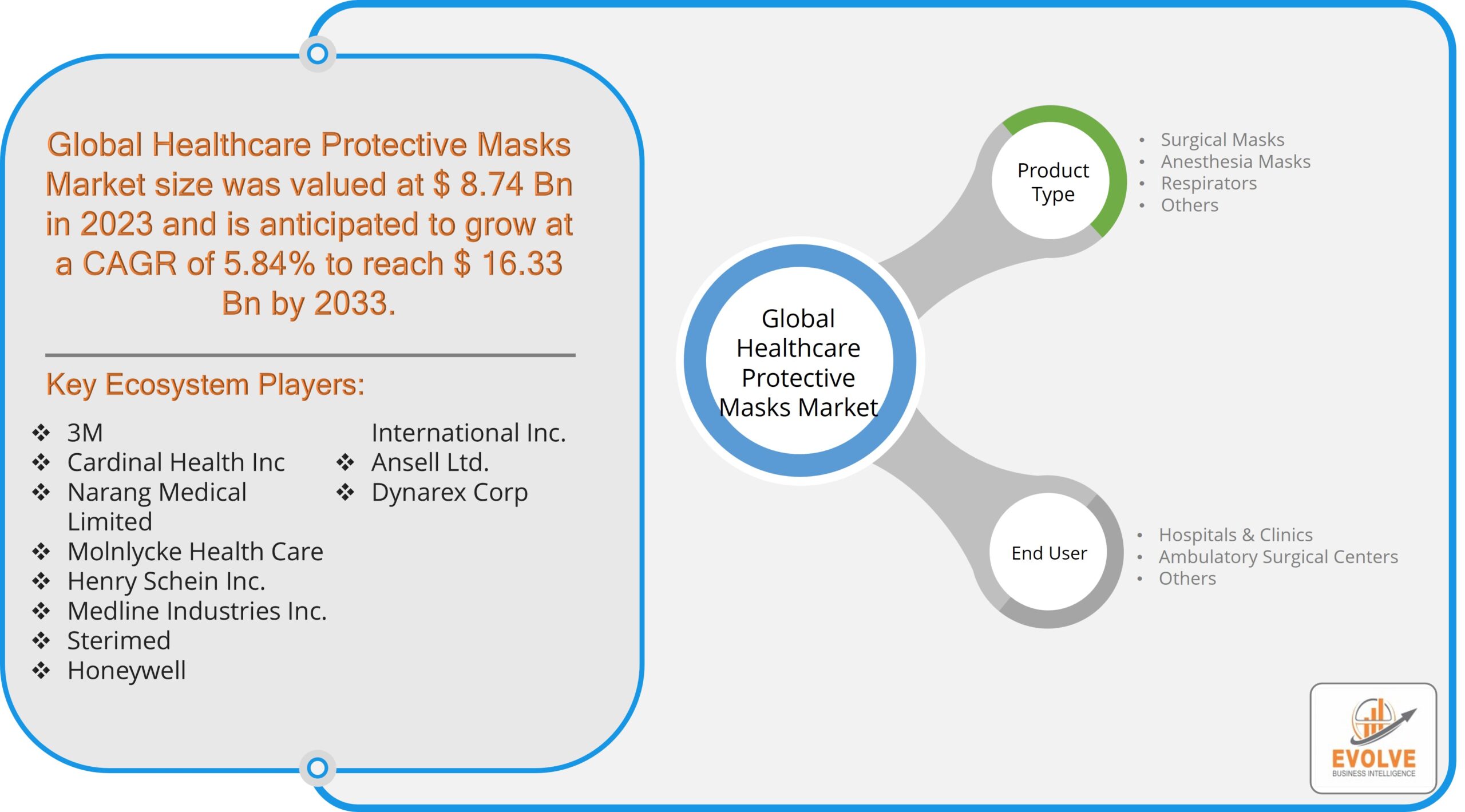
Healthcare Protective Masks Market Is Estimated To Record a CAGR of Around 5.84%

Evolve Business Intelligence has published a research report on the Global Healthcare Protective Masks Market, 2023–2033. The global Healthcare Protective Masks Market is projected to exhibit a CAGR of around 5.84% during the forecast period of 2023 to 2033.

Evolve Business Intelligence has recognized the following companies as the key players in the global Healthcare Protective Masks Market: 3M, Cardinal Health Inc, Narang Medical Limited, Molnlycke Health Care, Henry Schein Inc., Medline Industries Inc., Sterimed, Honeywell International Inc., Ansell Ltd. And Dynarex Corp.

Healthcare Protective Masks Market

For More Information: https://evolvebi.com/report/healthcare-protective-masks-market-analysis/

Global Healthcare Protective Masks Market Highlights

The Global Healthcare Protective Masks Market is projected to be valued at USD 16.33 Billion by 2033, recording a CAGR of around 5.84% during the forecast period. The Healthcare Protective Masks Market refers to the global market for masks designed specifically to protect healthcare workers, patients, and the general public from infectious diseases and environmental hazards. This market includes various types of masks such as surgical masks, N95 respirators, and other personal protective equipment (PPE) used in healthcare settings. These masks are essential for infection control and are worn by healthcare professionals to protect themselves and their patients from the spread of germs, viruses, and other contaminants.

The Healthcare Protective Masks Market plays a crucial role in public health by providing essential protective equipment to minimize the spread of infectious diseases.

The COVID-19 pandemic had a significant impact on the Healthcare Protective Masks Market. The outbreak of COVID-19 led to an unprecedented demand for healthcare protective masks worldwide as governments, healthcare facilities, and individuals sought to prevent the spread of the virus. At the onset of the pandemic, both healthcare institutions and the general public engaged in panic buying, leading to shortages of masks and other PPE. Initial disruptions in global supply chains due to lockdowns and restrictions impacted the availability of raw materials, such as melt-blown fabric, which is essential for mask production. The pandemic led to a significant increase in mask usage in non-healthcare settings, such as schools, offices, and public transport, further expanding the market. The heightened awareness of personal and public health safety has led to a sustained demand for protective masks even post-pandemic, with masks becoming a part of everyday life in many regions. The rapid market expansion led to concerns over the quality of masks and the proliferation of counterfeit products, prompting stricter regulations and quality checks.

Segmental Analysis

The global Healthcare Protective Masks Market has been segmented based on Product Type and End User.

Based on Product Type, the Healthcare Protective Masks Market is segmented into Surgical Masks, Anesthesia Masks, Respirators and Others. The Surgical Masks segment is anticipated to dominate the market.

Based on End User, the global Healthcare Protective Masks Market has been divided into Hospitals & Clinics, Ambulatory Surgical Centers and Others. The Hospitals & Clinics segment is anticipated to dominate the market.

For More Information: https://evolvebi.com/report/healthcare-protective-masks-market-analysis/

Regional Analysis

The Healthcare Protective Masks Market is divided into five regions: North America, Europe, Asia-Pacific, South America, and the Middle East, & Africa. North America, especially the United States, experienced a significant surge in demand for healthcare protective masks due to COVID-19.  Strong healthcare infrastructure and high awareness levels drive the market. Government initiatives to stockpile and ensure the availability of PPE and Ongoing investments in healthcare facilities and technology. Europe has a well-established healthcare system with a strong focus on infection control, leading to steady demand for protective masks. Stringent regulatory standards for PPE and infection prevention and increased awareness and usage in both healthcare and public settings. Asia-Pacific is one of the fastest-growing markets due to high population density and rapid urbanization. Rising healthcare expenditure and investments in healthcare infrastructure and high demand driven by frequent outbreaks of respiratory infections. The market in Latin America is expanding, with growing healthcare awareness and investments in medical infrastructure. Increasing government initiatives to improve healthcare services and rising incidence of infectious diseases driving demand for protective measures. The Middle East and Africa region is witnessing gradual growth in the healthcare protective masks market. Investments in healthcare infrastructure and growing public health awareness and efforts to improve disease management and control measures.

Exit mobile version